AuDHD and the Imposter Loop: When Self-Doubt Becomes a Survival Strategy

The Hidden Curriculum of “Not Enough”
For many adults with AuDHD (Autism + ADHD), life has been one long lesson in camouflage. You grew up scanning for the social rules no one ever explained, forcing your brain to run a background process of “what’s normal?” while you tried to act natural. That constant calibration wires the nervous system for vigilance, not confidence.
You learn to survive through over-preparing, over-apologizing, or over-achieving. The mask becomes your passport into belonging. But behind it hums the quiet voice:
“If they really knew me, they’d know I’m faking it.”
That’s the root of imposter syndrome — a neurobiological echo of a lifetime spent compensating for being misunderstood
.
The Neuroscience of Self-Sabotage
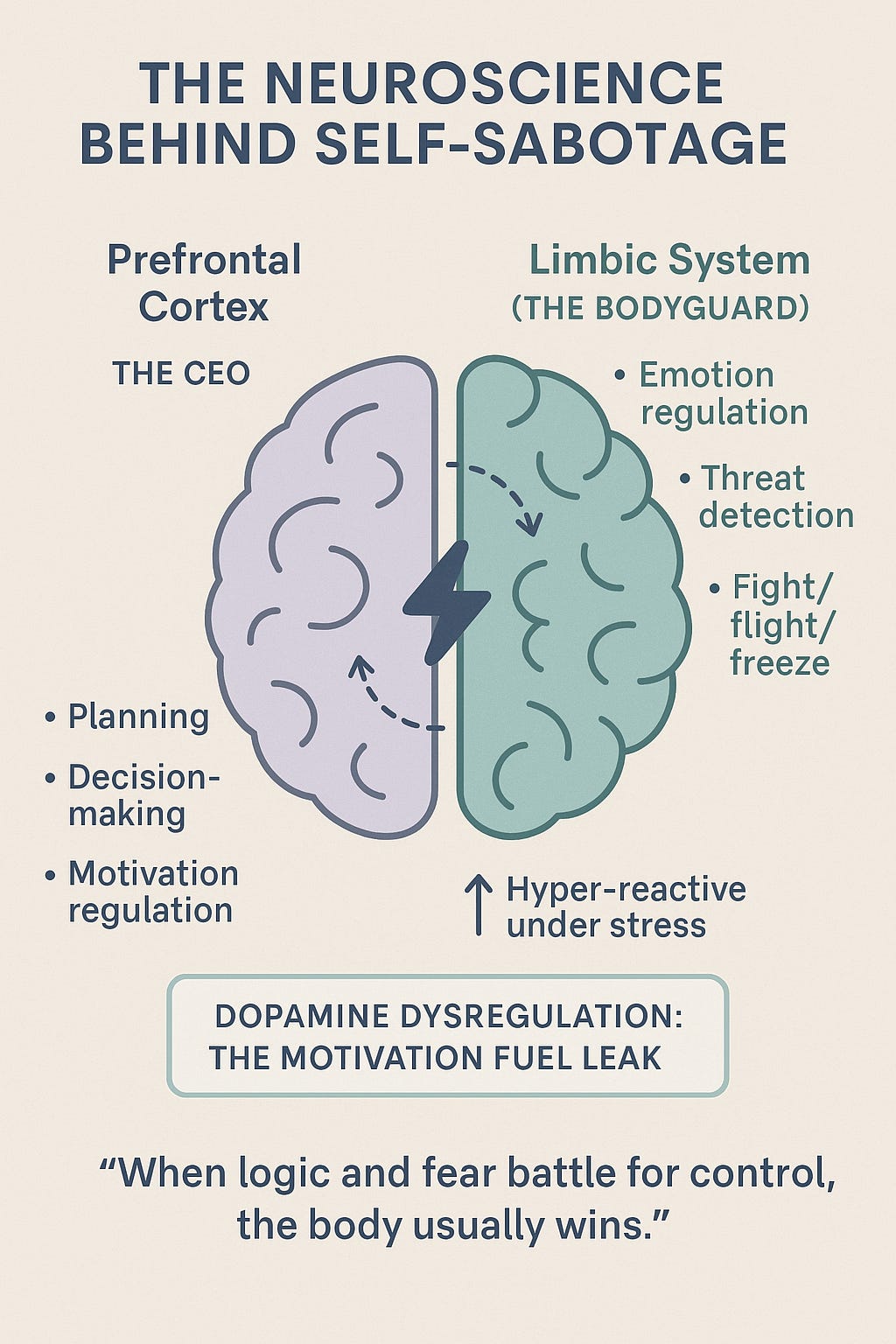
The Prefrontal Tug-of-War
The ADHD side of the AuDHD brain struggles with executive function regulation — the prefrontal cortex, our “CEO of the brain,” often loses signal to the limbic system’s emotional alarms. That means when stress hits, the amygdala (the brain’s threat detector) hijacks decision-making. You know you should send the email, apply for the job, or finish the project — but the limbic brain screams, danger! and floods you with cortisol.
To avoid rejection or shame, the brain takes a “safety exit”: procrastination, perfectionism, or avoidance. That’s self-sabotage — not laziness, but an unconscious attempt to protect the nervous system from pain.
Dopamine and the Mask of Motivation
Dopamine — the brain’s motivation currency — is naturally dysregulated in ADHD. The reward pathways need novelty or emotional urgency to activate. When the task lacks stimulation or feels risky, dopamine drops, motivation crashes, and the self-talk spirals: “I can’t do this, so maybe I was never capable to begin with.” The brain equates failure with identity, reinforcing the imposter narrative.
Meanwhile, autistic pattern-recognition ramps up — hyper-analyzing every social cue, tone, and misstep. The combination? Emotional paralysis disguised as perfectionism.
Why Imposter Syndrome Hits Harder in AuDHD
Masking Fatigue: Years of scripting and blending in teach your brain that safety equals performance. When you finally drop the mask, the nervous system panics — authenticity feels like danger.
Double Empathy Gap: Miscommunications aren’t a moral flaw, they’re neurological differences in social interpretation. But internalized blame sticks, especially after decades of being told you’re “too much” or “not enough.”
Inconsistent Output: ADHD’s fluctuating executive functions mean one day you’re a genius tornado of productivity, and the next you can’t answer an email. That inconsistency feels like fraudulence, even though it’s just how your brain’s energy cycles work.
Rejection Sensitivity Dysphoria (RSD): Emotional pain hits like an electric shock. Even imagined criticism can trigger shutdown or withdrawal — making you self-sabotage before someone else can.
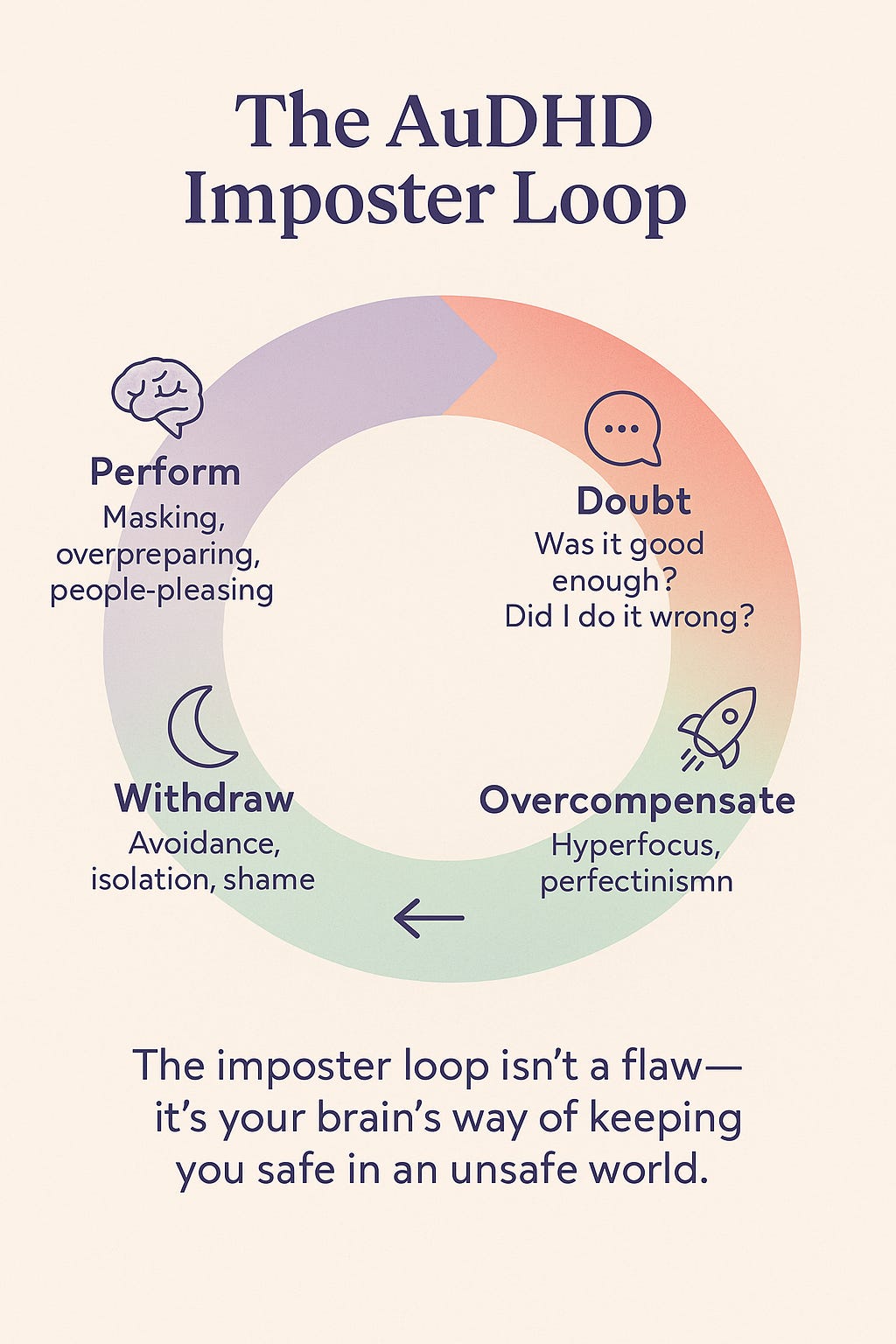
You end up living in a loop:
Perform → Doubt → Crash → Withdraw → Overcompensate → Repeat.
Breaking the Loop: Body, Brain, and Belief
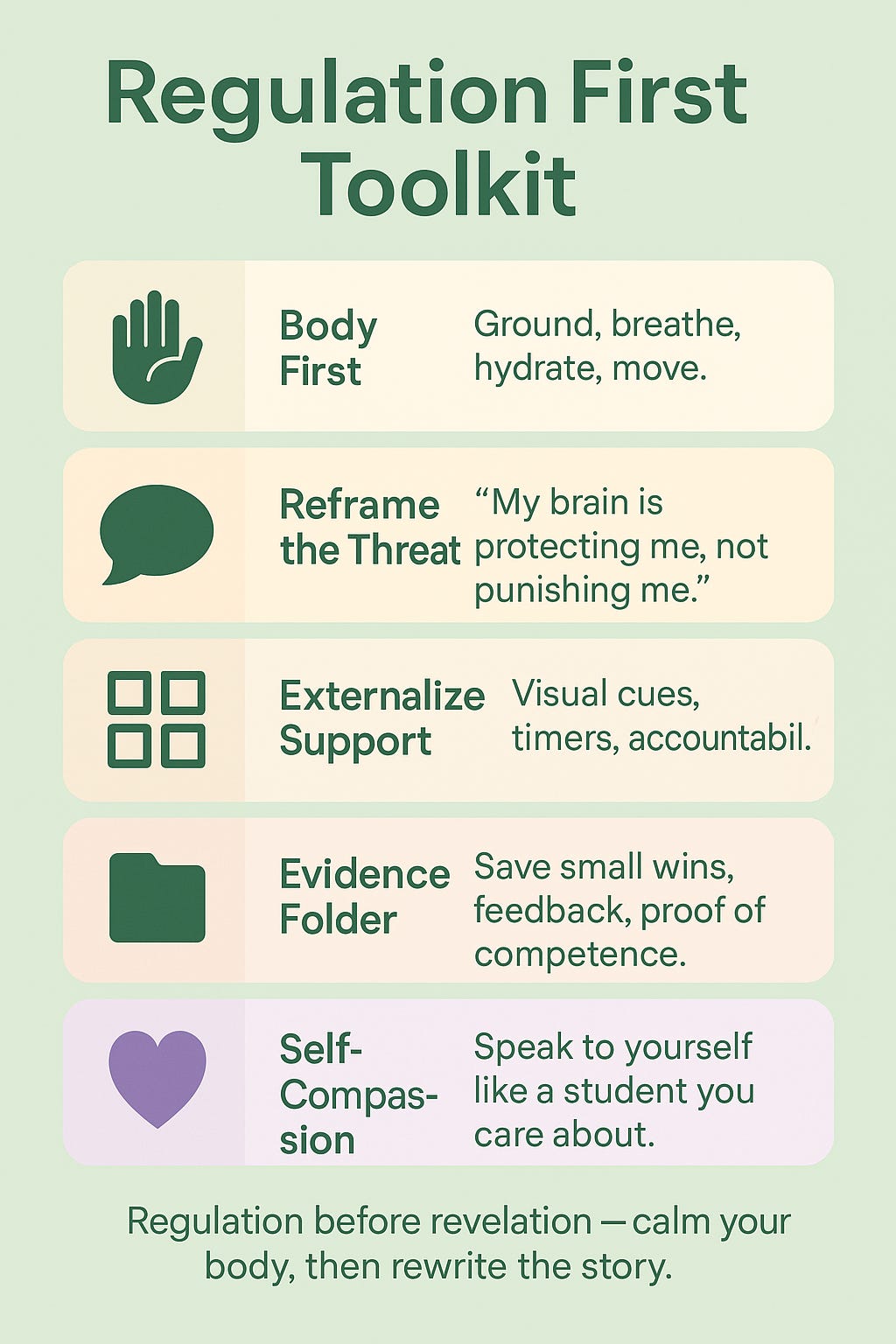
Body First
When your nervous system senses threat, logic won’t land. Start regulation in the body:
Ground with pressure: weighted blanket, hug, stretch.
Hydrate and move — physical movement reboots dopamine flow.
Use sensory anchors (texture, scent, warmth) to remind the brain: I’m safe now.
Brain Second
Reframe the Threat: When avoidance starts, ask: “What is my brain protecting me from?”
Name the Narrative: Replace “I’m a fraud” with “My nervous system is protecting me with old programming.”
Externalize Support: Use external structures (timers, body doubling, visual cues) to bypass overwhelmed executive functions.
Belief Third
Evidence List: Keep a “proof of competence” folder — screenshots, messages, small wins. Your brain needs visual reminders of success.
Self-Compassion as a Practice: Speak to yourself like you would to your students or clients: clear, kind, and curious.
Redefine Enough: Productivity isn’t proof of worth. Being is enough. Your difference isn’t a deficit — it’s a divergent design.
5. Reflection Prompts for the AuDHD Heart
When do I feel most like an imposter? What sensations show up in my body first?
What childhood rule or message might still be shaping my need to “earn” belonging?
What’s one area where I’ve self-sabotaged lately — and what fear might have driven it?
What evidence contradicts my imposter story, even if my emotions don’t believe it yet?
How can I create external safety cues (environment, people, routines) to remind my nervous system I’m safe to show up as me?
What would it look like to let success feel safe, not suspicious?
Closing Thought
Imposter syndrome in AuDHD isn’t a flaw to fix — it’s an adaptation that once kept you safe.
Now, safety can come from self-trust, not self-erasure.
You’re not faking it.
You’re just learning to live unmasked — and that’s the bravest kind of real.