


When Life Changes Feel Like Earthquakes (Introduction)

Big transitions – moving to a new home, losing a job, going through a breakup, becoming a parent – often feel like emotional earthquakes. Change is hard for everyone, but if you’re neurodivergent (for example, you have ADHD, are autistic, or are highly sensitive), these shifts can hit extra hard – sometimes downright overwhelming. Even a small change in routine might leave you feeling disoriented or drained. We’re creatures of habit at heart, and our brains crave predictability. For a neurodivergent mind already working overtime to navigate a world not exactly built for it, a major life change can feel like the rug being pulled out from under you. In this post, we’ll explore why transitions can be so uniquely challenging from a neuroscience-informed perspective. We’ll look at how executive functioning, nervous system regulation, emotional memory, and sensory processing all play a role. Along the way, I’ll share relatable examples (yes, I’ve ugly-cried on moving day) and practical, affirming tips to help you or your neurodivergent loved ones cope with transition stress. (Spoiler: It’s not because you’re “weak” – your brain is literally wired to take change hard, and there are ways to make it easier.)
Executive Function Chaos: The Brain’s Manager Quits on Moving Day
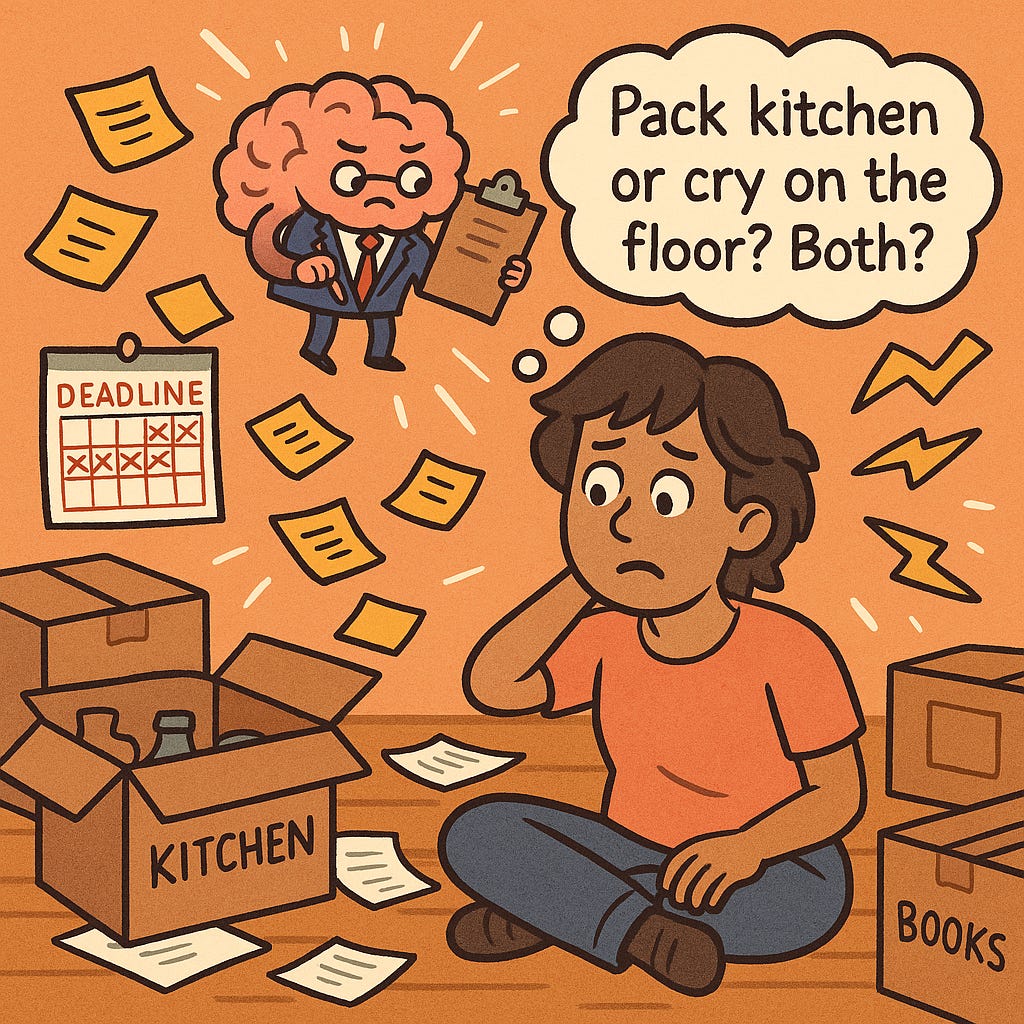
Think of your brain’s executive function as its project manager – keeping track of plans, organizing tasks, remembering stuff, and switching gears. Now imagine that manager takes a vacation right when you’re trying to, say, pack up and move to a new apartment. For many neurodivergent folks (especially those with ADHD or autism), that’s exactly what transitions feel like. Shifting from one task, role, or environment to another isn’t a gentle lane change; it’s like slamming the brakes and making a U-turn. One reason is executive functioning challenges – difficulties with planning, task initiation, and cognitive flexibility (the ability to “go with the flow”). Research shows that autistic people, for instance, often have cognitive inflexibility, meaning unexpected changes disrupt their equilibrium. In autism this need for sameness is actually an adaptive response – the world is so chaotic and overwhelming that routine becomes a safety raft. Meanwhile, ADHD brains struggle to switch attention when they’re hyperfocused on something rewarding, which makes stopping one activity and starting another a huge ask. ADHD also brings challenges like “time blindness,” where the future feels hazy and the present moment dominates. No wonder planning ahead for a transition (“Pack before the night before? What is time?”) can be uniquely hard in ADHD. The result of all this? Deadlines sneak up on you, you procrastinate on critical tasks, or you find yourself frozen in analysis-paralysis as the change looms.
Relatable example: When I had to relocate for a new job, I knew in theory I should start packing weeks early. But every time I looked at the mountain of tasks – finding movers, updating addresses, packing boxes – my brain short-circuited. I oscillated between hyper-focusing on trivial stuff (spent two hours reorganizing my book collection instead of packing it) and flat-out avoiding the planning. Sound familiar? If so, it’s not laziness or lack of willpower. It’s your neurodivergent brain coping with an executive function overload.
Tips to navigate transitions when executive function is tricky: One of the best ways to cope is by working with, not against, your brain’s need for structure and cues. Here are some strategies:
Break the change into bite-sized tasks. Big, vague tasks (“pack up the house”) will send anyone’s brain into panic, especially if you have executive dysfunction. Instead, create concrete lists, timelines, or step-by-step guides so you can tackle one small piece at a time. For example, list out “Kitchen on Monday, Bedroom on Tuesday” or use a visual moving checklist. Each small win gives a dopamine boost and momentum.
Externalize your memory and time cues. Don’t rely on your brain to magically remember everything or sense time passing – use tools! Set phone alarms or calendar reminders for important transition tasks, and stick Post-it notes in obvious places as prompts. Visual timers or countdown apps can also help make time more concrete if you have time blindness.
Create routines (even temporary ones). Transitions often blow up our normal routines, which is unsettling. Try imposing a new small routine to provide stability during the change. For instance, every morning, review the day’s top 3 transition-related tasks while having your coffee. A little ritual can give a sense of control amid chaos.
Ask for help and delegate. There’s no rule that says you must handle every detail alone. If organizing isn’t your forte, enlist a friend, family member, or hire support if possible to help structure the process. Neurodivergent brains sometimes just need an external “body double” or coach to get started. Teamwork can turn a overwhelming solo project into a manageable (maybe even fun) joint adventure.
(Remember: needing these supports doesn’t mean you’re failing – it means you’re strategizing. As one guide for college students aptly notes, executive function skills are keys to success in transitions, and using tools and help is just smart management.)
Nervous System Overload: Fight-or-Flight at Full Throttle
Ever notice how your whole body seems to revolt during a big change? Maybe your heart races, your stomach is in knots, or you’re jumpy and on edge as if danger is around every corner. That’s your nervous system responding to the uncertainty and stress of the transition. For neurodivergent folks, this stress-response can go into overdrive. The autistic and ADHD nervous system, in particular, is a “vulnerable and sensitive thing” that struggles to adapt to change and stress. In fact, neurodivergent individuals are more likely to experience panic attacks, intense anxiety, and mood disruptions during times of change. Neurologically, research has found differences in the amygdala (the brain’s emotion alarm center) in autistic individuals, which contributes to heightened stress responses. The result is an exaggerated fight-or-flight response – your body responds to a routine life change like it’s a saber-tooth tiger attack. For example, studies show that autistic people often have higher levels of cortisol (the stress hormone) whenever they encounter novel events or environments. In other words, new = danger as far as their HPA axis (stress system) is concerned. And once that stress response is triggered, it tends to be stronger and longer-lasting than in neurotypical folks. Even minor surprises can flood the system with adrenaline. ADHD hasn’t been studied as much in this exact way, but many ADHD adults will recognize the signature of emotional hyperarousal – the heart-pounding, racing thoughts, difficulty sleeping – when under stress. High anxiety often tags along with ADHD and autism, so it’s like having a hair-trigger alarm in your body that blares during transitions.
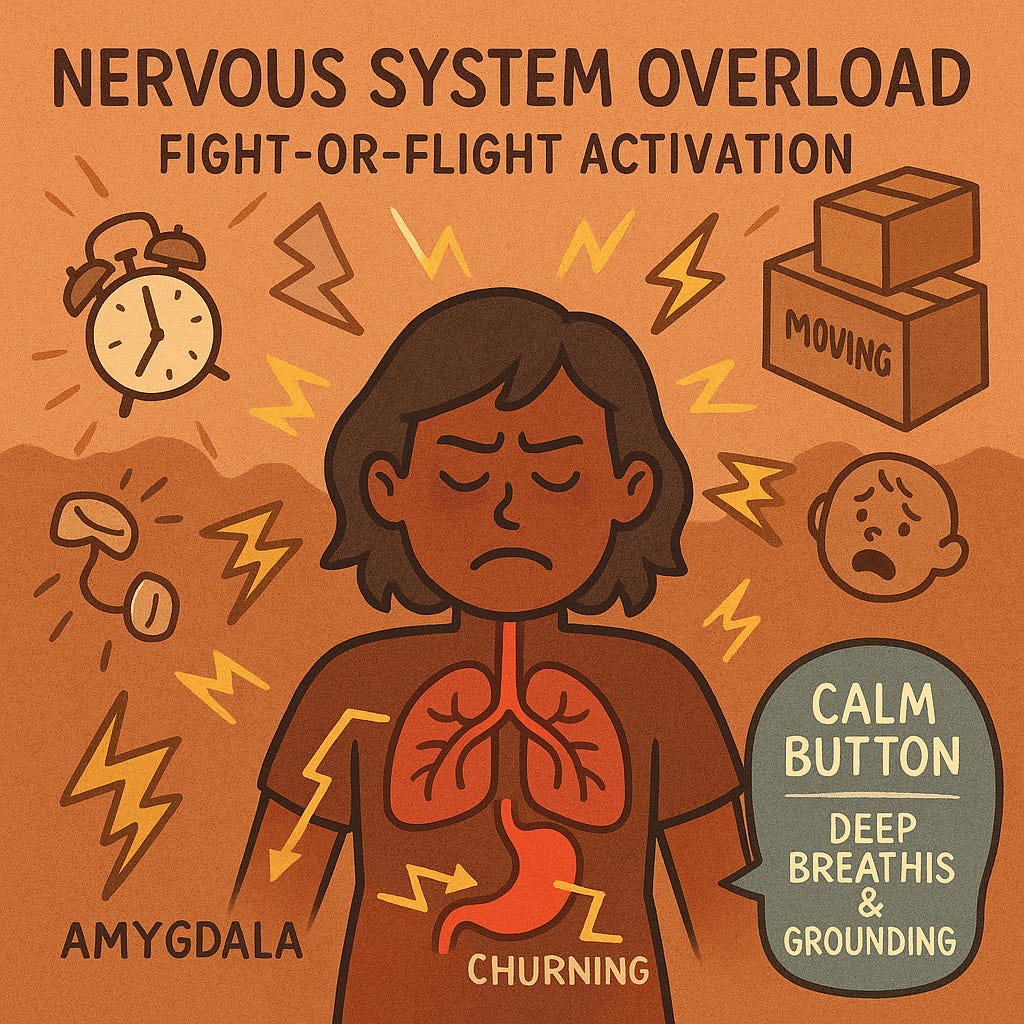
Relatable example: A week after I lost a previous job, I remember sitting at my kitchen table, logically knowing I had savings and would be okay for a while. Yet my body didn’t get the memo – I was waking up with a pounding heart at 3 AM, startling at every email notification, and generally feeling like I’d had 10 cups of coffee (when I’d had none). My nervous system was acting like losing that job = the world is ending. It took weeks for the physical symptoms to settle. Neurodivergent friends of mine have described similar reactions to even happy changes, like starting college or having a baby – the excitement comes packaged with insomnia, jitters, even dizziness or nausea from the tension. It’s as if our internal thermostat for stress is set too sensitive, and any fluctuation blows the fuse.
Tips to calm an overwhelmed nervous system during transitions: You can’t always stop your body from freaking out – but you can help soothe it. Here’s how to hit the “regulate” button when fight-or-flight is in overdrive:
Build in transition buffers and downtime. Don’t jump directly from a high-stress event into business-as-usual. Whenever possible, give yourself a cushion to physically and mentally recover. For example, if you’ve just moved or come back from travel, plan a low-key day or two after the move for unpacking slowly, resting, and nesting in. If you’re starting a new job, see if you can take a few days in between the old and new to decompress. These buffers help your nervous system recalibrate.
Use grounding techniques to engage your parasympathetic “brakes.” Simple practices can signal to your body that it’s safe. Try a few minutes of deep belly breathing (inhale for 4, exhale for 6-8 counts), do a quick body scan meditation, or use the classic “5-4-3-2-1” sensory exercise to get out of your racing mind (name 5 things you see, 4 you feel, 3 you hear, 2 you smell, 1 you taste). Even a short walk outside or listening to calming music between activities can reset your system. These little practices are like hitting a reset button on that fight-or-flight alarm.
Keep some familiar comforts in the chaos. When everything is changing, anchor yourself with something that stays the same. This might be a favorite soft hoodie, a familiar scent (carry that lavender hand lotion or your usual cologne), or eating the same breakfast each day when other meals are unpredictable. Consistency in small things can reassure your brain-body system that not all is unknown. It sounds trivial, but our nervous systems find comfort in any signal of safety or routine.
Consider supportive therapies or tools. If transition anxiety is really overwhelming, there’s no shame in seeking extra support. Therapy approaches like CBT (cognitive behavioral therapy) can help you challenge catastrophic thoughts and learn coping skills – CBT has shown benefit for stress and anxiety in autistic individuals. Also, don’t underestimate the power of exercise to bleed off stress hormones – even dancing around your room or punching a pillow can release some of that adrenaline. Some neurodivergent folks swear by weighted blankets or tight pressure clothing to calm an anxious body (mimicking deep pressure therapy). Explore what works for you, and use it liberally during big changes.
Above all, remind yourself that your reaction makes sense. Your body isn’t betraying you; it’s trying (in its quirky, overzealous way) to protect you. As one therapist noted, neurodivergent brains can go into full fight-or-flight mode from transitions that seem small – like just returning from a grocery trip – because our baseline anxiety and sensitivity are higher. So when your hands shake or heart pounds during a life change, remember: you’re not “overreacting” on purpose. Your nervous system just needs some extra TLC to come back to baseline.
Emotional Echoes: When Past Feelings Flood the Present
Ever had a transition that should be positive on paper – say, starting a dream job or moving in with a partner – but inside you’re hit with a tidal wave of dread or sadness that doesn’t entirely make sense? Or maybe a painful change, like a breakup, feels not only devastating in the present but also strangely tangled up with every heartbreak or rejection you’ve ever experienced. Neurodivergent people often experience emotions with the dial turned to 11, and big transitions can pull on emotional memory in ways that amplify stress. Neuroscience tells us that when emotions run high, our brains encode memories more strongly. We form persistent emotional memories when multiple neurons fire in synchrony during intense experiences. Later, encountering a similar situation can reactivate those old emotional circuits. In plain terms: a current change can wake the ghosts of past changes. If you’ve had traumatic or difficult transitions in childhood (and many neurodivergent kids do – think of abrupt school changes, medical emergencies, or bullying during a move), a new transition in adulthood can trigger those old fear or grief responses as if they’re happening again. This can make your emotional reaction to change feel way out of proportion, even to you. As one counselor put it, the feelings triggered by change in ND folks can seem “disproportionate to the situation”, with even minor shifts evoking big emotions. Part of this is also due to differences in emotional regulation. ADHD brains, for example, often have less developed control centers for emotion, leading to bigger emotional swings than neurotypical. So when the wave of feelings hits, it hits harder and may take longer to settle. Autistic individuals, too, might struggle to identify and moderate complex emotions (alexithymia is common), so a flood of feeling during change can be bewildering and paralyzing.
Relatable example: I once went through a relatively amicable breakup as an adult – it was the right decision and mutually respectful. Yet, that transition absolutely flattened me emotionally. Not only was I grieving the present loss, but suddenly I was back in every past loneliness: I was 13 and friendless after moving schools; I was 20 and heartbroken by my first big love; I was 5 and lost in the supermarket looking for my mom. All those emotional memories glommed on to the current breakup, making it feel catastrophic. It didn’t help that my routine was upended (weekends we used to spend together now yawning open and empty), which only gave my anxious brain more idle time to dredge up memories. In therapy I learned this is actually pretty common – our brains link the pain of current change with unresolved pain from past changes, creating one big ball of “ugh.” If you or your neurodivergent child have ever had an outsized meltdown or depressive spell around a transition, it might be these emotional echoes at work.
Tips to handle emotional memory and big feelings during transitions: While you can’t simply tell your brain “don’t bring up that old stuff,” you can navigate these big feelings with compassion and strategy:
Name it to tame it. When you feel a huge emotion in a transition, try to identify it and validate it. Are you sad, angry, scared? Maybe all of the above? Say it out loud or write it down: “I’m feeling a lot of fear right now.” Research in psychology shows that labeling emotions can actually lower their intensity by engaging your frontal brain to soothe the limbic (emotional) brain. Remind yourself that it’s okay to feel whatever comes up – self-compassion is key during changesmillennialtherapy.com. Instead of judging yourself (“Why am I freaking out about this?!”), talk to yourself like you would a good friend: “Of course you’re anxious – this is a big deal and it’s stirring up old feelings. It’s alright, let’s figure this out.”
Connect the dots to the past (gently). If you notice that a current transition is bringing up echoes of a past event, it can help to acknowledge that. You might think or journal: “This move is reminding me of when I was a kid and we moved and I lost my friends. No wonder I’m extra anxious.” By making that connection explicit, you separate the old memory from the current reality just a bit. Yes, the old pain is real, but this is a different situation. For instance, tell yourself: “Back then I felt alone and scared; now I have tools and support I didn’t have before.” It doesn’t erase the anxiety, but it can shrink the ghost down so it’s not running the whole show.
Create new positive experiences in the transition. Emotional memory works both ways – you can form powerful positive memories during big changes too. So intentionally create moments of joy or comfort to associate with the transition. Throw a silly “goodbye house” pizza party amid the moving boxes, or mark the end of a job by visiting your favorite park with friends. When I realized I was dreading moving because of a lonely childhood move, I made a plan to video-call a friend each night while packing. It turned a scary, lonely process into something oddly heartwarming (and now that memory is tied to feelings of support). By weaving in positive emotional moments, you give your brain something good to latch onto, reducing the dominance of old negative tapes.
Lean on support networks. Talk out your feelings with someone you trust – a friend, a support group, a therapist. Transitions can kick up feelings of isolation, so actively remind yourself you’re not alone in this change. Hearing “I’m here for you” from a loved one, or getting a reality-check from a therapist (“Yes, it makes sense you’re upset; let’s brainstorm coping strategies”), can ground you. If past trauma is consistently overwhelming current life changes, therapy modalities like EMDR (which is often used for trauma) might help untangle those triggers. Essentially, don’t tough it out solo if you don’t have to. As the saying goes, “shared pain is halved, and shared joy is doubled” – sharing your transition journey can lighten the emotional load.
Finally, remember that feeling a lot during big changes is not a sign of weakness – it’s a sign that you care deeply and probably remember deeply. Your neurodivergent brain may be bringing the full archive of emotion to the table. It’s intense, yes, but it also means you’re human. Give yourself permission to grieve, laugh, reminisce – whatever comes up – and know that every storm of feelings does eventually pass. You’ll get through with a little extra support and self-kindness.
Sensory Storms: New Surroundings, New Overwhelm
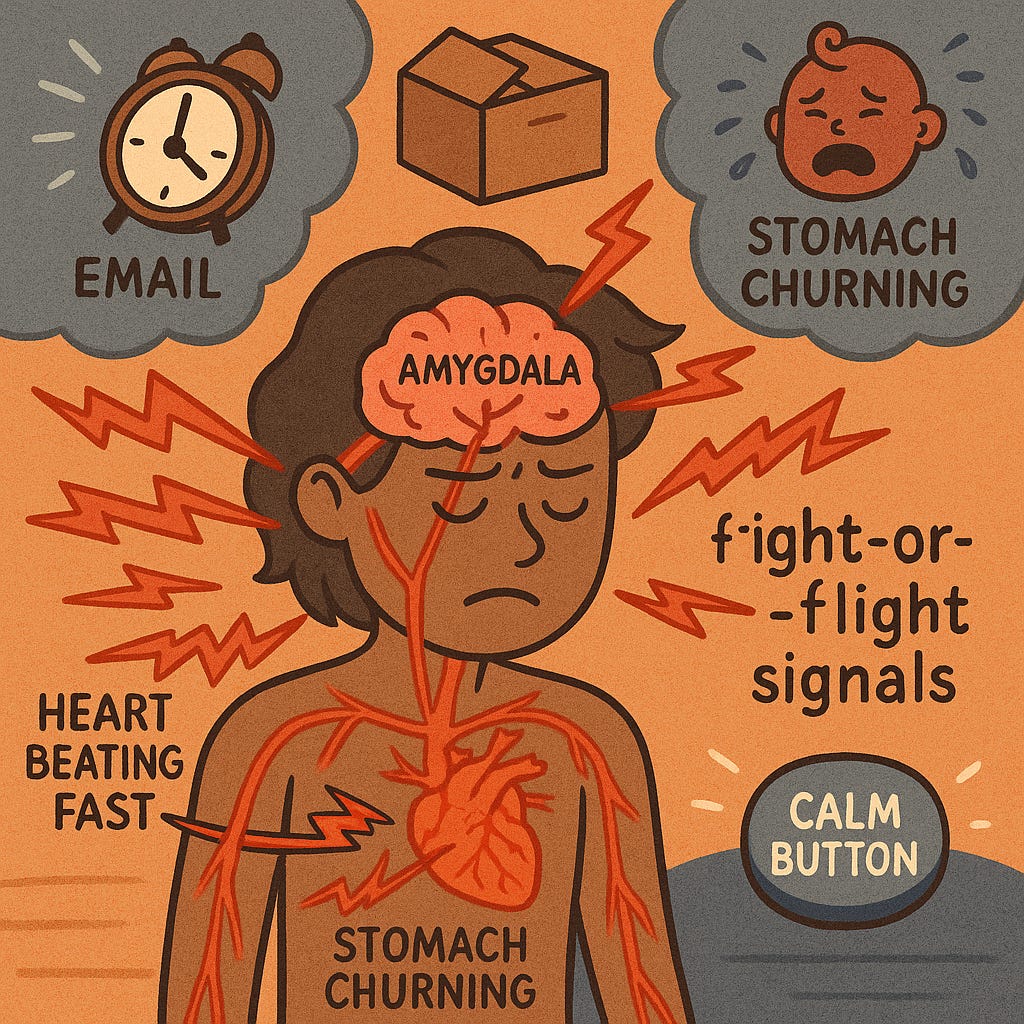
Picture this: you move into a new apartment in a busy neighborhood. The first night, you’re hit with unfamiliar sensations – the streetlights cast a weird yellow glow through the blinds, the air smells different, the traffic noise is unrelenting, and even the water from the tap tastes off. Your senses are shouting “What is this?!” If you’re neurodivergent and have any sensory processing differences, a scenario like this can be the breaking point of a big transition. In fact, it’s estimated that a large portion of neurodivergent people (perhaps 15–20% of the population falls under neurodiversity) have sensory sensitivities that significantly affect how they experience new environments. Sensory processing is how our brain takes in and interprets sights, sounds, smells, textures, etc. Many autistic and ADHD folks have brains that struggle to filter and prioritize sensory input, leading to hypersensitivity (feeling too much of certain stimuli) or hyposensitivity (not feeling enough unless input is strong). During a transition, especially one that involves a new environment or routine, the sensory onslaught can be immense. Research has shown that people with ADHD, for example, are more prone to sensory overload – their brains can easily become overwhelmed by a flood of sensory information. Common triggers include things like crowded, noisy spaces, bright lights, changes in weather or clothing, new foods – basically, everything that might come with a move or a new life role. Autistic individuals often report that even positive changes bring distress because the sensory landscape shifts; familiar calming stimuli are gone and new, unfiltered stimuli take their place. No wonder a neurodivergent person might feel literally untethered and frazzled when moving to a new home, as one therapist described it. Even becoming a parent – a joyous life change – introduces intense sensory inputs (the baby’s cries, constant touch, sleepless nights affecting your internal sense of balance) that can push a sensitive nervous system into overload.
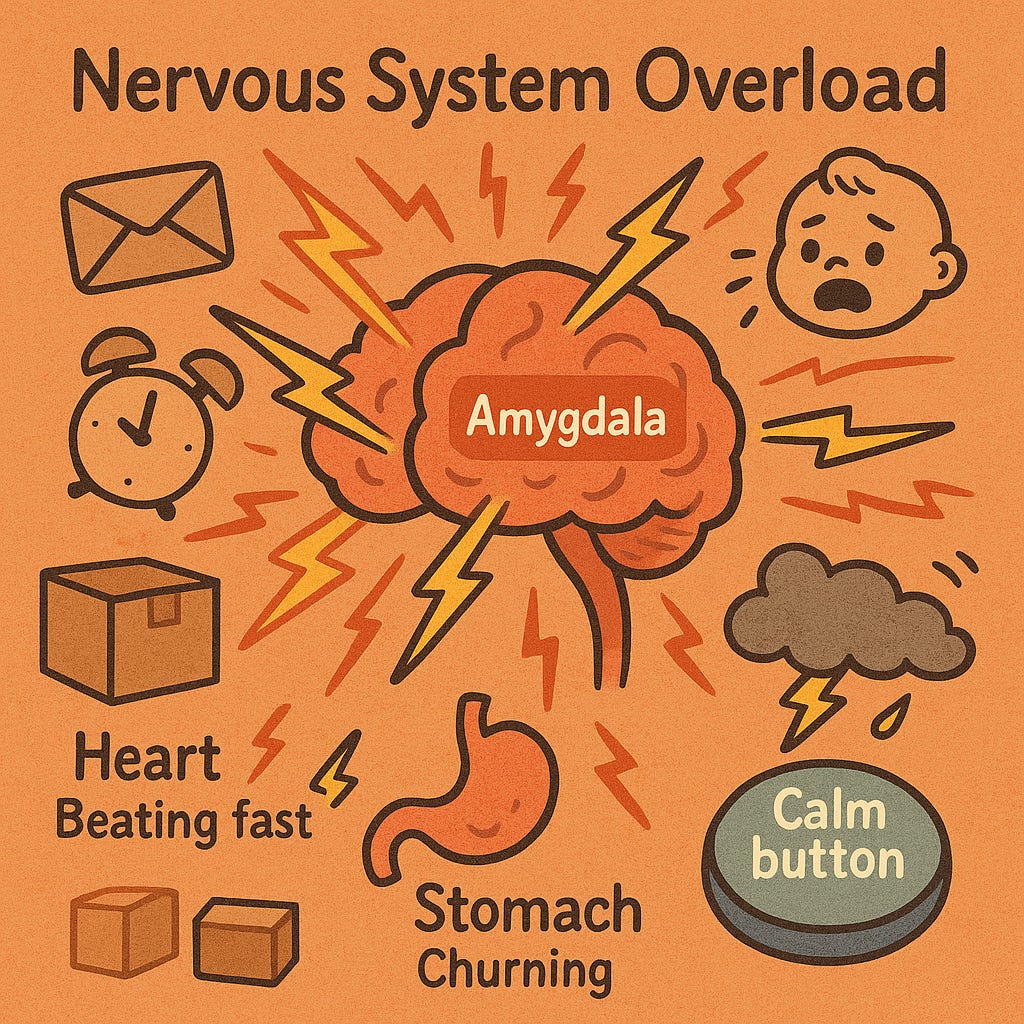
When the sensory system is overwhelmed, you might experience irritability, exhaustion, meltdowns or shutdowns, or even physical pain (like headaches from lights or nausea from certain smells). It can also make it take longer to recover from the transition – your system stays in a state of overload for days or weeks as you slowly adapt. This is why routine and familiar environments feel so safe to neurodivergent brains: they limit the sensory variables. The moment you throw a new environment into the mix, that safety net is gone. As the Child Mind Institute neatly put it, for those with sensory processing challenges, the world is already overwhelming – so a change just piles on more stimuli, which can be “even harder” to handle.
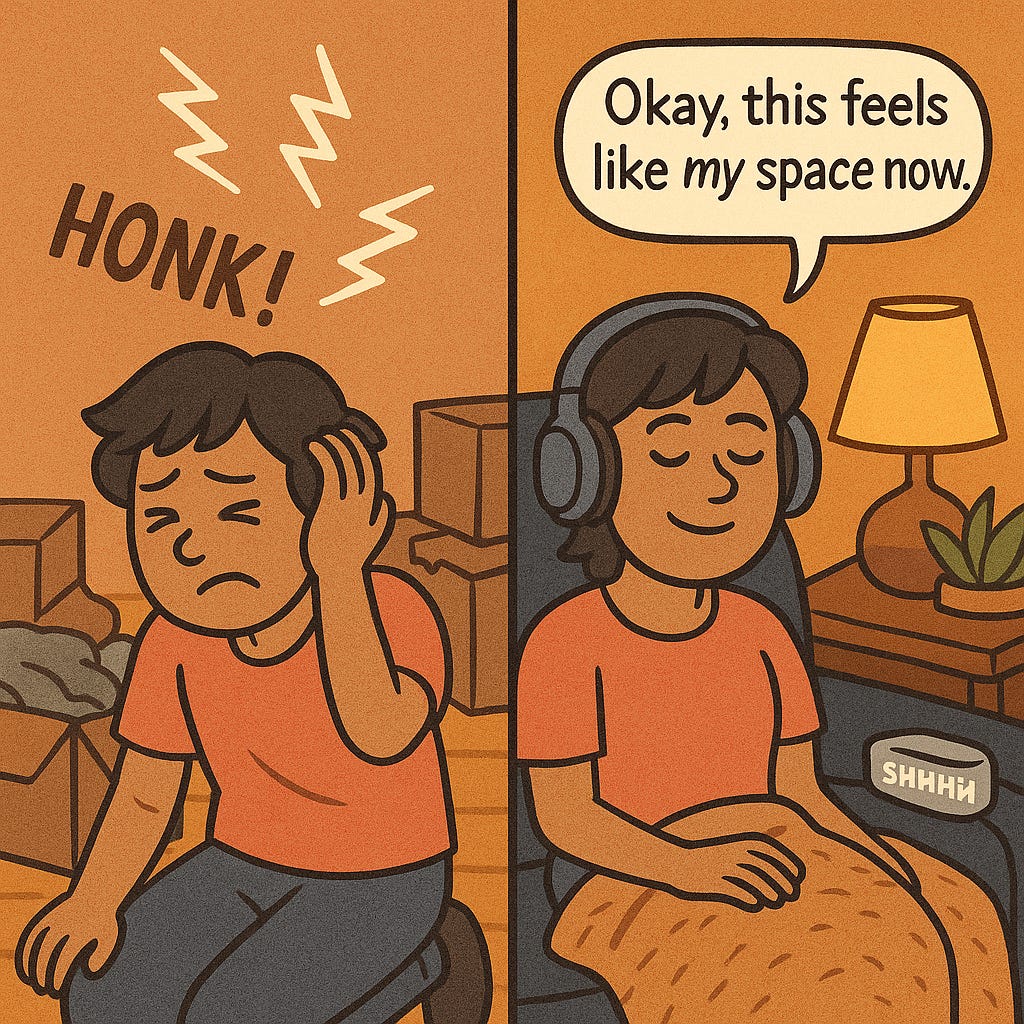
Relatable example: I once helped a neurodivergent teen, Jonah, prepare to transition from home to college dorm life. He was excited intellectually, but when we walked into the dorm on move-in day, he looked panicked. The communal bathroom had an echoing sound and unfamiliar smell of cleaning chemicals; the dorm room’s overhead light was a harsh fluorescent buzz; people were slamming doors in the hallway. Within an hour, Jonah had a splitting headache and was desperate to leave campus. We realized that before he could settle emotionally, we had to address the sensory environment. Over the next week, we made that dorm room a sensory-safe haven: soft lamp lighting instead of the overhead light, a white noise machine to drown out hallway chaos, his favorite scented candle and bedding from home for familiarity (and yes, noise-cancelling headphones for when the fire alarm inevitably got tested!). Slowly, his brain began to interpret the new space not as an assault, but as his. This process really drove home for me how any big change for an ND person must consider the sensory angle. It’s not just “new city, new job” – it’s new everything for the senses, which requires its own adjustment.
Tips to manage sensory overload during transitions: The goal is to give your sensory system the support it needs so it doesn’t go into meltdown mode. Here are some ideas for creating a sensory-safe landing during change:
Set up your environment proactively. As soon as you can, modify the new environment (home, office, etc.) to meet your sensory needs. This might mean unpacking your comfort items first – think soft blankets, familiar pillows, or your favorite mug – to immediately signal “safe space.” If lights are too bright, use lamps or install dimmers; if noise is an issue, consider curtains that dampen sound or use a white noise machine at night. For a new job, maybe bring a small desk fan if you need air movement or wear blue-light filtering glasses under harsh office lights. These tweaks aren’t trivial – they can be the difference between constant agitation and eventual calm.
Use sensory tools and supports. Don’t hesitate to use the whole toolkit of sensory aids, especially in the early phase of a transition. Noise-cancelling headphones or earplugs can save your sanity in a loud environment (life-changing for many new parents trying to cope with crying and chaos). Sunglasses or tinted glasses indoors can help if the visual stimuli are too much. Chewing gum or a chewy necklace can provide grounding oral input if you’re jittery. If certain clothing textures comfort you, prioritize wearing those during stressful days. Essentially, think about which senses are freaking out and how you can either soothe or satisfy them. For vestibular/proprioceptive needs (your sense of balance and body), maybe do some heavy work like push-ups or use a weighted blanket to feel more grounded. These kinds of accommodations are common for ND kids, but guess what – they work for adults too. There’s zero shame in using what helps.
Pace the sensory exposure. When possible, introduce new sensory experiences gradually. If you’ve moved to a bustling city from a quiet town, you might limit outings to busy areas until you’ve settled in – find a calmer café instead of diving into the loudest restaurant on day one. If you’re newly sharing your space (new roommate or new baby), communicate about creating quiet times or dim-light evenings to let your system recuperate. Take “sensory breaks” – step into a dark room, wear your headphones for an hour, step outside for fresh air – routinely. These breaks allow your overloaded neural circuits to rest so you can handle the next chunk of stimulation better.
Educate and advocate for your needs. If you’re able, let the people around you know that sensory issues are real for you and that you might need adjustments. Tell your friends, “After we go to that concert (or noisy kids’ playdate), I’m probably going to be tapped out – I’ll need some quiet time after.” Or inform your new boss, “I focus best with minimal noise, so I might pop in earplugs when I’m working – just a heads up.” Often people are understanding if they know it’s a sensory thing and not you being antisocial or picky. And if they aren’t? Well, you still have every right to prioritize your well-being. As the WHO emphasizes, people with autism and other developmental differences have the right to accessible, supportive environments for their health – that goes for ADHD and sensory-processing differences, too. You deserve to have your sensory needs respected in any space you occupy.
Above all, listen to your body’s signals. If you feel the creeping irritability or fatigue that says “I’m in sensory overload,” honor that. It’s perfectly okay to leave the party early, to take an extra long bathroom break at work just to get silence, or to decline an invitation to somewhere you know will overwhelm you (at least until you’re more settled). Sensory well-being is foundational – when it’s addressed, you’ll find you have much more capacity to handle the emotional and executive demands of a transition, too. As one article beautifully put it, providing sensory support and structure can minimize potential stress triggers during transitions. In other words, tweak the environment in your favor and watch how much smoother the ride becomes.
Embracing Change on Your Terms (Conclusion)
By now, you’ve seen that big life transitions aren’t “one size fits all.” For neurodivergent adults, teens, and parents of ND kids, a move, a job loss, a breakup, or a new baby can be a whole-body, whole-brain experience. It’s not just “in your head” and certainly not a personal failing – it’s neuroscience. Executive function quirks make planning and adapting tougher, nervous system differences crank up stress responses, emotional memory can flood you with past feelings, and sensory sensitivities turn new environments into minefields of stimuli. The common thread through all of this is that transitions demand extra energy and resources from an ND brain and body. It’s like asking a computer to run four heavy programs at once – expect some lag, maybe a crash or two. So be gentle with yourself (and your ND loved ones) during these times. What looks like “overreacting” or “dragging your feet” is often a reasonable response to an overwhelming load.
The good news is, with understanding comes better coping. You can’t always control when life changes hit, but you can influence how you navigate them. By breaking tasks down, buffering stress with self-care, letting yourself feel and seek support, and fine-tuning your sensory world, you stack the deck in favor of a smoother transition. As the strategies we discussed show – from preparing ahead of time to practicing self-compassion – there are tangible ways to ease the journey. It might still be tough (and you have every right to vent about it with some dark humor and a tub of ice cream), but it can become manageable.
One more thing: every transition you get through is a testament to your resilience. Neurodivergent brains may hate change, but they also learn and adapt. You might find that each big life change teaches you more about what you need to thrive. Maybe you discover that a strict bedtime routine is non-negotiable for you during times of change, or that you actually love the new city once you find the quiet park and the coffee shop with gentle lighting. Celebrate those wins. Your journey might not look like your neurotypical neighbor’s, but it’s yours, and it’s valid.
So here’s to embracing the beautifully messy, stressful, and transformative nature of big life changes – on your own neurodivergent terms. With knowledge, tools, and support, you can ride those seismic shifts and come out the other side not just intact, but proud. Change will always be a bit hard for us; that’s okay. We can do hard things – and we can also do them in a way that honors our brains and bodies. And if all else fails, remember the cardinal rule: when in doubt, add a little extra kindness – and maybe noise-cancelling headphones. You’ve got this. Good luck with your next adventure, and take care of yourself out there!
Sources: The insights and tips in this article draw on current research and expert guidance on neurodivergence. Key references include clinical explanations from the Child Mind Institute on why kids (and by extension, adults) with ADHD or autism struggle with routine changes, neuroscience findings on stress hormones in autism, and neurodivergent-authored resources on sensory processing and transitions. These sources, among others, reinforce that heightened transition difficulties are rooted in real brain-body differences, and they offer evidence-based strategies for support. By understanding the science behind our reactions, we can approach life changes with more empathy and effective coping techniques. (See inline citations in the post for specific sources.)