
Cognitive Flexibility and Rigidity in AuDHD: Understanding Challenges and Finding Strategies
Includes reflection prompts

What Is Cognitive Flexibility (and Why It Matters)
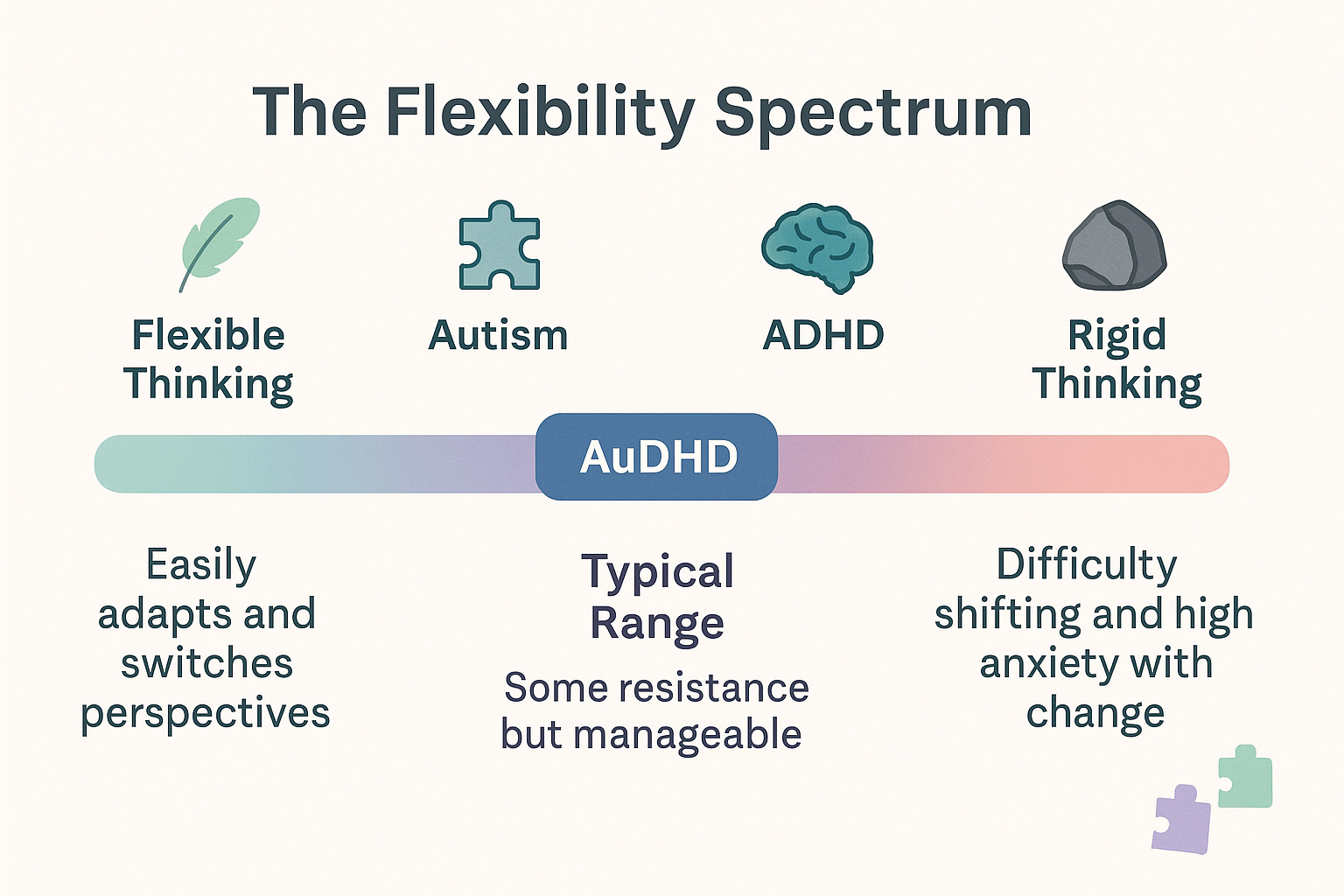
Cognitive flexibility is our mind’s ability to adapt and shift between thoughts, responses, or perspectives. It’s often described as the mental skill that lets us “switch gears” smoothly – whether that means finding a new solution to a problem or coping with an unexpected change in plans. In contrast, cognitive rigidity refers to difficulty with such shifts – feeling “stuck” in a particular thought pattern or routine. This rigidity might look like resisting last-minute changes, struggling to see alternative solutions, or clinging to specific preferences. While flexibility is an essential life skill for navigating change, rigidity is a common experience for many neurodivergent people, especially those with autism and ADHD.
Importantly, rigidity in thinking is not about being stubborn for its own sake. For neurodivergent minds, sticking to familiar patterns often provides a sense of predictability, structure, and safety in an unpredictable world. In fact, many autistic and ADHD folks describe that having consistency isn’t just comfort – it feels like survival. The predictable routines or rules act as an anchor when sensory input or life stresses become overwhelming. Cognitive rigidity can thus serve as a protective response to chronic stress, sensory overload, social unpredictability, or past negative experiences. Knowing this helps us approach the topic with compassion: what looks like inflexibility from the outside may actually be a coping strategy that the person has developed to feel safe and in control.
That said, struggling with cognitive flexibility can create real challenges. Research in neuroscience and psychology has shown that difficulties in this area are not a personal failing but are rooted in brain-based differences. Let’s explore how autism and ADHD each affect cognitive flexibility – and what it means when they occur together as AuDHD.
Why Do Autistic and ADHD Brains Struggle with Flexibility?
Both autism spectrum disorder (ASD) and attention-deficit/hyperactivity disorder (ADHD) are neurodevelopmental conditions that can affect executive functions – the brain’s self-management skills. Cognitive flexibility is one key executive function, and numerous studies indicate that it is often impaired or reduced in both autistic and ADHD individuals, relative to neurotypical people. In other words, the brains of people with ASD or ADHD may find it inherently harder to shift modes or adjust to new demands. However, the reasons behind this inflexibility can differ between autism and ADHD, and understanding both gives insight into the AuDHD experience.
Autism and Cognitive Rigidity
One of the hallmark traits of autism is a preference for routines and sameness, sometimes described clinically as “restricted and repetitive behaviors” or insistence on sameness. Autistic individuals often thrive on familiar patterns, and abrupt changes can be distressing or disorienting. This behavioral tendency is mirrored in cognitive tests: a comprehensive meta-analysis confirmed that autistic people on average have more difficulty with cognitive flexibility than neurotypical controls. The differences were statistically significant (small to moderate in size) and observed across the lifespan, from childhood into adulthood. Notably, tasks measuring “set-shifting” (like the Wisconsin Card Sorting Test, which requires changing sorting rules) show that autistic participants tend to make more perseverative errors – continuing to apply an old rule even when it no longer works. In plain terms, the autistic brain can get “stuck” on a previous pattern and finds it hard to switch to a new one.
From a neuroscience perspective, these cognitive flexibility challenges in autism have been linked to differences in frontal lobe function. The prefrontal cortex – especially the dorsolateral prefrontal region – is critical for executive functions like flexible thinking and self-control. Brain imaging studies suggest that some autistic individuals show underactivity or less efficient functioning in these frontal brain circuits during tasks that require flexibility. In fact, researchers have identified hypofunction of the prefrontal cortex as a core neural factor underlying cognitive inflexibility in autism. In simpler terms, the brain regions that should “light up” to help a person shift their thinking might be less responsive in autistic brains, making those shifts more effortful.
Beyond the neurology, it helps to remember that autistic cognitive rigidity often serves a purpose. As mentioned, sticking to known routines can shield autistic individuals from sensory overload or social confusion. It’s a way to create order and predictability. However, it can become a double-edged sword: what protects in one context may hinder in another. For example, an adult on the spectrum might have an extremely structured daily routine that helps them manage anxiety and sensory input. But if an unavoidable disruption occurs (say, a sudden change in work schedule or a store closure forcing a detour), that rigidity can lead to overwhelming stress, anxiety, or even meltdown. The same mental wiring that favors routine can make unexpected changes feel like an emergency. Autistic writer Ehsan “Essy” Knopf notes that cognitive rigidity “helps manage chaos by narrowing the options… It gives us a sense of control,” yet it can also become restrictive, limiting one’s ability to explore new experiences or handle change.
ADHD and Cognitive Inflexibility
ADHD is often associated with inattention and impulsivity, but another side of ADHD is its impact on executive functions like organizing, switching tasks, and regulating focus. While people with ADHD can sometimes seem flighty or easily distracted (jumping from one thing to another), they can also experience a form of rigidity – especially when it comes to shifting attention intentionally or adapting to structured changes. In adults with ADHD, research has found that cognitive flexibility is frequently impaired. One empirical study using task-switching paradigms showed that adults with ADHD responded more slowly and inconsistently when they had to switch focus compared to adults without ADHD. In particular, when a task required changing one’s attentional focus or adapting to a new rule, participants with ADHD struggled, indicating a deficit in the flexible deployment of attention.
Interestingly, a 2023 study using network analysis of cognitive tests identified cognitive flexibility as a central deficit in adult ADHD, strongly interconnected with processing speed and mental fluency. In other words, inflexibility in thinking was not an isolated problem – it was linked with how fast and smoothly the ADHD brain could work through information. When an ADHD adult encounters a novel or complex task, difficulties with flexibility can lead to inflexible problem-solving approaches and trouble adapting strategies on the fly. Many with ADHD might recognize this in themselves: for example, hyperfocusing on one approach to a task and getting stuck, or feeling unable to “shift gears” to a different task even when the current one is unproductive (sometimes jokingly called hyperfocus trap).
From a brain chemistry angle, ADHD’s inflexibility ties into the neural circuits involving dopamine and executive control networks. ADHD brains often show differences in the fronto-striatal circuits (connections between the frontal cortex and the striatum) which are important for task switching and impulse control. One large analysis found altered connectivity involving the caudate (a part of the basal ganglia) in ADHD brains – a finding that supports the idea of “communication glitches” in brain regions that manage shifting and control. Additionally, brainwave (EEG/ERP) studies show that people with ADHD have measurable differences in how their brains respond to changing stimuli or rules (for instance, differences in the P300 wave, which reflects attention and updating of working memory). All this reinforces that ADHD-related inflexibility is physiological, not intentional. The result for the person with ADHD is that even if their mind is racing with ideas, harnessing that mental energy into a flexible, structured change can be very challenging.
Finally, ADHD can create a paradoxical experience: sometimes difficulty switching tasks is due not to love of routine, but to difficulty disengaging from a current focus. For example, an ADHD adult might get so absorbed in a project or interest (hyperfocus) that breaking away to attend to something else (even an urgent matter) feels almost impossible. This is a different flavor of rigidity – rooted in the ADHD tendency to have an interest-based nervous system. While autism-related rigidity often centers on needing sameness for comfort, ADHD-related rigidity might center on struggling to transition focus (especially from something stimulating to something mundane). Both can look like inflexibility from the outside.
The “Double Whammy” of AuDHD
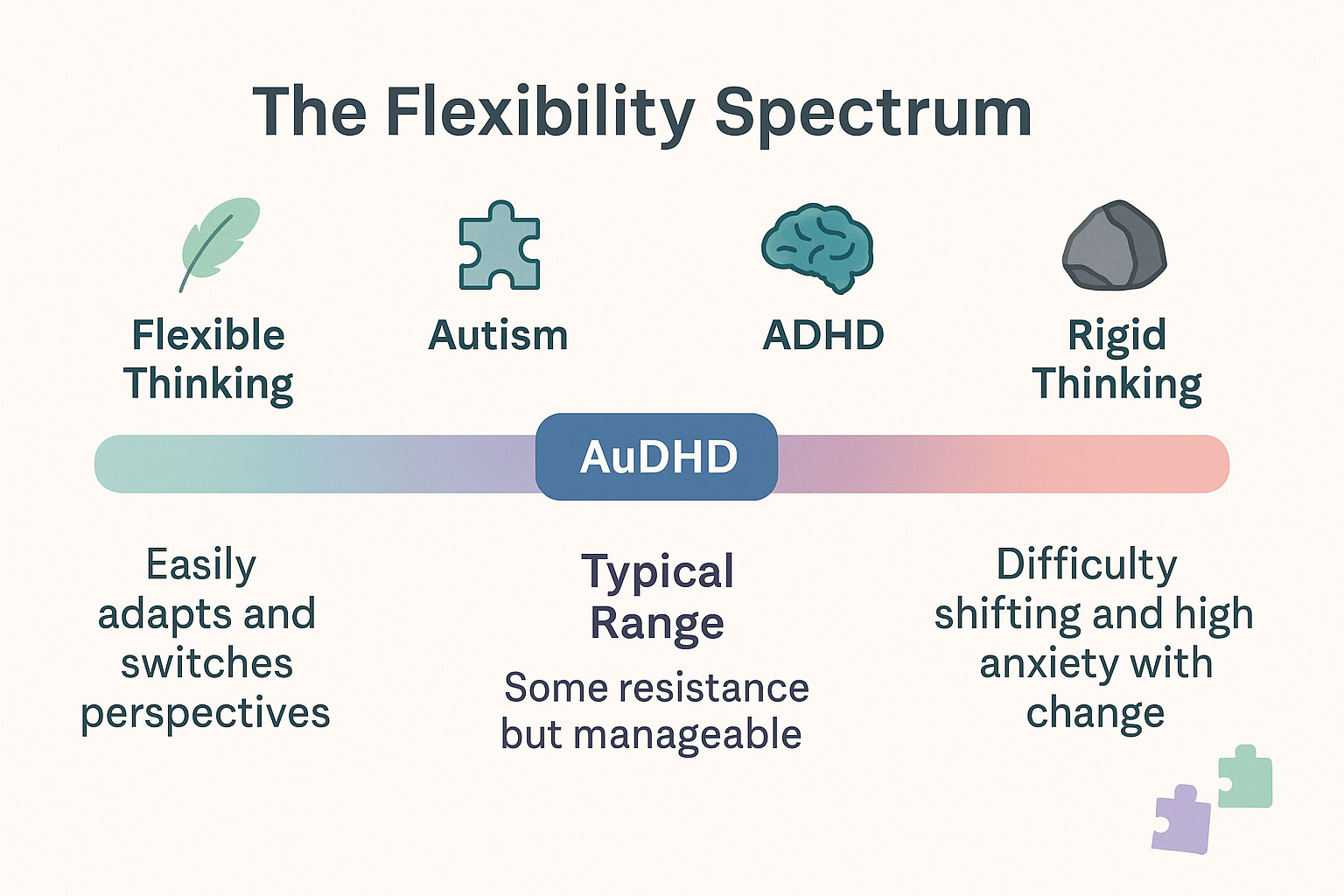
Now, consider what happens when autism and ADHD co-occur in the same person – a profile often informally called AuDHD. It’s not uncommon; studies estimate that between 20% and 50% of people with ADHD also meet criteria for ASD, and vice versa. In the past, clinicians thought you couldn’t have both (DSM-IV rules prevented a dual diagnosis), but now it’s well-recognized that these conditions frequently overlap and intertwine. Adults with AuDHD often describe feeling like they have “autistic wiring and ADHD wiring” both at play. What does that mean for cognitive flexibility? In many cases, it can mean the challenges are compounded.
Research suggests that when ASD and ADHD occur together, executive function difficulties (including cognitive flexibility) tend to be more severe than in either condition alone. For instance, one neuropsychological study looked at children in three groups – those with ADHD only, ASD only, and combined ASD+ADHD – and tested their ability to flexibly shift attention using tasks like Trail Making Tests. The results were striking: kids with co-occurring ASD+ADHD had even greater difficulty switching between tasks than those with only ADHD, evidenced by more errors and slower adaptation. In tasks requiring cognitive set-shifting, the combined group’s performance reflected deficits in cognitive flexibility and attentional control that were particularly prominent when both diagnoses were present. In plainer language: having both conditions often means you’re carrying both the autism tendency to get stuck in set patterns and the ADHD executive function weaknesses. The two don’t cancel each other out – if anything, they can amplify the challenge.
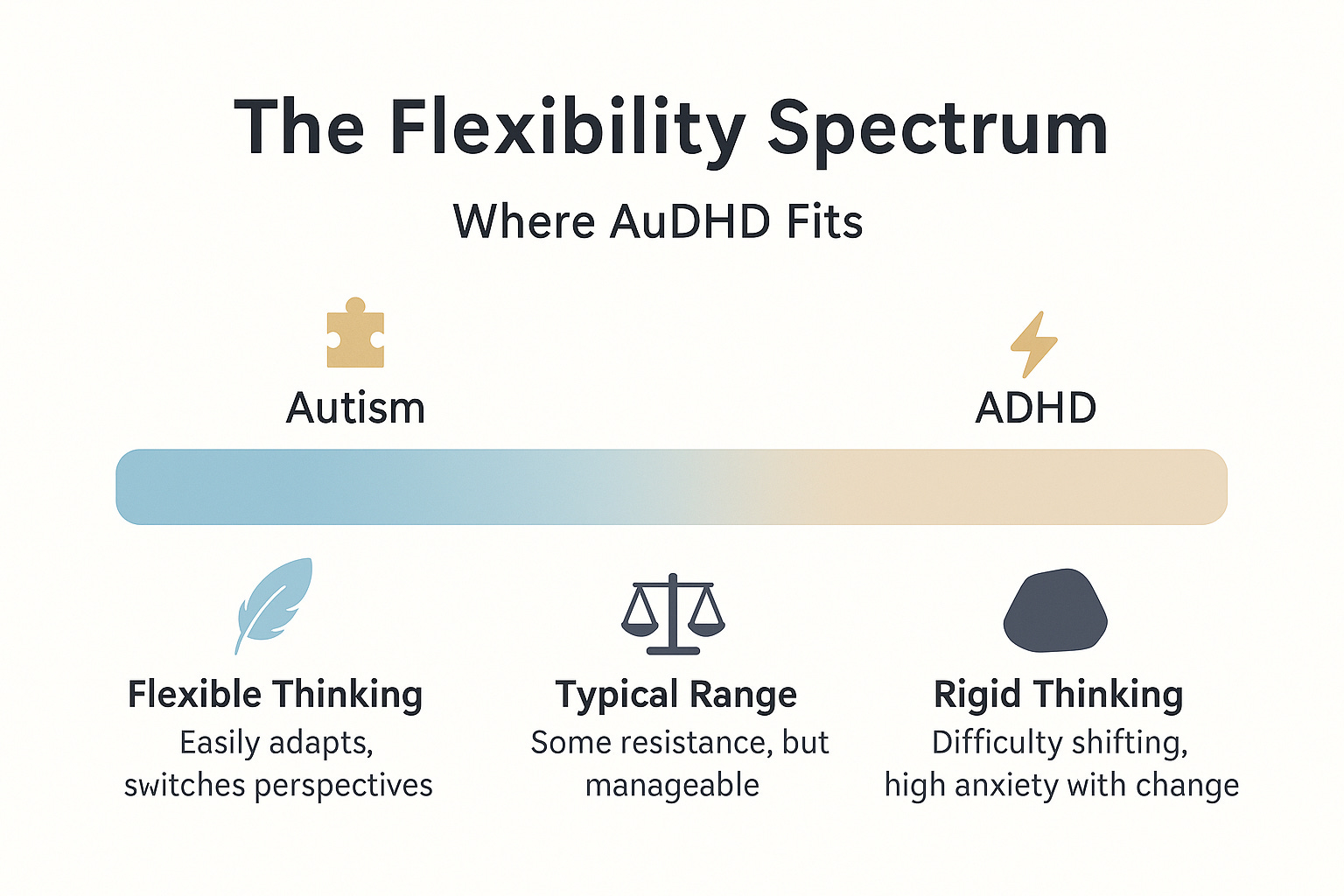
From a brain perspective, individuals with AuDHD show unique patterns. Neuroimaging and EEG studies hint that co-occurrence is not just a simple overlap but has its own “signature.” For example, an EEG study found that a co-occurring ASD+ADHD group had distinct brainwave differences (like more pronounced delays in certain signals) compared to either condition alone, indicating extra strain on the brain’s attention-switching systems. This aligns with everyday observations: an AuDHD brain might, for example, crave novelty (ADHD) but also fear change (autism) – leading to an internal tug-of-war. One part of the mind is pulling toward stimulation and new ideas, while another part desperately holds onto familiar routines for stability. This can be exhausting. Adults with AuDHD often report high levels of mental fatigue from constantly trying to self-regulate and adapt in a world that’s throwing curveballs.
To illustrate, imagine an AuDHD adult at work: they might jump into a new project with enthusiasm (ADHD’s impulsivity and curiosity), but if the project’s parameters shift mid-stream or if a meeting time changes, the autistic rigidity hits, and they feel a surge of anxiety or anger at the unexpected change. Or consider problem-solving: they might generate lots of ideas (thanks to ADHD creativity), but also get fixated on one “right” way of doing it (thanks to autistic black-and-white thinking), making it hard to actually switch strategies. The combination can also affect emotional flexibility – e.g., quickly shifting from calm to frustrated when routines are disrupted, and struggling to shift back out of that emotional state. Knowing that these reactions have a basis in neurodivergent brain function can be validating for AuDHD individuals: you’re not “just being difficult” – your brain truly finds changes and shifts more difficult to process.
Everyday Challenges: Rigidity in Action
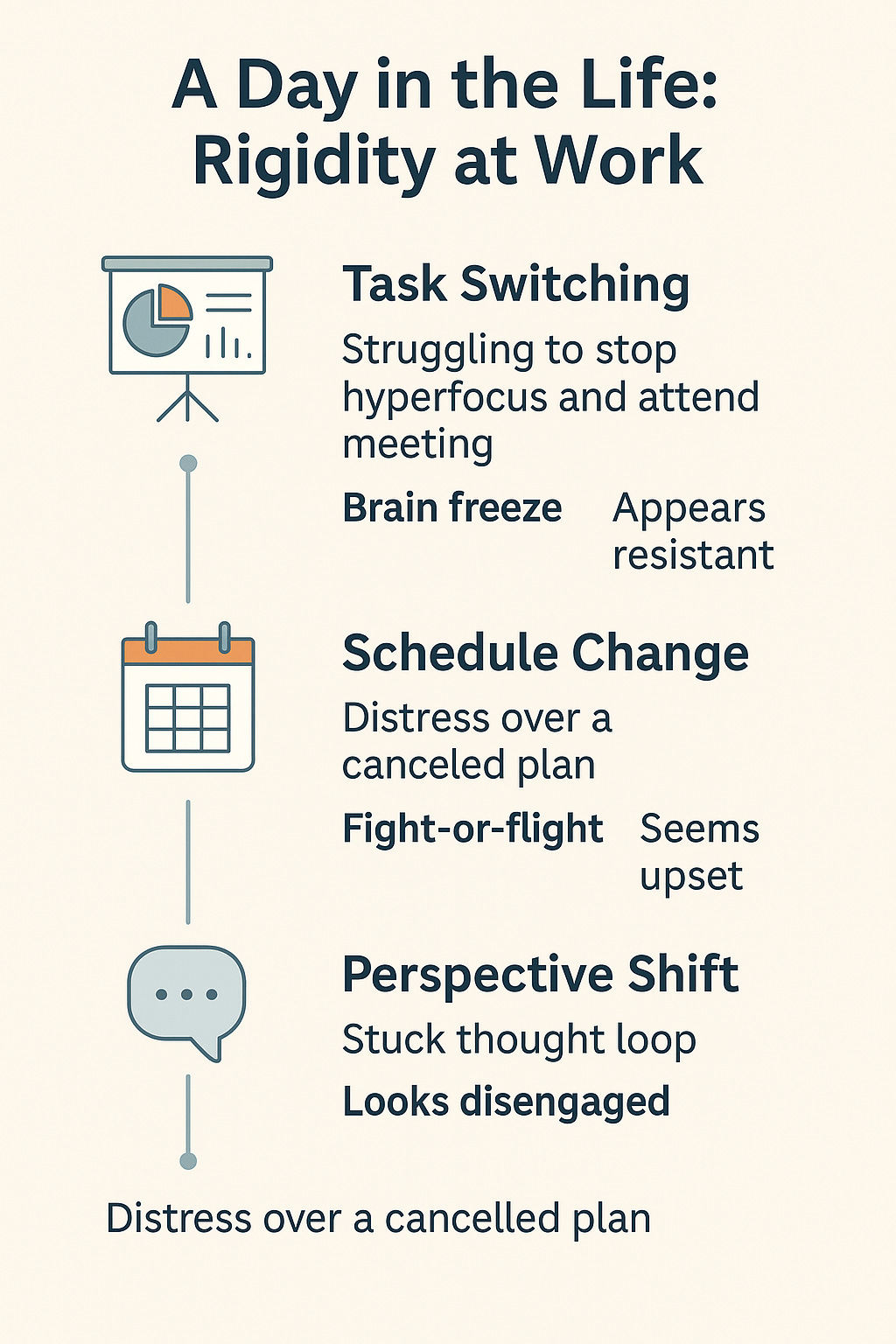
Understanding the theory and science is important, but what does cognitive inflexibility look like in the daily life of an adult with AuDHD? Here are some common real-life challenges that stem from rigidity in thinking or difficulty with flexibility:
Sudden Schedule Changes: Many adults with AuDHD meticulously plan their days to manage energy and anxiety. An abrupt change – like a meeting moved to a different time or a friend cancelling plans last minute – can be extremely upsetting. Rather than “just go with the flow,” the individual might feel a wave of panic, anger, or shutdown. Their mind struggles to reconfigure the day’s script, and this can result in visible distress. Peers might be puzzled why a small change caused a big reaction. But remember, the internal experience is one of losing a predictable anchor. (Research confirms that such disruptions can hit autistic people particularly hard, as shifting gears requires much more mental effort than it does for neurotypicals.)
Transitioning Between Tasks: Stopping one activity and starting another can be a major hurdle. For example, an AuDHD person might know they need to wrap up browsing the internet and begin an important work task, but their brain feels stuck in the current mode. This is more than procrastination – it’s a form of cognitive “gear stick” problem. They may end up hyperfocusing on the current activity far longer than intended, or conversely, feel scattered and unable to initiate the next task at all. ADHD-related executive function issues (like activation and task-switching difficulties) play a role here. The result can be missed deadlines or working late hours to compensate for slow switching. Day-to-day, this rigidity in shifting focus can seriously impair time management and productivity.
Rigid Routines and Rituals: Having set daily routines or particular ways of doing things is common in autism. In an adult’s life, this might manifest as needing to follow a specific morning sequence (wake up, exercise, coffee at a certain spot, start work at 9:00 sharp) or using particular routes for commuting. These routines provide comfort. But if something interferes – e.g., the coffee machine breaks or the usual route is closed – it can feel catastrophic. The person might become irritable, anxious, or unable to function optimally the rest of the day. Peers might notice this as an “overreaction” to a trivial problem, but for the neurodivergent brain, these routines are important self-regulation tools. Breaking them unexpectedly can dysregulate the person’s mood or focus for hours.
Inflexible Problem-Solving: Rigidity isn’t just about schedules; it can also affect thinking patterns and problem-solving. An adult with AuDHD might approach a problem (at work or home) with a certain solution in mind and then struggle to consider alternative approaches – even when the first approach isn’t working. This can look like “beating a dead horse” with one strategy, or insisting on a method that others find impractical. For instance, they might stick to a familiar software tool to complete a task even if a new tool would be more efficient, simply because learning the new one feels overwhelming. This kind of stuck thinking is a direct result of reduced cognitive flexibility: the mental cost of switching to a new strategy is high, so they keep applying what they know. Studies indicate that such inflexible problem-solving is a known outcome of cognitive flexibility deficits in ADHD. Over time, it can lead to frustration (“Why can’t I figure this out?”) and lower self-confidence.
Social Interactions and Communication: Cognitive rigidity can also appear in how someone communicates or relates to others. For example, rigid thinking may cause an AuDHD adult to interpret things in black-and-white terms. They might struggle with gray areas or with adjusting their communication style in different contexts. In a conversation, they might stick intensely to a preferred topic (an autistic trait) or have trouble shifting when the topic changes. They might also hold very firm opinions and find it difficult to consider others’ perspectives in the moment. This isn’t because they don’t care about the other person’s view, but because their brain has trouble pivoting perspective quickly. Such rigidity can sometimes lead to misunderstandings or conflicts – e.g., being perceived as argumentative or uncooperative. Peers and colleagues might need to recognize that the more pressure put on an AuDHD person to “just be flexible” in the heat of the moment, the more their brain may seize up. It helps if others give them a little time and space to process changes or new ideas rather than demanding an immediate adaptation.
It’s clear that these challenges can impact many aspects of life: work, relationships, daily living, and emotional well-being. Research supports this, noting that executive function deficits like cognitive inflexibility can significantly affect daily decision-making, interpersonal functioning, and long-term goal achievement. The strain of constantly struggling to adapt can contribute to anxiety or burnout. It can also erode self-esteem, especially if the person has been repeatedly told they are “overreacting” or “too rigid” when they are truly doing their best with the neurocognitive resources they have.
For peers or coworkers: try to remember that an AuDHD individual’s rigidity is not intended to be difficult. It’s how their brain is wired. Just as a color-blind person isn’t “choosing” not to see red, a neurodivergent person isn’t choosing the distress they feel when flexibility is required of them. Keeping this empathy in mind lays the foundation for the supportive strategies we’ll discuss next.
Tips and Strategies for Building Flexibility
While cognitive rigidity can’t be magically “cured” (and again, it exists for understandable reasons), adults with AuDHD can gradually build more flexibility and coping skills – and their peers can adjust their own approaches to reduce unnecessary stress. Here are some evidence-based and practice-proven strategies:
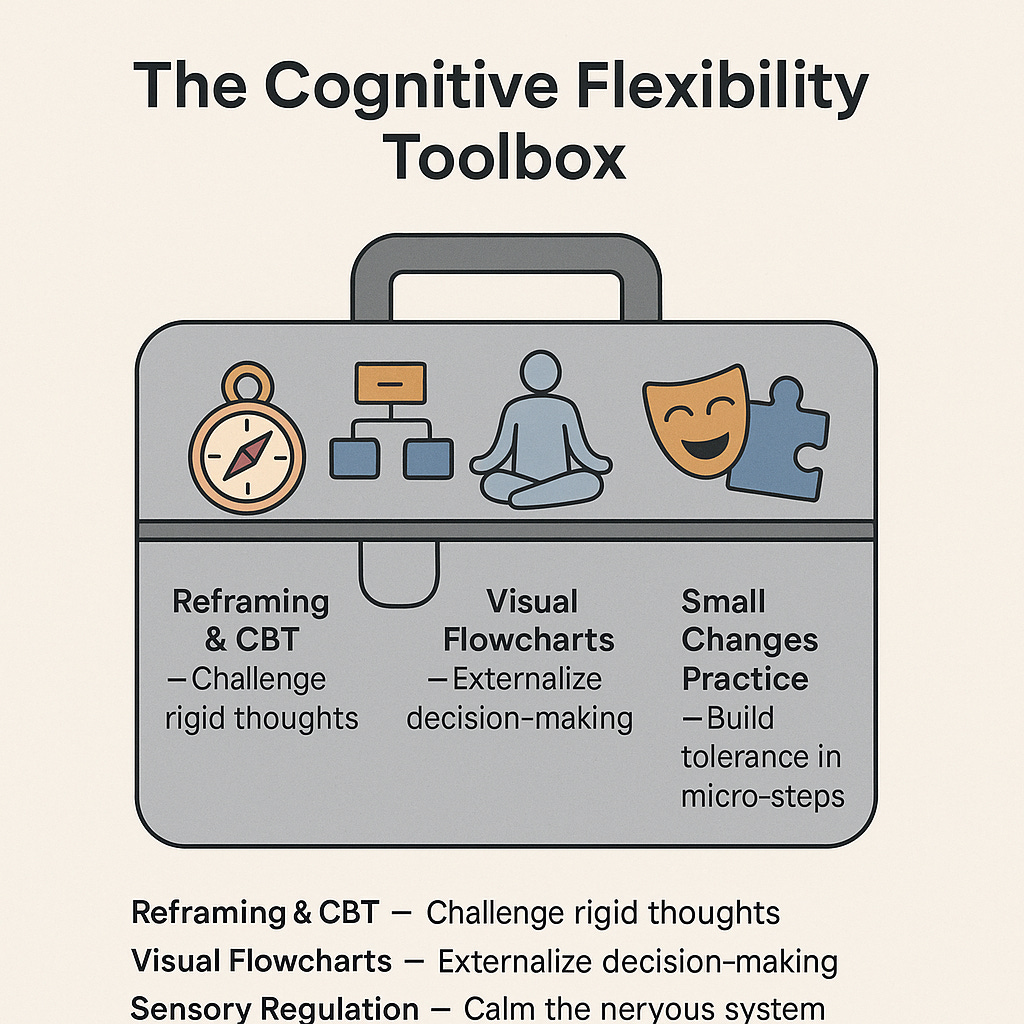
Start Small with Gentle Changes: Don’t force big sudden changes to “train” flexibility – that often backfires by spiking anxiety. Instead, practice tiny deviations from routine in low-stress contexts. For example, choose a familiar café for your usual Saturday coffee but order something slightly different than your go-to drink. Or rearrange the order of one or two minor morning tasks. These small experiments gently nudge the brain to handle change, without overwhelming it. Each successful small change can build confidence that “different” doesn’t always equal “bad.”
Plan for Transitions and Recovery: Knowing that switching tasks or environments is taxing, build transition rituals or buffers into your schedule. If you have to shift from Work Mode to Home Mode, maybe take a 15-minute walk or a shower as a “reset” between the two. If you’re going to try something new (even something fun, like attending a social event), plan some recovery time afterward – quiet time alone, using noise-cancelling headphones, or any soothing activity that helps you recharge. Simply having a plan for after the change can reassure your brain that it will get relief soon, making it easier to tolerate the change itself.
Use External Supports for Executive Function: Offload some of the mental load of task-switching to external tools. This can include timers and alarms that give you a heads-up when it’s almost time to change tasks (e.g., a 5-minute warning before a meeting starts, so you can begin wrapping up what you’re doing). Visual schedules or daily planners can help make upcoming transitions more concrete and expected. Some adults with ADHD/ASD like to use checklists that include “closing” routines for tasks – e.g., steps to properly stop one task and set up for the next. This adds structure to a transition. Additionally, consider apps that gamify task switching or focus (there are apps that play a sound or give a small reward when you switch tasks on schedule). These supports act like “training wheels” for cognitive flexibility, reducing the pressure on your brain to do it all internally.
Cognitive Exercises and Therapy: Certain therapies specifically target flexible thinking. For example, Cognitive-Behavioral Therapy (CBT) in adult ADHD has been shown to improve not just ADHD symptoms but related executive skills. CBT often teaches skills like reframing thoughts (“Maybe this change in plan could lead to something positive” instead of catastrophic predictions) and gradually exposes individuals to feared situations (like handling unpredictability) in a controlled way. Dialectical Behavior Therapy (DBT), though originally for emotional regulation, includes techniques for tolerating distress and accepting change that many AuDHD adults find helpful. Executive function coaching is another option – a coach can work with you to create personalized strategies for task management and mental flexibility. On a more experimental front, researchers are even exploring brain-training exercises and neurofeedback to enhance cognitive flexibility. Early evidence suggests that with practice, the brain’s attention networks can be strengthened – one study noted improvements in attention and flexibility in adults with ADHD after targeted cognitive training. While more research is needed, it’s encouraging that the brain can learn new tricks to some extent, even in adulthood.
Mindfulness and Relaxation Techniques: When faced with an unexpected change or the need to shift gears, the fight-or-flight instinct often kicks in for neurodivergent folks. Techniques from mindfulness can help calm the immediate panic and create a mental “pause” to pivot more smoothly. Simple practices like deep breathing, grounding exercises, or brief meditation can be effective. Even something as basic as the 4-7-8 breathing technique (inhale for 4 seconds, hold 7, exhale 8) can slow your heart rate and clear the mental fog of anxiety. Mindfulness meditation over time also trains cognitive flexibility by teaching your mind to notice when it wanders and gently guide it back – essentially practice in shifting attention. These approaches help reduce the stress response that fuels rigidity.
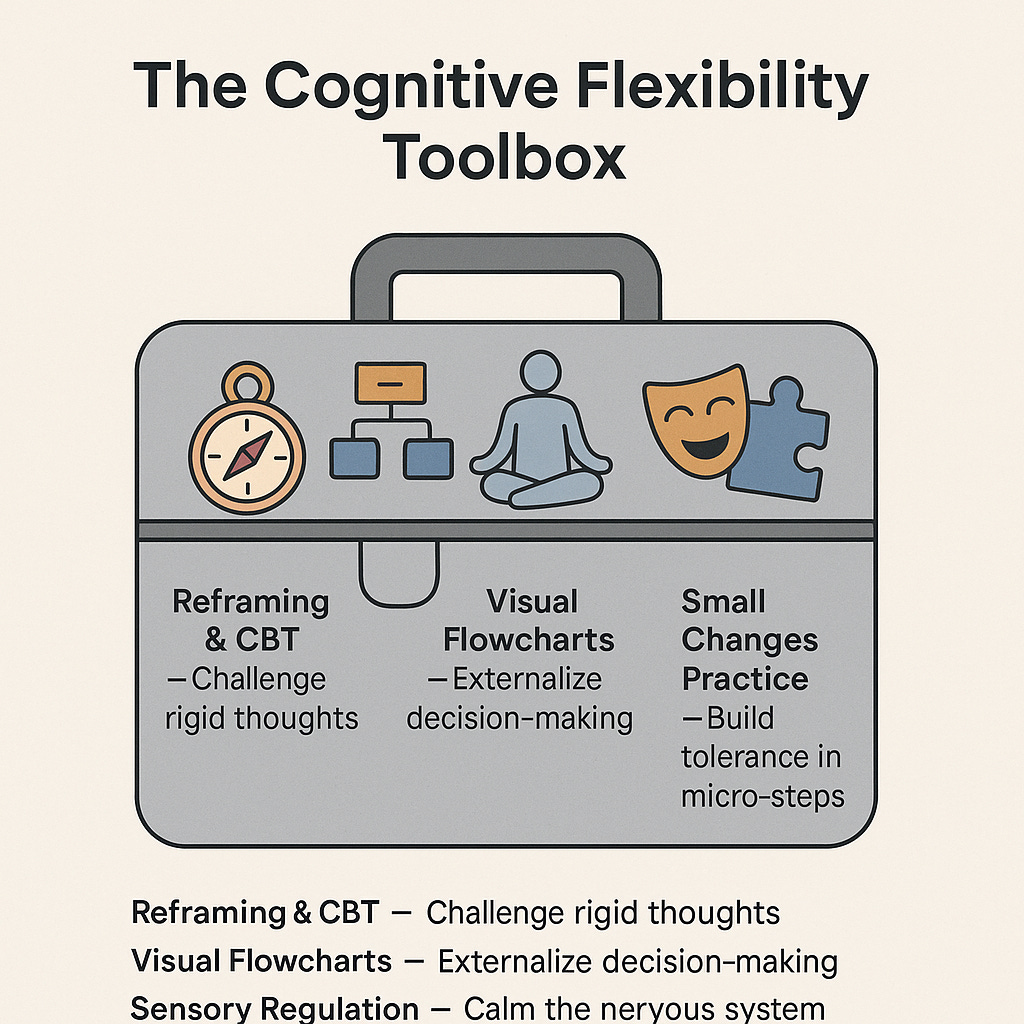
Challenge Catastrophic Thinking (Gently): The rigid mind often leaps to worst-case scenarios when confronted with change (“If my routine is disrupted, the whole day is ruined!”). Part of building flexibility is learning to talk back to these catastrophic thoughts. When you notice black-and-white or all-or-nothing thinking, try to inject a more balanced thought: “This change is unfamiliar, not necessarily dangerous. I might still be okay.”. It can help to reflect on past experiences – were there times a change turned out fine or even well? Collect those examples to remind yourself. This doesn’t mean invalidating your anxiety, but rather preventing your own thoughts from pouring gasoline on the fire. Some people even give their anxious, rigid inner voice a nickname (“Rigid Rachel” or “Panicky Pete”) and respond to it with reassurance rather than buying into its every warning.
Build on Special Interests and Strengths: Both autism and ADHD often come with special interests or hyperfocus abilities. These can sometimes be leveraged to practice flexibility in a comfortable context. For example, if you’re passionate about cooking (and maybe usually stick to the same recipes), challenge yourself to improvise a new dish using the same ingredients – a low-stakes way to be flexible. If you love a certain video game, try playing it in a new mode or strategy; the game provides structure, but you’re varying your approach. Using interests as a “sandbox” for flexibility can make the practice more enjoyable and meaningful. It’s like stretching your flexible thinking muscles during an activity you want to do, so that it feels less like a threat.
Communicate Your Needs to Others: You don’t have to tackle flexibility challenges alone – and certainly not silently. It’s important to let the people around you know about your cognitive rigidity and what it means. Explain to trusted friends, family, or colleagues that when plans change or when you seem stuck, it’s not stubbornness or lack of willingness – it’s how your brain works. By communicating this, you set the stage for collaboration. For instance, you might ask a coworker: “If possible, can you give me a day’s notice before changing our meeting time? I function much better with advance warning.” Most people are willing to accommodate if they understand the reason. Educating your peers can also reduce the stigma; instead of them interpreting your reactions as personal or negative, they’ll see it as a practical need. As one expert puts it, “When people understand your needs, they’re more likely to accommodate them.” Open dialogue can prevent a lot of frustration on both sides and create an environment where you can gradually flex your wings without feeling misunderstood or judged.
Self-Compassion and Mindset: Perhaps the most important strategy is practicing self-compassion. It’s easy to get down on yourself when you struggle with things that seem easy for others. You might think, “Why am I like this? Other people can handle this change, what’s wrong with me?” It’s crucial to remember you are not broken or lazy for needing structure and predictability. Your brain has developed wise ways to protect itself. Acknowledge that wisdom – and acknowledge that you also deserve the freedom to grow beyond your current comfort zone. Adopting a growth mindset (slowly) can help: you might not be naturally flexible, but you can become more flexible with practice. Celebrate small victories, like “Yesterday I coped with a schedule change and only felt anxious for a little while – that’s progress from last time.” Give yourself credit for every bit of stretching you do. By meeting yourself with understanding rather than harshness, you create a positive feedback loop that makes it easier to try new strategies. Remember, flexibility is a skill, not a character trait, and skills can improve over time.
Supporting a Friend or Colleague with AuDHD
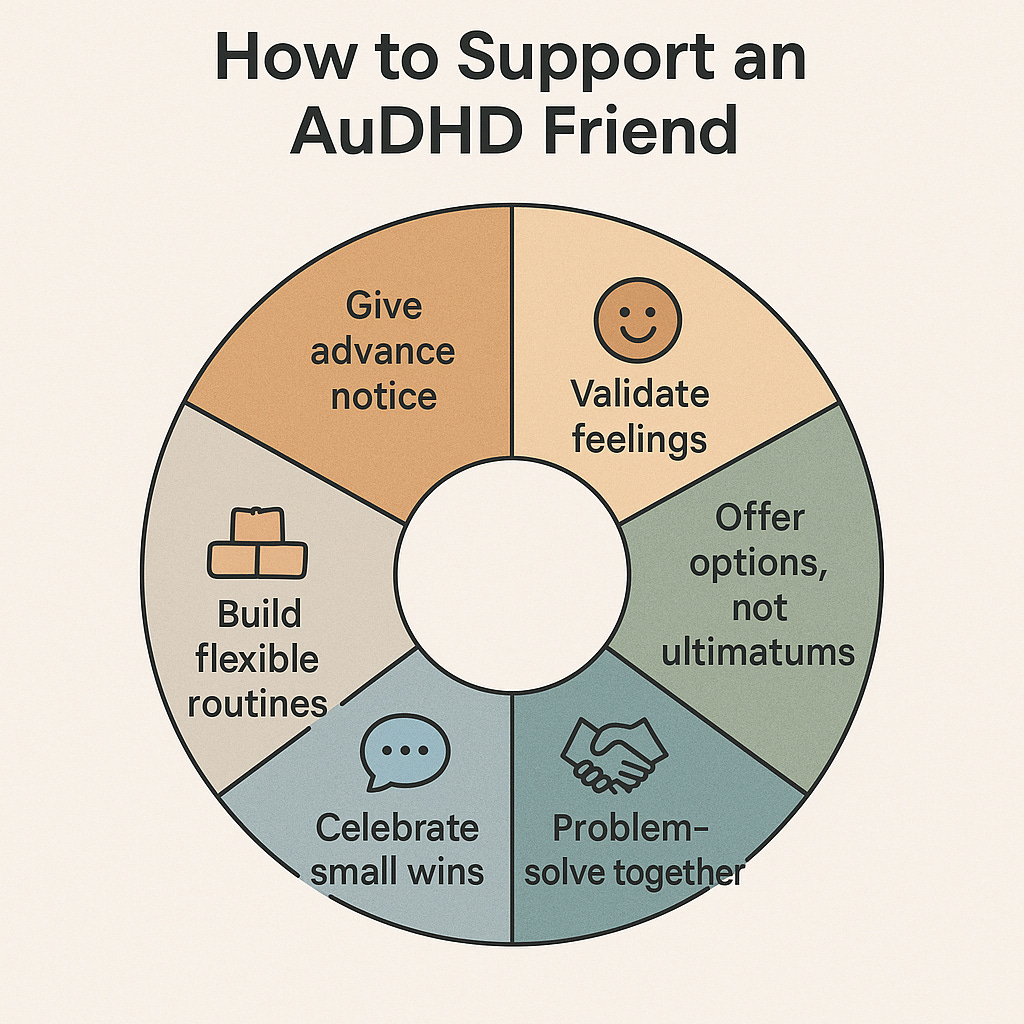
If you’re reading this as a friend, partner, or coworker of an adult with AuDHD, you play a key role in helping them navigate cognitive rigidity. Your understanding and support can make a huge difference in their ability to cope and feel safe. Here are a few tips tailored for peers and loved ones:
Learn and Acknowledge: Educate yourself about what AuDHD is and how cognitive flexibility challenges manifest. Simply acknowledging to the person, “I know that sudden changes are hard for you, and I respect that,” can be validating. It shows you don’t dismiss their struggles as trivial.
Communicate Predictably: Whenever possible, give advance notice of changes. If you’re making plans together, try to firm up details ahead of time. If something does have to change last-minute, take a moment to explain why and acknowledge it might be stressful for them. E.g., “I’m really sorry to throw off our plan; I know you were expecting X, but here’s what happened…” This transparency helps rebuild a sense of predictability.
Offer Choices and Control: One way to ease flexibility challenges is to give the person a sense of control amid change. For example, if a plan can’t go ahead, offer two alternatives and let them choose. “Since the restaurant we wanted is closed, would you prefer to try the Italian place nearby, or reschedule for tomorrow?” Having options (even if Plan A is gone) can engage their cognitive flexibility in a gentle way and make them feel less helpless.
Be Patient During Transitions: If you notice your AuDHD friend is struggling to switch tasks or adjust to something new, be patient. They might need a bit more time or a bit of solitude to process the change. Avoid teasing them for being slow to adjust or pressuring them with “Come on, it’s no big deal.” From their perspective it is a big deal, and pressure will only increase their anxiety. Instead, you could say, “Take your time, no rush,” or ask, “Is there anything you need to feel more comfortable?” Often, just a few extra minutes or a brief comforting activity can help them come around.
Validate Feelings, Don’t Dismiss Them: Even if you can’t fully understand why a certain thing is hard, you can still validate that it’s real. Statements like, “I see this is really upsetting for you,” or “I know it’s hard for you to switch gears so quickly; I’m here for you,” show support. Avoid saying things like “You’re overreacting” or “Everyone deals with changes, just deal with it.” Those comments, while perhaps well-intentioned, minimize the person’s very real neurological experience and can damage trust.
Encourage (but Don’t Force) New Experiences: You can gently encourage your friend to stretch their flexibility by inviting them to try new things – but do so in a no-pressure way. For instance, you might say, “I found a new cafe – would you like to check it out sometime? If not, no worries.” Make it clear that no is an acceptable answer. If they agree, maybe set it for a time when nothing else is stressful, and have a backup plan in case it’s too crowded or overwhelming. The goal is to show that new experiences can be positive, especially with support. If they need to leave early or change the plan, roll with it. Each successful gentle adventure can expand their comfort zone.
Celebrate their Flexibility Successes: If you notice your AuDHD peer handling a change well or trying a new strategy for flexibility, acknowledge it and celebrate it. Positive reinforcement isn’t just for kids – we all like to have our efforts recognized. You might say, “Hey, I noticed you managed it fine when our meeting moved to a different room today. I know that kind of change used to throw you off – that’s awesome progress!” Such remarks can boost their confidence and motivate them to keep building the skill.
Being a supportive ally doesn’t mean coddling or walking on eggshells – it means having empathy and working with the person’s brain rather than against it. Over time, your efforts to accommodate (like providing consistency where you can) combined with their efforts to grow can meet in the middle, resulting in a more balanced flexibility.
Finding Balance and Moving Forward
Cognitive rigidity is often painted as a villain, but as we’ve discussed, it also has a protective function. The goal for an adult with AuDHD is not to eliminate all rigidity – that would be neither possible nor desirable. Instead, the aim is to find a balance: retaining the helpful structure and focused passion that rigidity can provide, while nurturing the ability to bend when bending is needed. Think of it like a tree that needs deep roots and flexible branches; you want stability at the core, and some give at the edges.
Remember that progress may be slow and nonlinear. You might take two steps forward in flexibility (handling one change really well), then one step back (getting thrown by another change). That’s normal. Executive function skills develop over a lifetime, and even neurotypical people have varying tolerance for change. So measure progress against your past self, not against others. Are you handling disruptions better than you did a year ago? If yes, that’s what matters. If not, that’s okay too – it might be a sign to try a new strategy or seek additional support.
It’s also worth noting that as research evolves, new interventions may emerge. Scientists are actively studying ways to support cognitive flexibility, from neuromodulation techniques (like mild brain stimulation in research settings) to specialized cognitive training programs. The fact that a 2025 study used tDCS (transcranial direct current stimulation) on frontal brain regions and saw improved cognitive flexibility in an autism model is an exciting hint at what the future might hold. While such treatments are not mainstream yet, it underscores a hopeful message: the challenges of AuDHD are being recognized, and experts are seeking solutions at multiple levels – behavioral, psychological, and biological.
In the meantime, the combination of self-awareness, practical strategies, and supportive understanding from others can significantly improve an AuDHD person’s quality of life. Many adults with autism and ADHD develop a kind of wisdom about themselves over the years: they know their triggers and comforts, and with that insight, they can architect a life that plays to their strengths while accounting for their difficulties. Cognitive flexibility can slowly increase – sometimes in remarkable ways – when someone feels safe, accepted, and empowered to grow at their own pace.
So, if you are an adult with AuDHD reading this, take heart. You’ve been handling one of the toughest balancing acts there is: a mind that’s pulled in opposite directions by two neurotypes. The rigidity you experience is not a flaw; it’s a facet of who you are, with upsides and downsides. You can honor the part of you that needs structure and nurture the part that wants more spontaneity. With patience and practice, your brain can learn that a little change is not the end of the world, and that you are capable of adapting when it matters. Each small step out of your comfort zone, supported by research-backed strategies and kind people in your life, is a victory.
And if you’re a peer or loved one, know that your efforts to understand and accommodate do make a difference. By creating an environment where flexibility is a shared project (rather than a unilateral demand), you help unlock the best in your AuDHD friend – their creativity, loyalty, unique problem-solving, and yes, even some adventurous spirit.
In conclusion, cognitive flexibility difficulties in AuDHD are very real, but they don’t have to keep a person stuck forever. Like a muscle that can be gradually stretched, the mind can learn to bend bit by bit. It may always prefer the familiar shape, but with support, it can also discover the beauty in new shapes. Rigid thinking can soften without losing identity. With knowledge from research, strategies from lived experience, and compassion from ourselves and others, those of us with AuDHD can navigate change more smoothly – not by abandoning who we are, but by gently expanding it.