
Living with AuDHD: Navigating Planning, Prioritizing, and Organizing

AuDHD refers to the co-occurrence of Autism Spectrum Disorder (ASD) and ADHD in the same person. These overlapping conditions can create a double dose of executive-function challenges. In fact, experts note that many struggles in AuDHD come from shared weaknesses: “planning, prioritizing tasks, and staying organized can be daunting with ADHD or autism”. This means that tasks like mapping out your day, deciding what to do first, or keeping your living space orderly can feel especially overwhelming. For example, a UK autism guide points out a catch-22: “if you struggle to understand the concept of time, how do you plan what you will do over the course of a week?”. It’s no surprise, then, that adults with both ADHD and autism often feel frustrated by simple planning tasks – it’s really the brain’s wiring making it hard, not a lack of effort or intelligence.
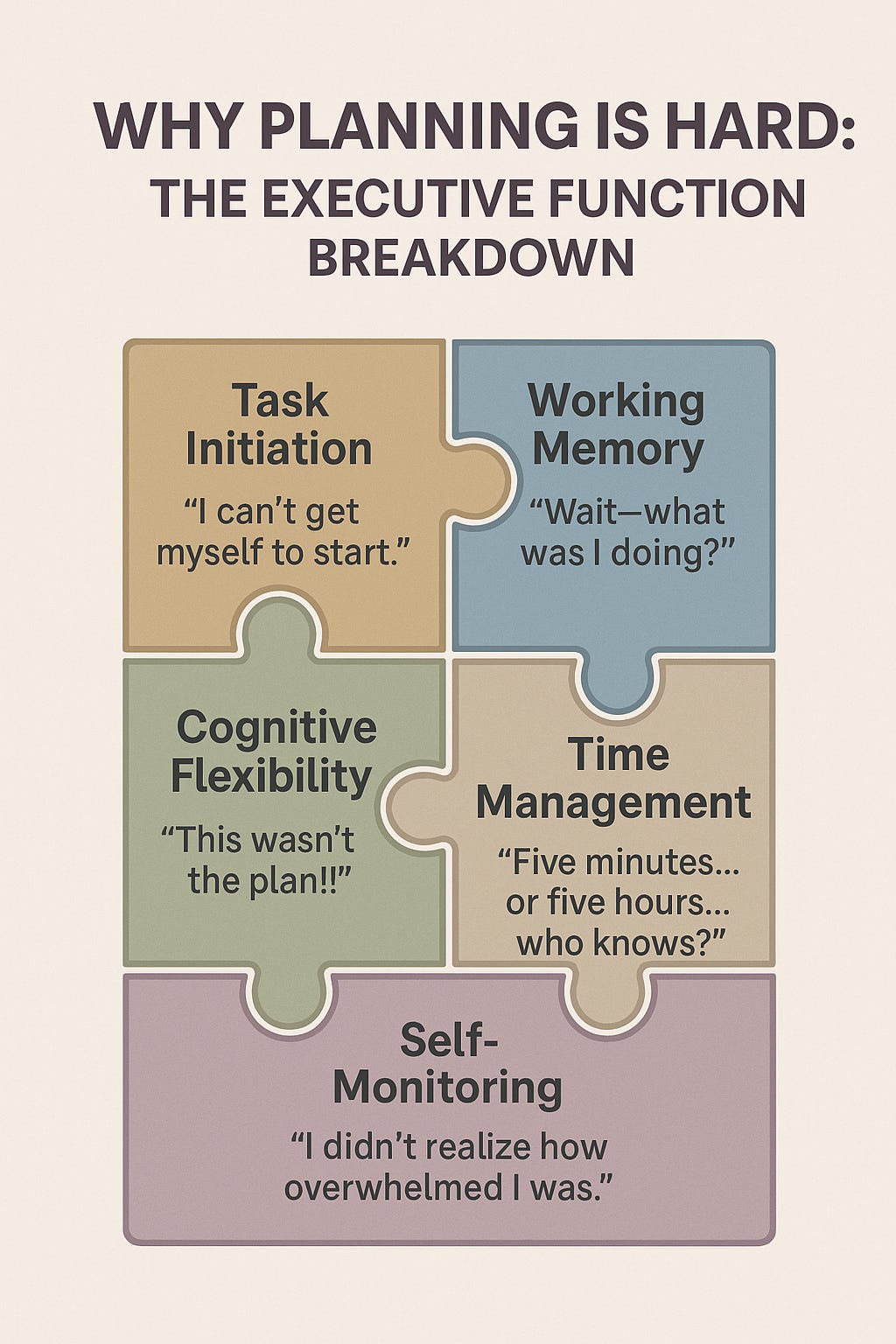
Understanding why AuDHD affects planning and organizing means diving into executive functions – the brain skills that control planning, time management, and organization. Executive functions live in our prefrontal cortex and related networks, and they manage self-directed behavior like making a plan, starting and finishing tasks, and keeping track of details. Research describes executive function as “cognitive skills that allow individuals to self-regulate and perform self-directed behaviors, enabling them to plan, execute ideas, and achieve goals”. In other words, executive functions are our internal manager for daily life. When these manager-skills are weaker or mixed up (as they often are in ADHD and autism), everyday tasks can fall apart.
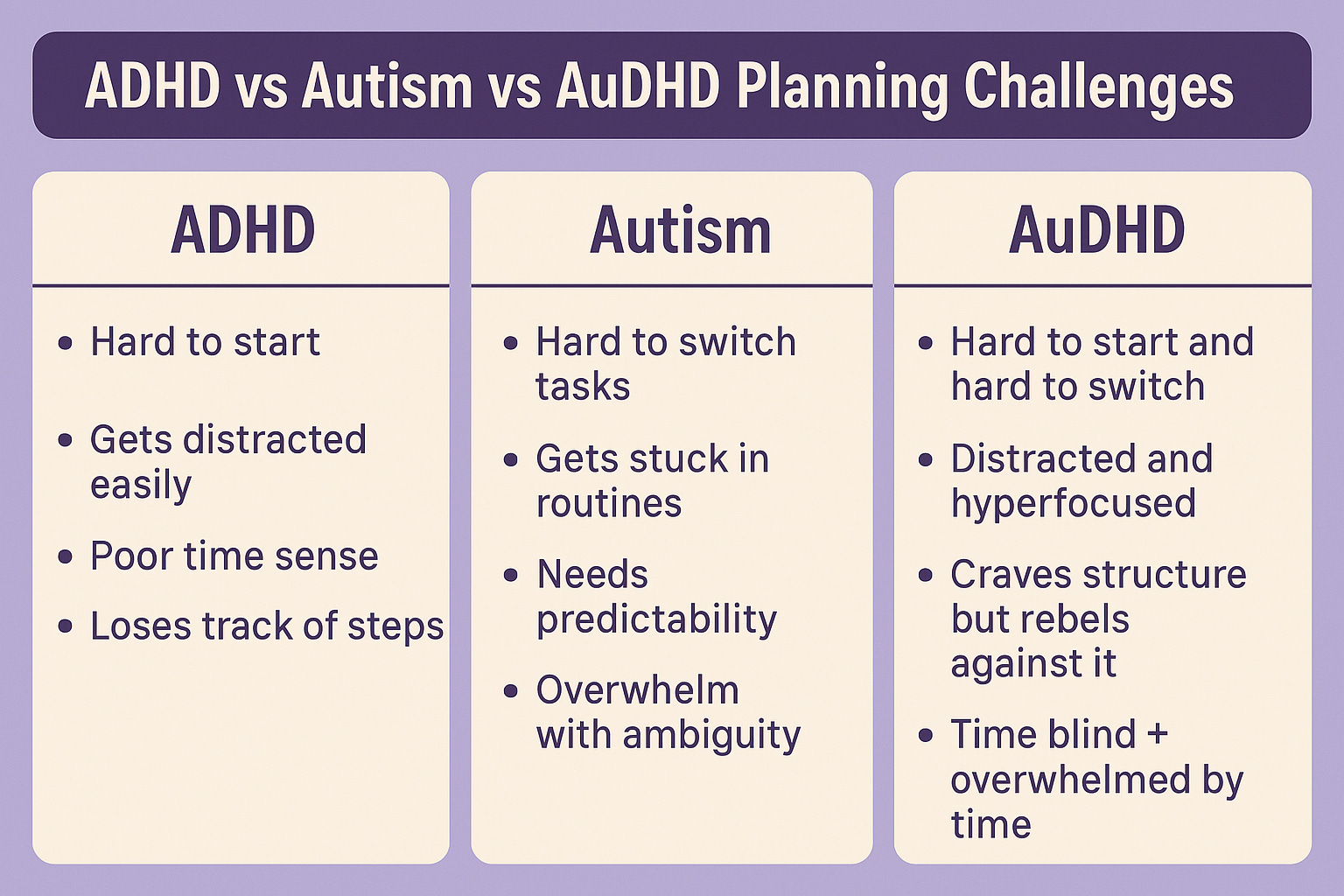
Figure: Executive function deficits in ADHD vs. ASD. ADHD (left) tends to impair inhibition and sustained attention, while ASD (right) often impairs cognitive flexibility. People with both (AuDHD) may experience a combination of these challenges. Individuals with ADHD typically have larger struggles with inhibition and sustained attention, whereas those with autism often have more difficulty with flexible thinking and task-shifting. For example, an ADHD brain might make it very hard to resist impulses or stay focused, while an autistic brain might have trouble switching gears when plans suddenly change. When both ADHD and autism traits combine in AuDHD, these problems can add up. In fact, a recent review found that “individuals with both ADHD and ASD may exhibit worse executive function impairments than those with either condition alone”. In practical terms, that means an adult with AuDHD might struggle even more to plan and organize than someone with only one of these conditions.
Brains with ADHD also show some concrete differences that make planning tough. Brain-imaging studies find that people with ADHD often have a smaller or slower-developing prefrontal cortex – the very area key for organizing, planning, and time management. Scientists have also identified differences in brain networks: for example, the “default mode network” (normally quiet during focused tasks) stays overly active, making it hard to focus Chemically, lower levels of dopamine (a brain chemical for motivation and decision-making) are common in ADHD. All of this means an ADHD brain processes tasks and time differently – for instance, many people with ADHD experience “time blindness”, the feeling that time has sped away without notice. Research links this to brain activity: lower activity in the prefrontal cortex and altered dopamine signaling can literally skew time perception. When you underestimate how long things take or can’t sense time passing, it’s easy to miss deadlines or run late – a classic pitfall for planning.
Autism brings its own twists. Executive dysfunction in autism tends to involve cognitive flexibility: shifting from one task to another, and adapting plans when situations change. Autistic individuals often have trouble persevering through plans if things don’t go exactly as expected. For example, the research notes that autistic brains often show “deficits in all [executive function] domains” and more difficulties with planning and cognitive flexibility than ADHD alone. This can look like becoming stuck on details, feeling anxious if schedules are altered, or being overwhelmed by too many choices.
Together in AuDHD, these factors mean our internal planner (executive function) is trying to work with conflicting signals. We might want to make a neat schedule, but our brain distracts us or gets rigidly focused. We might set an alarm reminder, but still blunder past it. No wonder organizing life feels like a struggle on two fronts.
What This Feels Like: Real-World Examples
Everyday life can highlight how these planning struggles play out. Imagine a morning routine: you intend to shower, dress, eat breakfast, and leave on time. But if time feels strange, you might jump into something else (like scrolling your phone) and suddenly it’s 15 minutes later than you thought. Or you open your email intending to clear urgent messages, but get sidetracked sorting newsletters instead – only to realize you missed an important appointment.
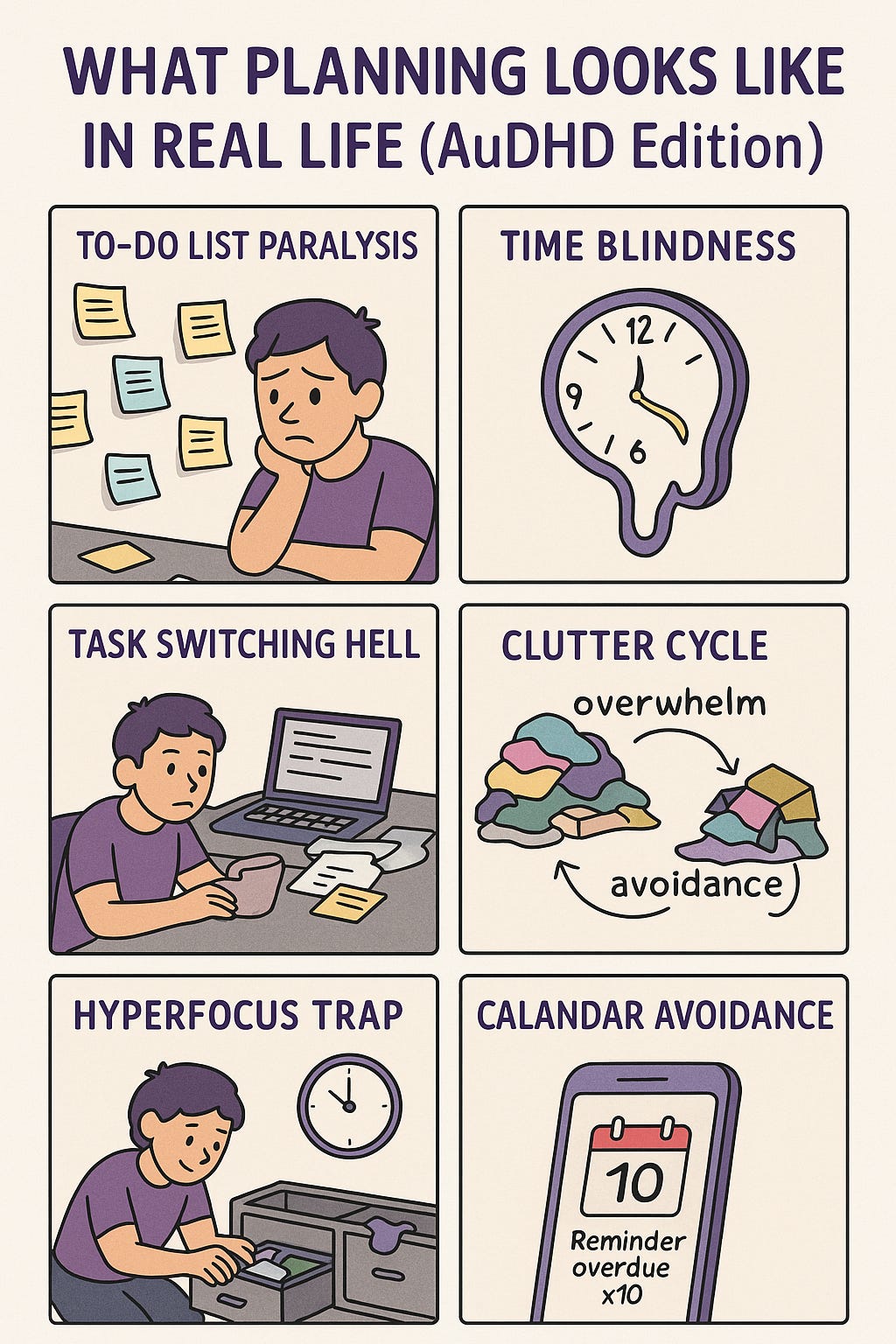
Here are some common scenarios many adults with AuDHD report:
Overwhelm by To-Do Lists: You write a to-do list but it looks like an endless list of abstract tasks, so you delay starting any of them. (Or you keep rewriting the list without crossing anything off.)
Incomplete Projects: You start cleaning one room or beginning a project, then get distracted (perhaps by a new idea or a text message) and leave a trail of half-done tasks. By week’s end, nothing is really finished.
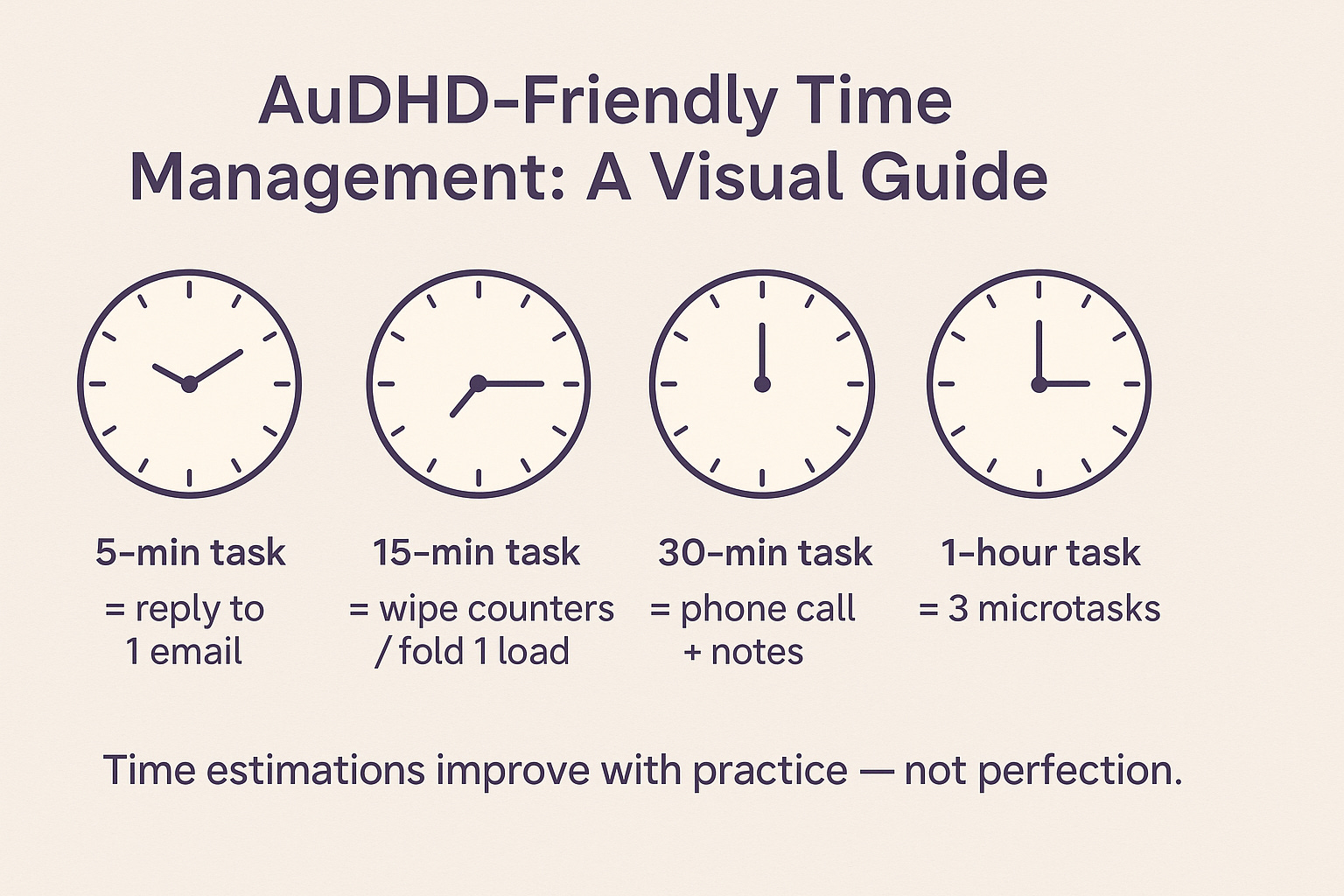
Time Mismatches: You estimate it will take “5 minutes” to pay bills or reply to an email, but it takes an hour (or vice versa). As one guide notes, struggling to understand time makes planning anything hard – so you might miss deadlines because you don’t “feel” how soon they’re approaching.
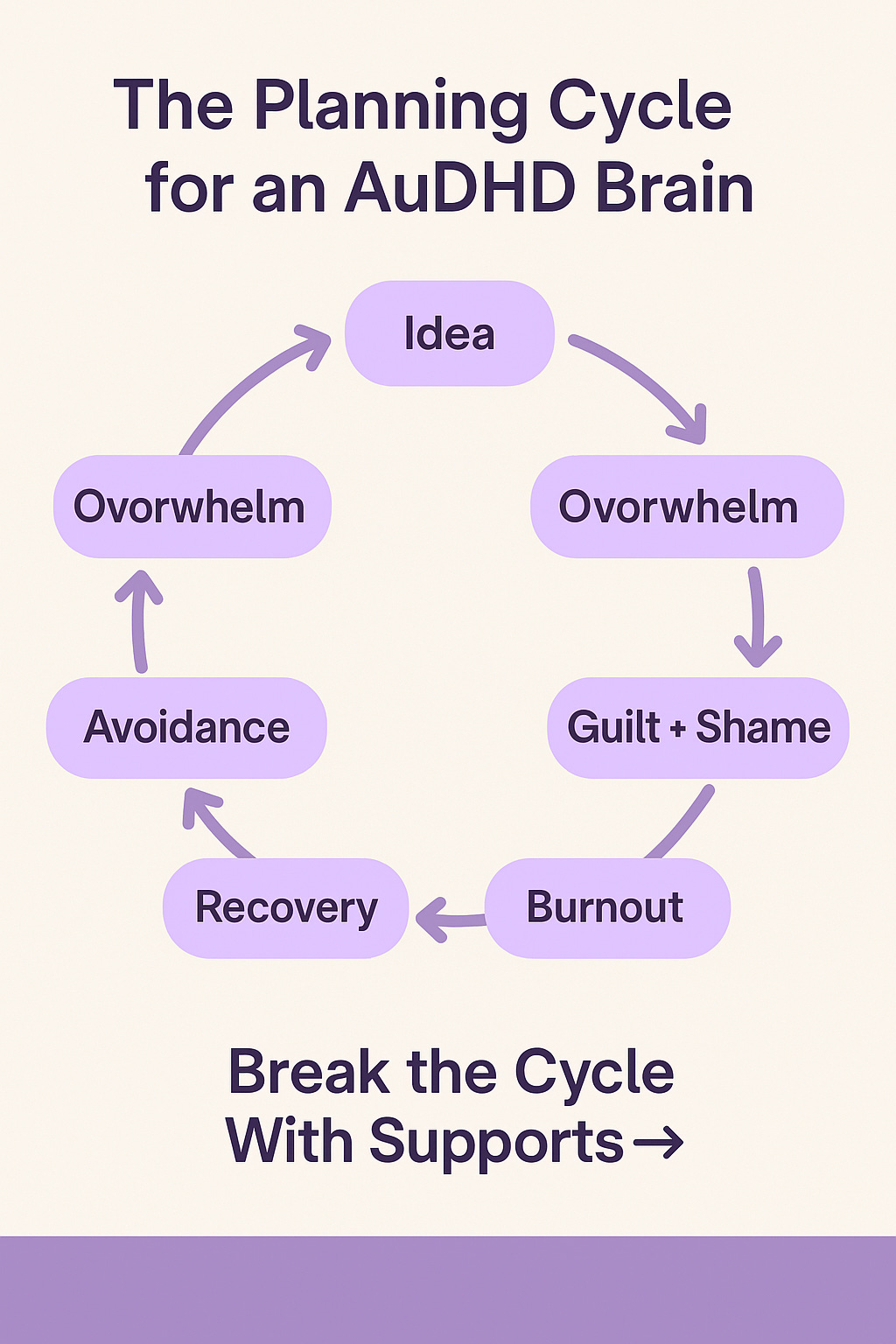
Prioritization Puzzle: Every task feels equally urgent or confusingly unimportant. You might do a quick chore instead of the crucial one (like cleaning dishes before studying for a deadline), simply because it seems easier.
Clutter and Lost Items: Organizing physical spaces can fail – stacks of papers or laundry piles build up because it feels taxing to file things away or set up a system. So keys, bills, or even the next day’s clothes can vanish until panic sets in.
Anxiety and Avoidance: Sometimes simply looking at your calendar or email causes anxiety, so you put it off entirely. Then when the notification finally pops up, it’s a mini-crisis (and your “smoke alarm” metaphorically goes offadd.org).
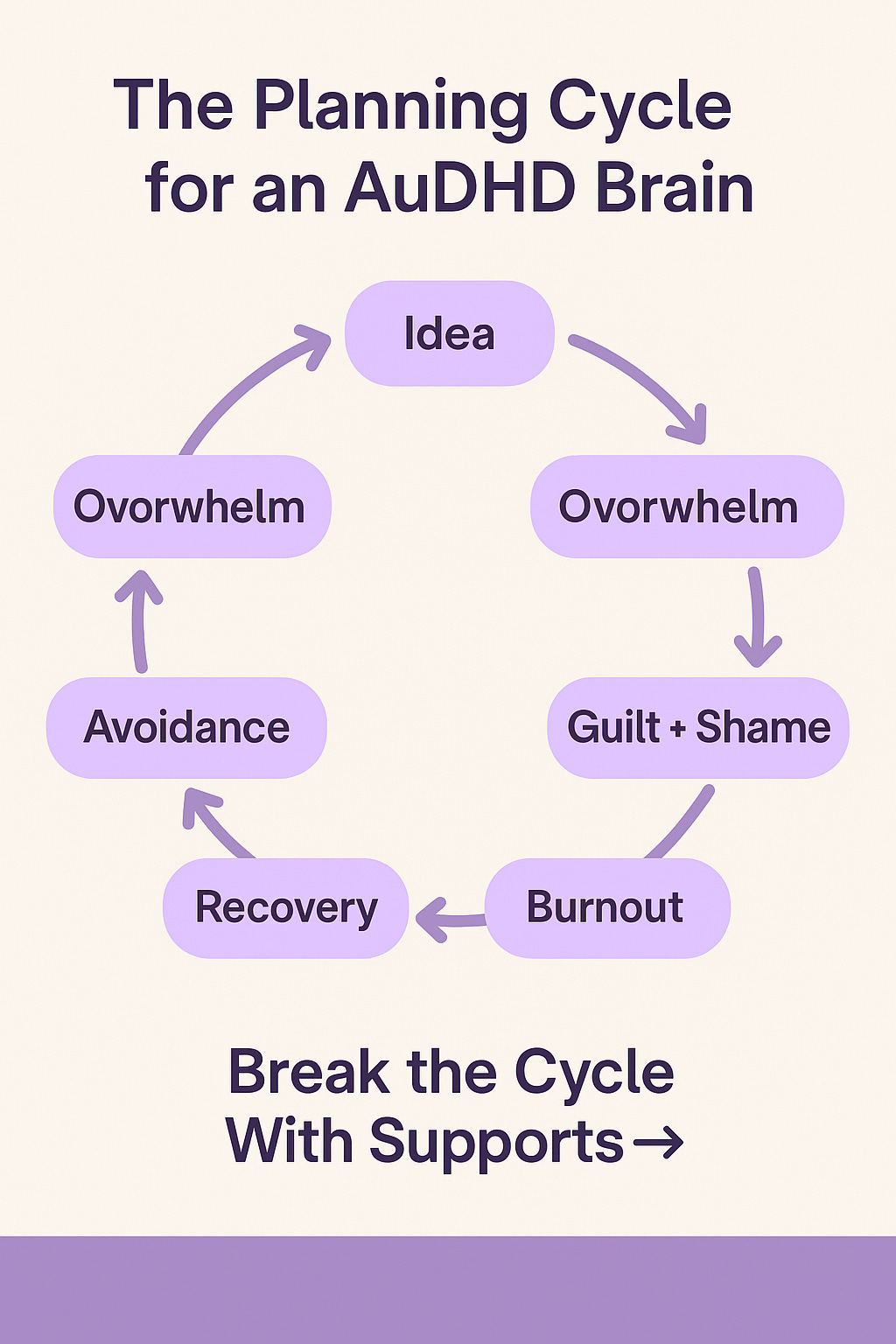
These examples aren’t personal failings – they’re just how executive-function struggles often look in daily life. If this sounds familiar, it’s because research across ADHD and autism shows these patterns again and again. With AuDHD, you might experience any combination of them.
Why It’s Not Just You: Research Insights
Scientists studying ADHD and autism help explain why we struggle with planning. For instance, one review of ADHD found that adults with ADHD continue to show “alterations in…executive functions” – including planning deficits, working memory problems, and trouble with cognitive flexibility. In short, the executive-function challenges don’t go away in adulthood. Another study comparing ADHD vs. autism found that children with autism actually had more severe planning deficits than those with only ADHD In that study, autistic kids “demonstrated deficits in all [executive] domains…with more difficulties…with planning and cognitive flexibility”.
What does neuroscience say? As noted, ADHD brains often show slower development or smaller size in the prefrontal cortex and related areas. Those areas govern planning and decision-making. When they’re under-active, we literally can’t sense time or structure as well as others Autism research also points to differences in brain connectivity and processing – for example, brains of autistic people can be less synchronized in networks that manage planning and social tasks. In sum, these are brain-based challenges, not questions of willpower.
Importantly, having both ADHD and autism traits can amplify difficulties. A 2023 meta-review noted that people with co-occurring ADHD+ASD often performed worse on real-world executive tasks than those with just one diagnosis. It also pointed out key differences: ADHD tends to sap one’s ability to inhibit impulses and sustain focus, while ASD more often hurts flexible thinking and shifting tasks. Combining them means juggling challenges on both fronts.
Tips & Strategies
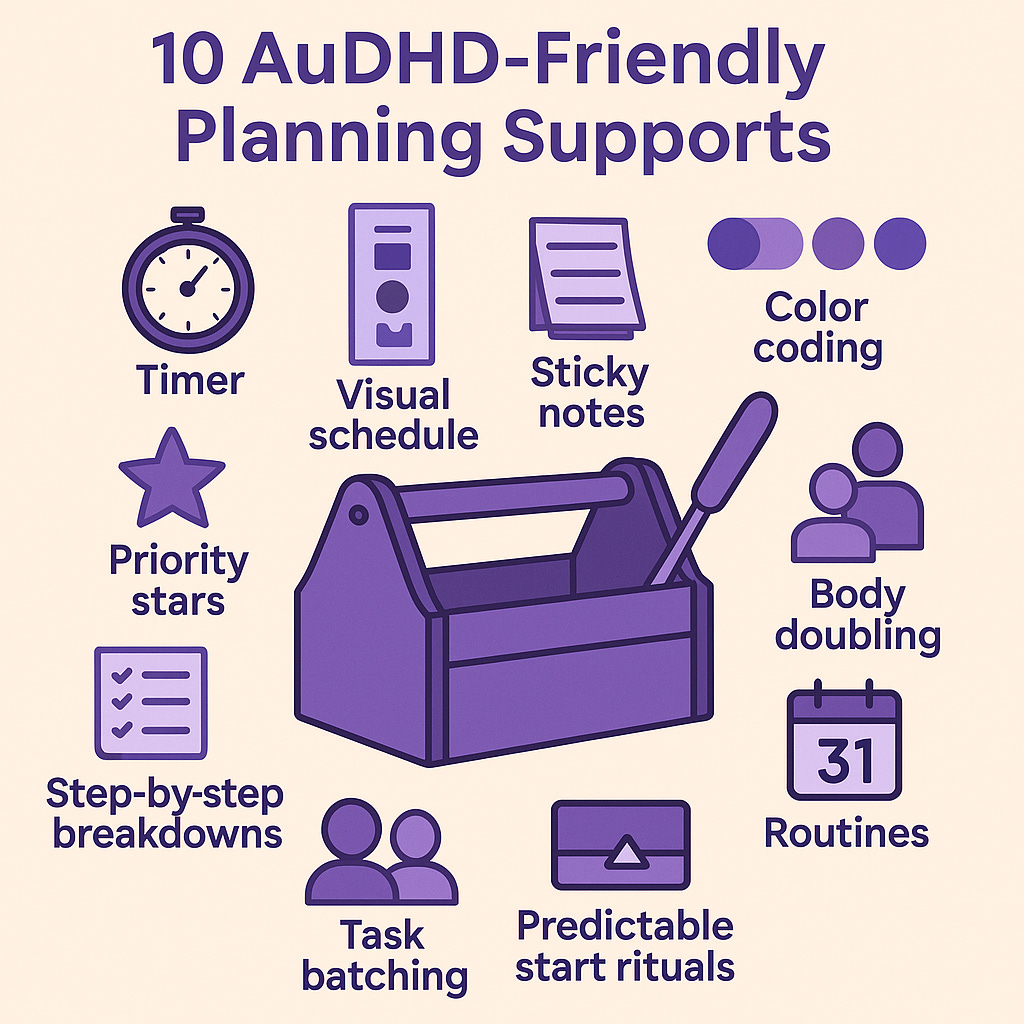
You’ve got AuDHD – so what helps? The good news is there are many tools and tactics that can make planning and organizing more manageable. Below are some evidence-informed strategies (drawn from ADHD and autism expertise) that may help in daily life, at work, and for self-care. Feel free to try a few and see what clicks for you:
Externalize tasks with lists and visuals. Write down everything you need to do (a “brain dump” on paper or an app) so it’s not all in your head. Use calendars or whiteboards with big, clear visuals. Color-code tasks or files by priority (the UK autism guide suggests a red file for urgent tasks, green for pending, blue for low-priority). Seeing things in color and chart form can help your brain grasp what needs doing.
Use reminders and alarms. Set alarms or alerts on your phone/computer for important tasks (paying bills, meetings, taking breaks). Even simple timers (like a kitchen timer or Pomodoro clock) can signal, “Time to switch gears” or “Task complete.” According to autism support advice, phone calendars and text alerts are a discreet way to prompt action.
Break tasks into tiny steps. Big tasks can be paralyzing. Ask yourself: what’s the first next step? Write down the smallest chunks (“Open a new document,” “Locate phone charger,” “Sort these five papers”). This turns abstract plans into concrete actions. For work or school tasks, you might make a step-by-step checklist or pictorial sequence (like pairing a drawing or icon with each step). The goal is to make the starting point crystal clear.
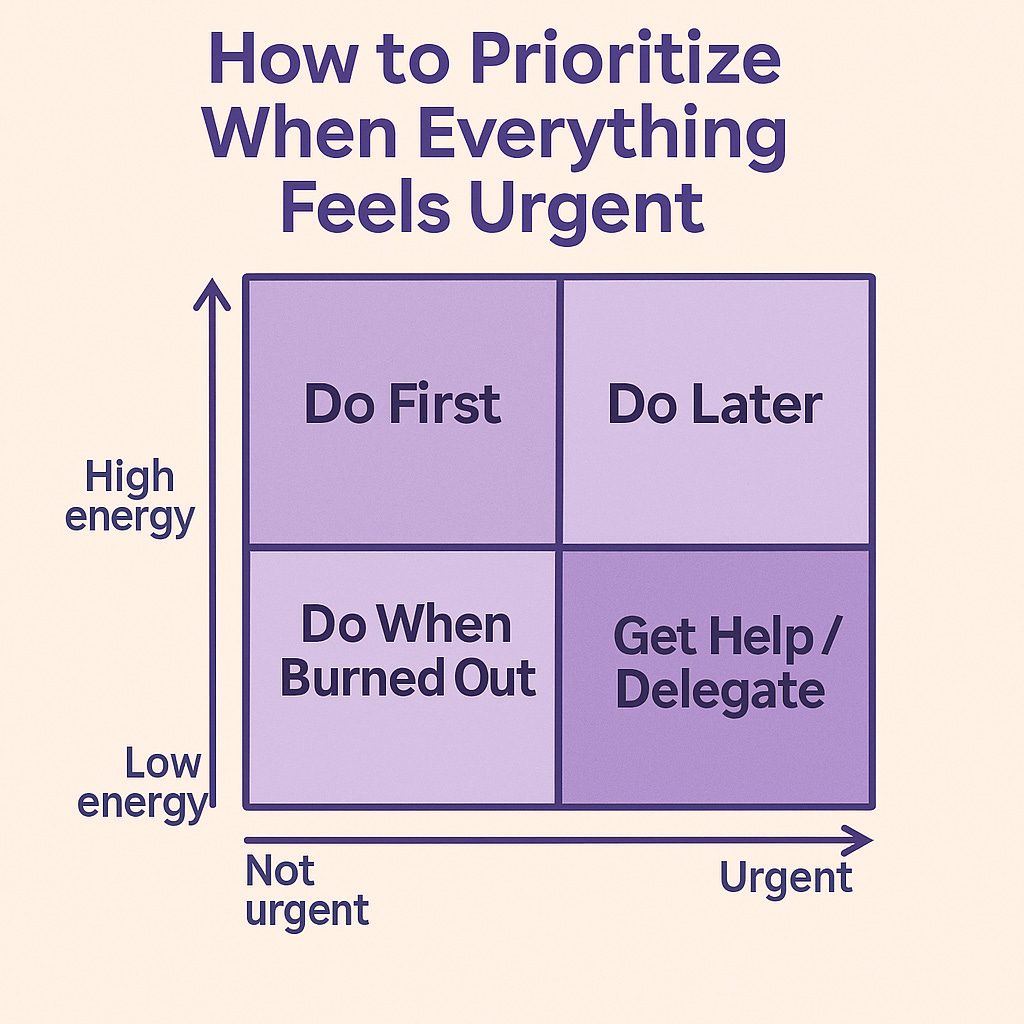
Prioritize deliberately. If everything feels important, use some objective filter: deadlines, importance, or required effort. For example, apply a simple system: one star for high-importance/urgent tasks, two stars for medium, three for low. Do red-star items first. Alternatively, time block your day by assigning fixed hours to tasks.
Schedule with structure. Even if you dislike rigid routines, having at least a loose schedule helps. Write down time slots for tasks or routines (morning/evening rituals, work blocks). Use planners or digital calendars religiously: when a task comes up, immediately assign it a date/time. ADHD coaches often advise building “time blinders” – e.g. laying out clothes the night before a busy day, or setting up a dedicated “bills day” each week
Leverage special interests or rewards. If certain activities energize you (like a hobby or music), try linking them to your tasks. For example, only allow yourself 30 minutes of a favorite show after completing a smaller chore. Or use a motivating playlist as a timer: when the album is over, switch tasks.
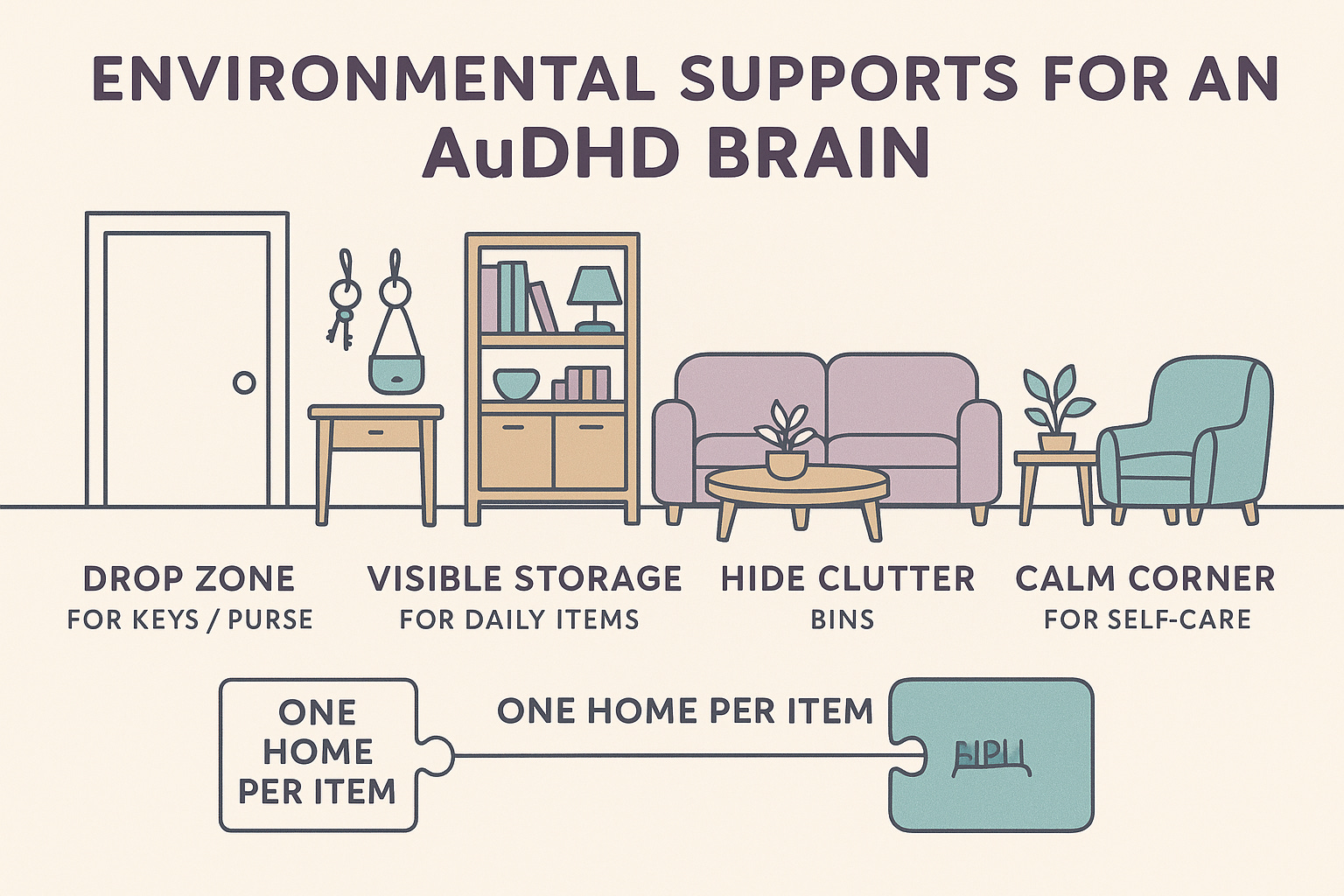
Organize your environment. Keep workspaces and living areas as simple as possible. Use labeled bins, shelves, or “inboxes” for papers and supplies. A consistent place for keys, glasses, or your wallet can save time searching. The UK guidance suggests task boxes or envelope systems for separate projects. A tidy, minimized setup can reduce decision fatigue.
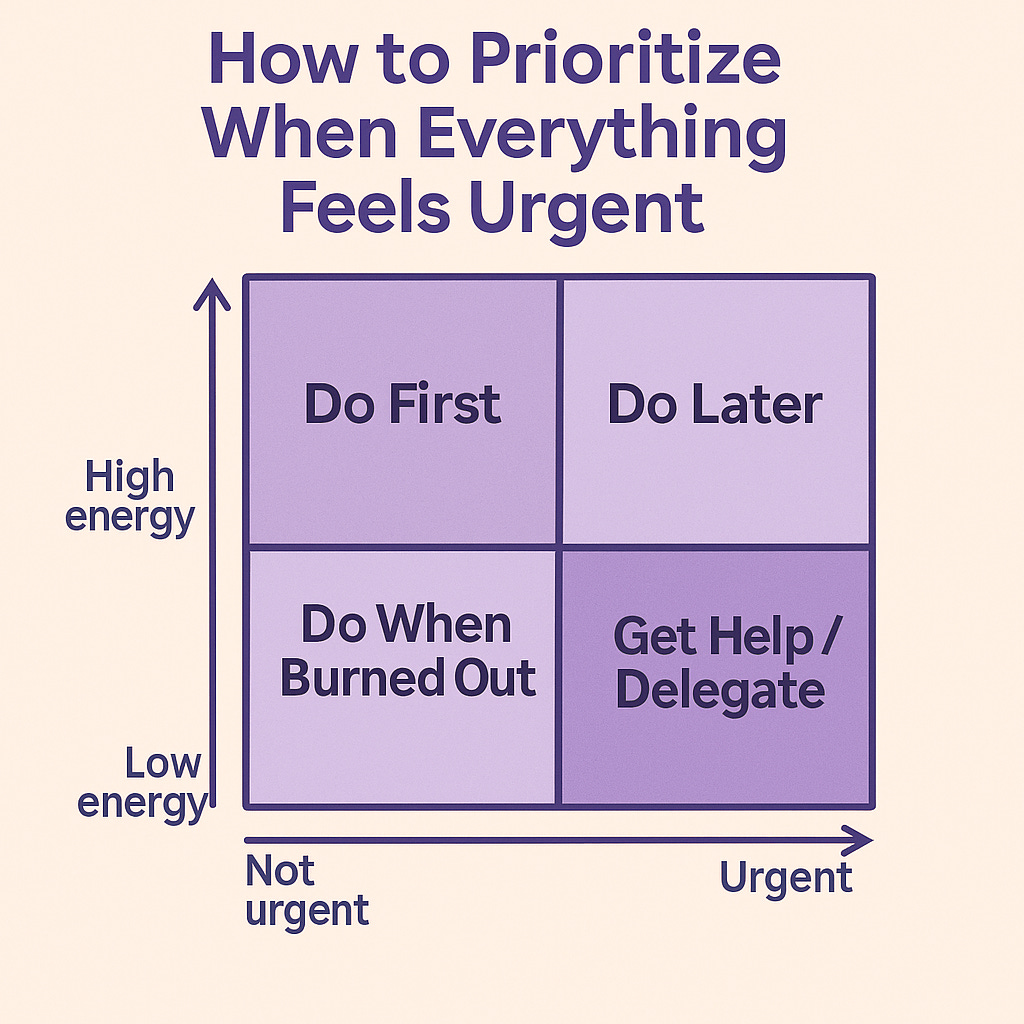
And the quadrants are labeled exactly as needed:
Do First (urgent + high energy)
Do Later (not urgent + high energy)
Do When Burned Out (not urgent + low energy)
Get Help / Delegate (urgent + low energy)
✨ Why it works
It visually validates the REAL way AuDHD brains prioritize — not by “importance,” but by energy + urgency, which is way more realistic and compassionate.
Technology aids. There are many apps for people with ADHD/autism: visual planners (like calendars with icons), to-do list apps, habit trackers, reminder apps. Some incorporate the “brain dump” idea by capturing tasks from anywhere. Find one that fits your style – even sticky notes on a wall can do the trick if that’s more tangible.
Regular check-ins and accountability. Share your plans with someone (a partner, friend, coach, or colleague) and ask them to remind you or check progress. For work or school, consider brief daily meetings with a supervisor or study buddy to set priorities and review status. Knowing you’ll report to someone can keep you on track.
Self-care and routines. Basic routines (enough sleep, healthy meals, exercise) actually support executive function. When we’re sleep-deprived or stressed, planning gets even harder. So treat self-care as part of your productivity strategy. Mindfulness or short movement breaks can reset your focus. If possible, build routines around predictable cues (e.g. always paying bills right after dinner).
Remember, not every strategy will work the first time. Mixing and matching approaches – and experimenting – is key. What matters is finding a set of supports that fit you. And be patient: these challenges aren’t a personal failing. They’re just part of AuDHD, and with the right systems, you can still manage a productive, organized life.
Reflection Journal Prompts
Taking time to reflect can help you understand your patterns and needs. Try journaling on these prompts to gain insight and plan improvements:
Identify Your Hurdles: What is the one task you keep postponing or find most confusing to start? Why do you think that is?
Successful Moments: Think of a recent day when you actually got things done smoothly. What was different about that day? What helped you succeed then?
Time Troubles: Reflect on a time when you lost track of time. How did you feel when you realized it? What could have helped you notice time passing?
Prioritization Patterns: When facing a list of tasks, how do you usually decide what to do first? Are you drawn to easier tasks, urgent tasks, or something else?
Environmental Check: Take a look at your workspace or home. What is one small change (like a new box or label) that could make it easier to find and organize things?
Emotional Impact: How do planning struggles affect your mood or self-esteem? Write about a moment of frustration or relief.
Goal Setting: Pick one small goal (like doing laundry today or writing an email) and plan the exact steps you’ll take tomorrow. What support (alarms, someone’s help, music) will you use to make it happen?
By reflecting on these questions, you may discover patterns and solutions tailored to you. Journaling isn’t about judging yourself – it’s about understanding how AuDHD shapes your experiences and finding creative ways to work with it.
Sources: For this discussion we have drawn on autism and ADHD research and resourcespmc.ncbi.nlm.nih.govtalkspace.compmc.ncbi.nlm.nih.govpubmed.ncbi.nlm.nih.govadd.orgautism.org.uk. These studies and guides highlight why organizing and planning are challenging in AuDHD and suggest the coping strategies above. You are not alone in these struggles – many adults with AuDHD face them, and there are supports and communities that understand what you’re going through. Keep experimenting with tools and prompts, and remember: small steps add up to big progress over time.