
Neurodivergent Vacations: Expectations vs Reality
The Stuff that NOONE Puts in the Brochure


Vacations are supposed to be a relaxing escape – cocktails at sunset, sandy toes, and absolutely no thought of Monday morning. For many neurodivergent folks (especially those with both ADHD and autism, sometimes called “AuDHD”), vacations often feel more like a full-contact sport for the brain. On paper, packing lists and itineraries promise order, but in practice our brains can treat them like hot coals. Executive functions (the brain’s project manager skills) go out the window, new sensory inputs crash in, and emotional control can fray under pressure. In fact, research highlights that ADHD and autism share many overlapping struggles that all flare up on vacation: “sensory differences… intense focus on specific interests… executive dysfunction… and emotional dysregulation” are common in both conditions. In short, the very strengths and quirks that make us unique can turn a “restful” holiday into a juggling act of brain chemistry, all capped with what feels like a tiny cocktail umbrella of anxiety on top.
The first lesson? We are definitely not alone in feeling wiped out after a family road trip or beach weekend. Studies of neurodivergent brains show that what seems simple to neurotypicals – change-of-plans, crowded airports, unfamiliar routines – can actually require superhuman effort for us. For example, a recent meta-analysis found that children with ADHD or autism scored significantly worse than neurotypical peers on tasks of attention, working memory, flexibility, and inhibition. This means daily travel tasks (booking a ticket, juggling luggage, memorizing a schedule) hit our weaker cognitive muscles. And when someone has both ADHD and autism, the challenges can be even greater: one 2024 study suggests that kids with combined ASD+ADHD show more pronounced sensory sensitivities and inhibitory-control problems than those with only one condition. In other words, AuDHD brains face a double-whammy of difficulties that vacations mercilessly expose.
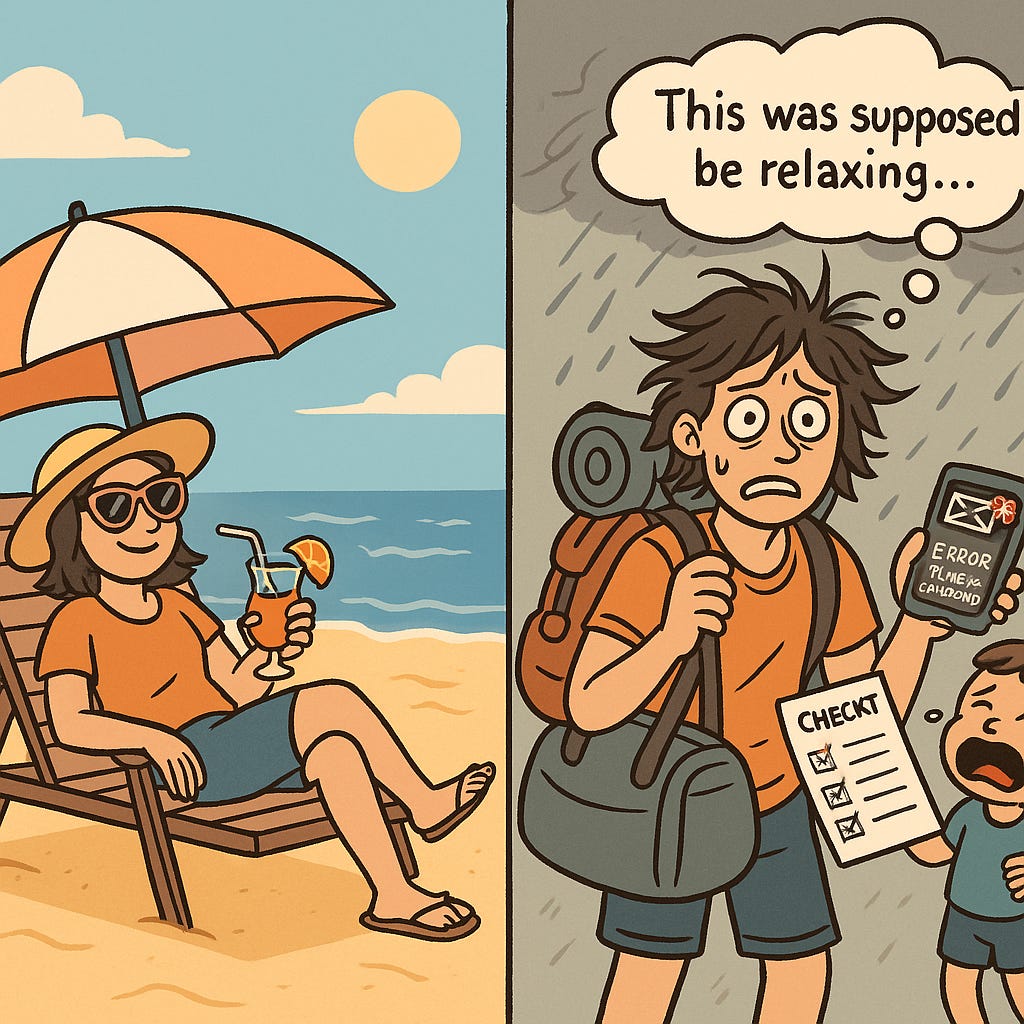
So yeah – while our loved ones are lounging with fruity drinks, our brains might be running a marathon of planning, scanning, and survival mode. But fear not: understanding the science behind it can help us cope (and maybe laugh a little). The rest of this blog will unpack those sneaky stressors – from planning paralysis to sensory storms – and end with a toolkit of strategies so you (and your family) can actually enjoy the trip.
Executive Dysfunction: Planning Is a Full-Contact Sport
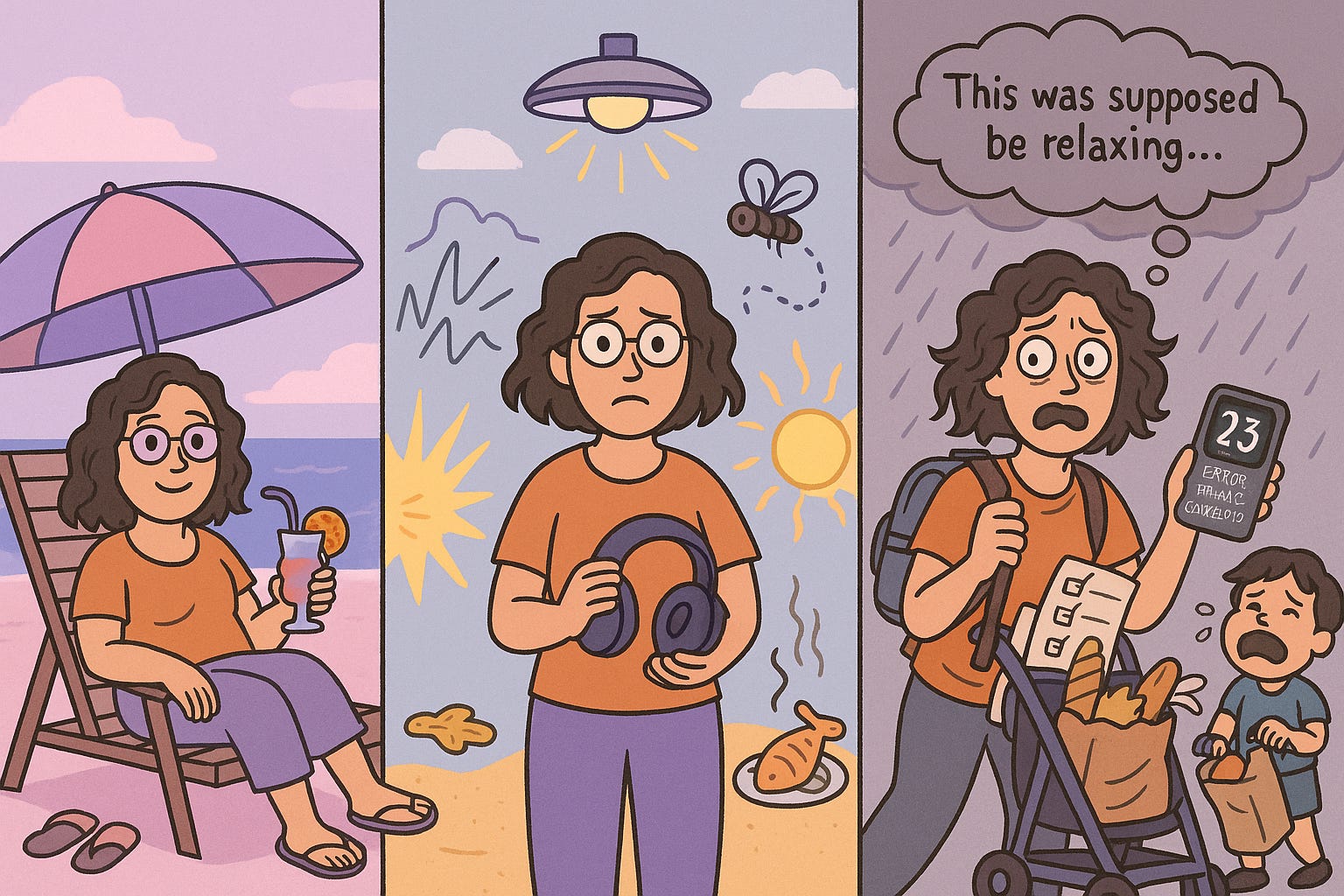
Think of executive function as the brain’s life coach: it helps us plan, prioritize, initiate tasks, and adapt on the fly. Vacations demand loads of it – compare itineraries, pack the right clothes, keep track of everyone’s belongings, and pivot when the flight is delayed. For neurodivergent brains, though, executive skills are often the first victim of vacation chaos. Studies confirm that both ADHD and autism involve marked executive-function deficits compared to neurotypical peers. In ADHD, the trouble is usually inhibition and sustained attention: imagine constantly stopping yourself from impulse-buying every souvenir or calming the inner chatter that sprints off on tangents while you try to focus on finding the right gate. ADHD brains also struggle with time-blindness and “working memory” – we might literally forget why we walked into the hotel room if distracted. All this means the simplest tasks feel like crawling up a very steep hill.
Autistic brains have some overlap but a slightly different flavor of chaos. The biggest executive hiccup in autism is typically cognitive inflexibility. That translates to mega stress when routines change or schedules slide. A closed pool for repairs? A late train? For us, those aren’t minor bumps – they can feel like the ground shifting underfoot. We often rely on hard-won routines and step-by-step plans (like a visual schedule or checklist) to keep anxiety at bay. When those plans get derailed on vacation, we’re at risk of burning out mentally. Researchers note that autistic individuals “often have diminished perseverance… especially when planning and shifting between tasks”, and this lack of flexibility can make packing five outfits for every weather scenario feel impossible.
Meanwhile, paradoxically, a hyperfocus on small details can also kick in. Maybe you’ll super-organize your suitcase by color or alphabet, but still forget the toothbrush – classic ADHD logic! Even if we start with the best intentions (digital reminders, Excel spreadsheet, maybe one of those “master packing checklists” that ADDitude offers), something still slips through. One Travel Psychologist quips that “ADHD is not so much a deficit of attention as a surplus of attention,” meaning everything is interesting at once until we’re overwhelmedcntraveler.com. The result? We either hyper-plan (and wear ourselves thin), scramble at the last minute, or silently panic as the van leaves without us.
In dual-diagnosis (AuDHD) brains, both patterns collide. You might feel torn between wanting a strict itinerary (autistic need) and craving spontaneous adventure (ADHD urge). As one Autistica article puts it: someone who is AuDHD “may experience an internal struggle between competing autistic and ADHD traits and a heightened experience of shared traits”. The good news is: knowing this battle is happening in our heads can bring some empathy for ourselves. It’s not “just poor planning” – it’s a known neurobiological challenge. So how to fight back? In the coping tips below we’ll cover hacks (like packing lists, reminders, and even travel buddies) that leverage what scientists do know. For now, just remember: if your itinerary is shredded or you end up napping in the rental car because your brain is fried, you’re in good company.
Sensory Overload: When Sunshine Feels Like Strobe Lights
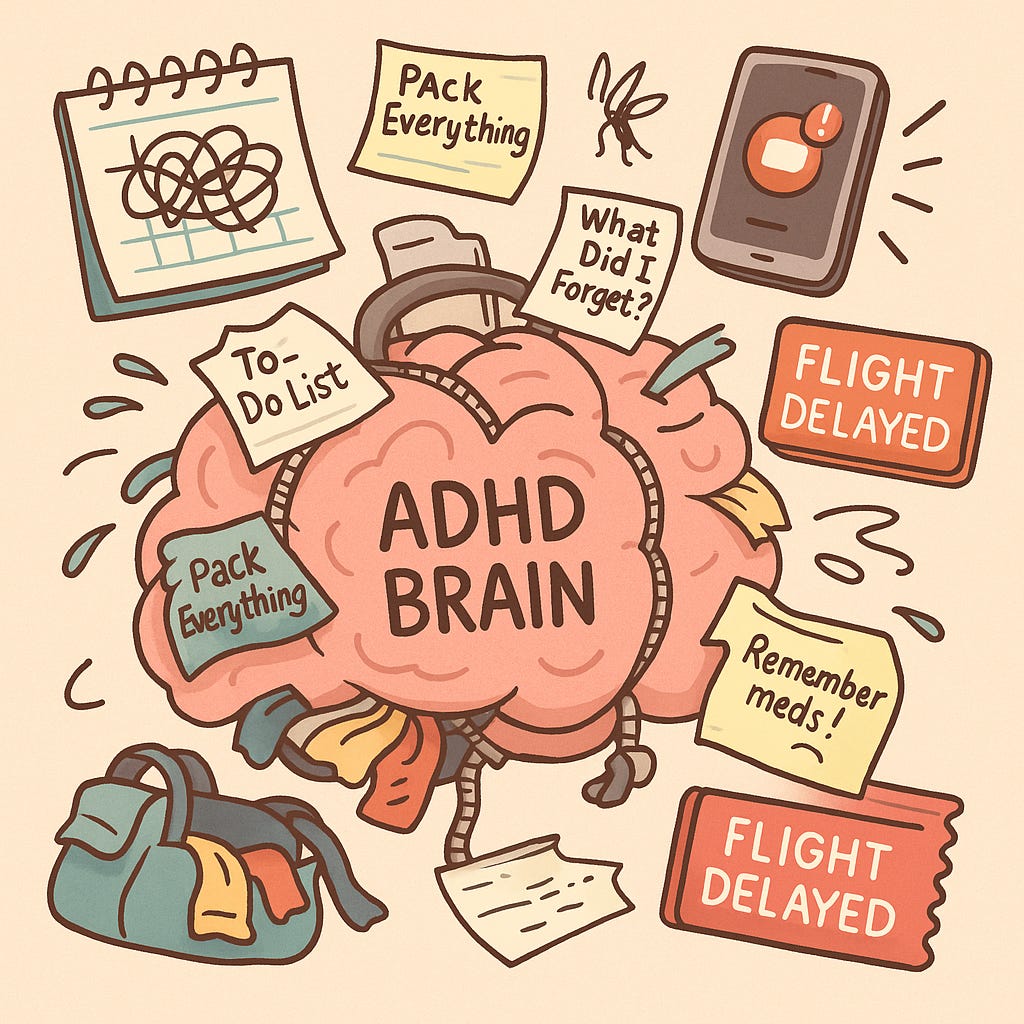
Even if you somehow wrangle the planning, another big party crasher is sensory overload. Airports, hotels, beaches – these are full-sensory environments, and for many ADHD/autistic folks, that means our brains react like we’re at an all-night rave. Crowds talking all around, alarms beeping, fluorescent lights flickering, a cacophony of new smells (sea salt! sunscreen! BBQ!), plus the tug of hot sun on our skin or scratchy new pants on our ankles. Our nervous systems may not know which way is up, and alarm bells can blare: “Too loud! Too bright! Too many people! Too much uncertainty!”
Research backs up what we feel: sensory processing differences are extremely common in neurodiversity. One 2024 study found sensory issues in 42–88% of autistic children and about 50% of children with ADHD. Autism diagnostic criteria even list unusual sensory reactivity as a core feature. In everyday life that might mean disliking tags on clothes or a family member’s cologne. On vacation, it can mean panic when a blaring resort playlist or a child’s cry triggers a fight-or-flight reaction. In fact, the same study concluded that both ASD and ADHD kids have a much higher likelihood than typical children of sensory abnormalities.
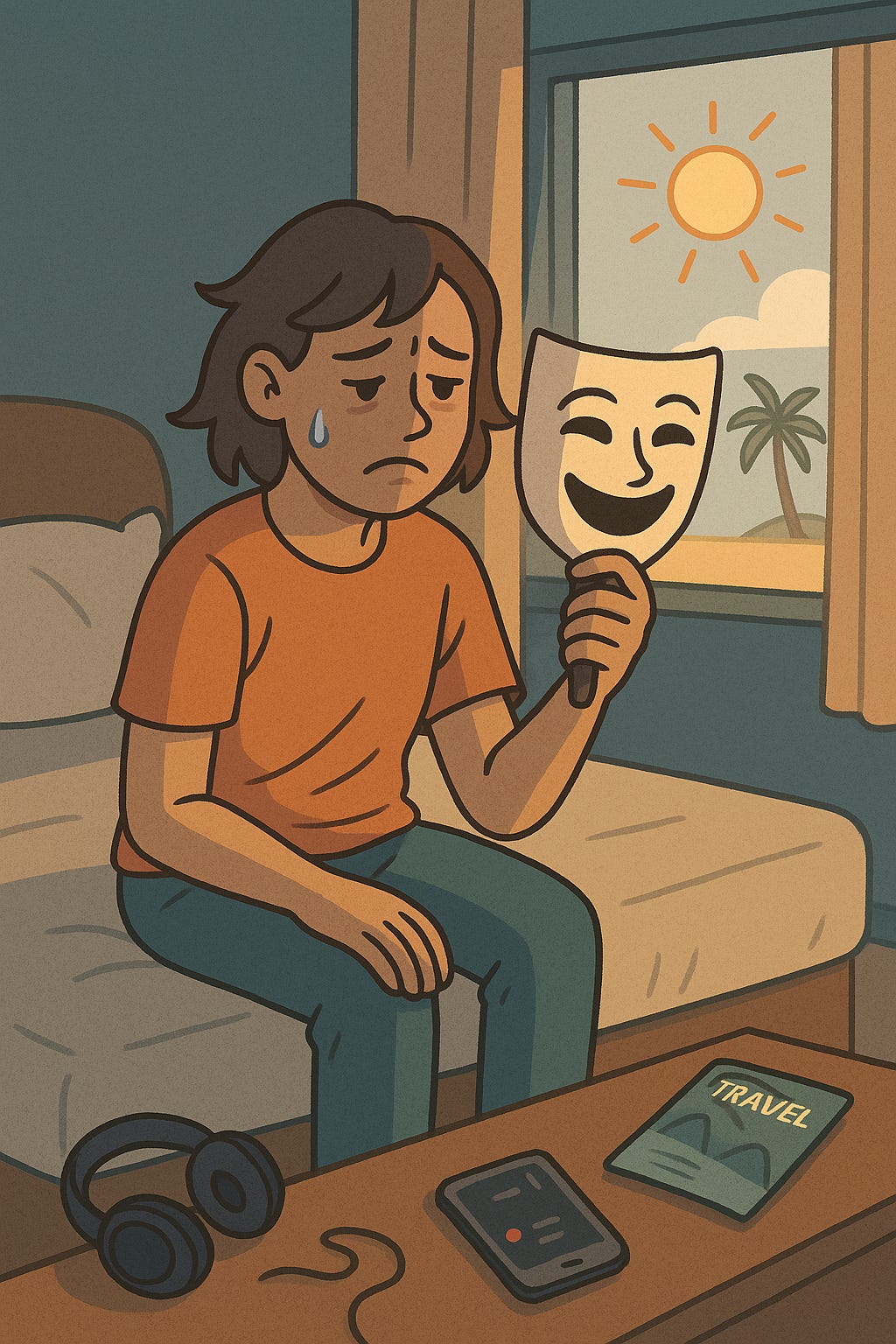
What does that feel like? Picture this: your hotel room has an air conditioner that hums too loudly, the bathroom tile is too cold on bare feet, and the motel faucet’s drip goes every single second. You may find yourself overwhelmed by the combination of even small discomforts. For ADHD, distractibility can add to the problem – a fly buzzing becomes a siren in your ear. For autism, even a plane’s engine roar might feel as painful as an alarm clock. Some of us might be the classic “tactile avoiders” who cringe at sunburn or sand between our toes, or “auditory avoiders” who cover our ears at seagull squawks.
Combined, these can provoke meltdown territory fast (more on meltdowns next). The bottom line: vacations confront us with an assault of stimuli, and our brains are wired to latch onto all of it. It’s not a lack of effort that makes it hard – it’s neurological. One neuroscience review even highlights that in autism, brain scans show hyper-activation in sensory and limbic areas when overwhelmed, correlating with anxiety levels. Translation: a noisy airport literally lights up our threat circuits.
⚡ ADHD Sensory Lightning.
ADHD isn’t often diagnosed by sensory problems, but many ADHD adults report that bright sunlight or background chatter can fry their focus. Some ADHD brains react strongly to movement and sound – it’s part of that brain’s novelty seeking. Being in a new environment means many new “novelties” at once, which can hijack attention or pump up stress hormones. Think: trying to hear your spouse’s narration over a chopper tour and a kid’s meltdown, all with jetlag – sensory lightning bolts everywhere.
🎛️ ASD Sensory Dials.
Autistic individuals often have a narrower “comfort bandwidth” for sensations. A small change in texture or routine can feel monumental. Studies note that those with autism who have more severe sensory dysfunction also show higher anxiety levels. So, a sun-soaked beach that’s fun for others may turn to anxiety when there’s no shade or the sand feels like a million tiny needles. Some autistic travelers carry portable lamps or non-fluorescent bulbs to make hotel rooms feel less harsh – a sign of how important sensory tweaks are.
In short, even if we try to “tough it out,” sensory overload can leave us drained or trigger panic. We may not even announce it; many of us “mask” discomfort until we collapse later. That’s why you might see a neurodivergent person escape to the quiet car or wear headphones mid-vacation – not just for “spoiled kid” reasons, but as a survival tactic. Acknowledging this sensory avalanche (and bringing coping tools for it, as we’ll discuss) is key to not burning out by day two of vacation.
Meltdowns, Shutdowns, and Emotional Mayhem
By now, the cocktail of relentless planning demands and sensory bombardment can do a number on our emotional regulation. “Meltdown” might be an over-used word online, but there’s a neuroscience truth behind it: both ADHD and autism brains often struggle with emotion regulation (sometimes called emotional dysregulation). For ADHD, researchers have found that emotion control problems are prevalent throughout the lifespan and are a major contributor to overall impairment. ADHD brains can have poor orienting to emotional cues and impulsive reactions – meaning we might snap, scream, or suddenly panic when overwhelmed without intending to.
Autistic brains, likewise, tend to have an amplified stress response when things go awry. One recent review suggests that core autistic traits (like perseveration or sticking on a problem) are closely linked to difficulty controlling emotions. In other words, if the journey isn’t going as “rehearsed,” anxiety can spiral. Autistic individuals also frequently have intense responses to unpredictable situations due to what scientists call “intolerance of uncertainty”. Put simply: not knowing when the next delay or sensory assault will happen can feel terrifying.
The result? We might experience meltdowns (explosive outbursts) or shutdowns (withdrawing, going blank) when our brain’s “stress cup” overflows. It’s important to note these are involuntary reactions, not tantrums for attention. During a meltdown we’re fighting a physiological panic: heart racing, cognitive fog, tears or anger welling up. A coworker who sympathized on a delayed connecting flight once said, “I understand why you just burst into tears at customs – any normal person would’ve done the same thing.” And there’s research for that empathy: studies of autism note meltdowns/shutdowns are essentially brain overdrive when thresholds are crossed.
Travel-specific triggers can include: a lost toy, a long wait at security, unexpected plans at dinner, or even just the pressure to be happy on demand. For example, a parent might want pictures of us smiling on the beach – which only adds guilt and stress for someone reeling inside. Neurodivergent meltdowns are often “unspoken” – we might quietly dissociate, cry in the bathroom, or nod along while seething inside. But those moments leave us exhausted and sometimes feeling guilty, which ironically makes the vacation memories fuzzy or tainted.
Social expectations can worsen this. An ADHD parent juggling family travel might snap at their child for dropping crayons at the airport, or an autistic teen might retreat at a crowded resort party and be labeled “moody”. In reality, both are classic responses to overwhelm. We have to constantly re-regulate (deep breaths, stepping back, sometimes medication) just to stay functional.
Key point: Stress and emotion regulation are also brain functions that tend to be weaker in ADHD/autism. On vacation, this means we need extra strategies to stay afloat (more on that below). In the meantime, if you catch yourself on the brink of meltdown – or watching someone else struggle – remember: it’s science, not willpower. Take a moment, remind yourself this is a known phenomenon, and maybe find the nearest quiet corner. (Pretend you’re a wounded NPC in a video game going for HP regen.)
Coping Strategy Toolkit: Surviving (and Enjoying!) the Trip
Okay, enough doom and gloom – let’s talk survival. Yes, vacations will always have challenges for AuDHD brains, but knowledge is power. Here are evidence-backed strategies and practical tips to make your next trip more enjoyable and less catastrophic:
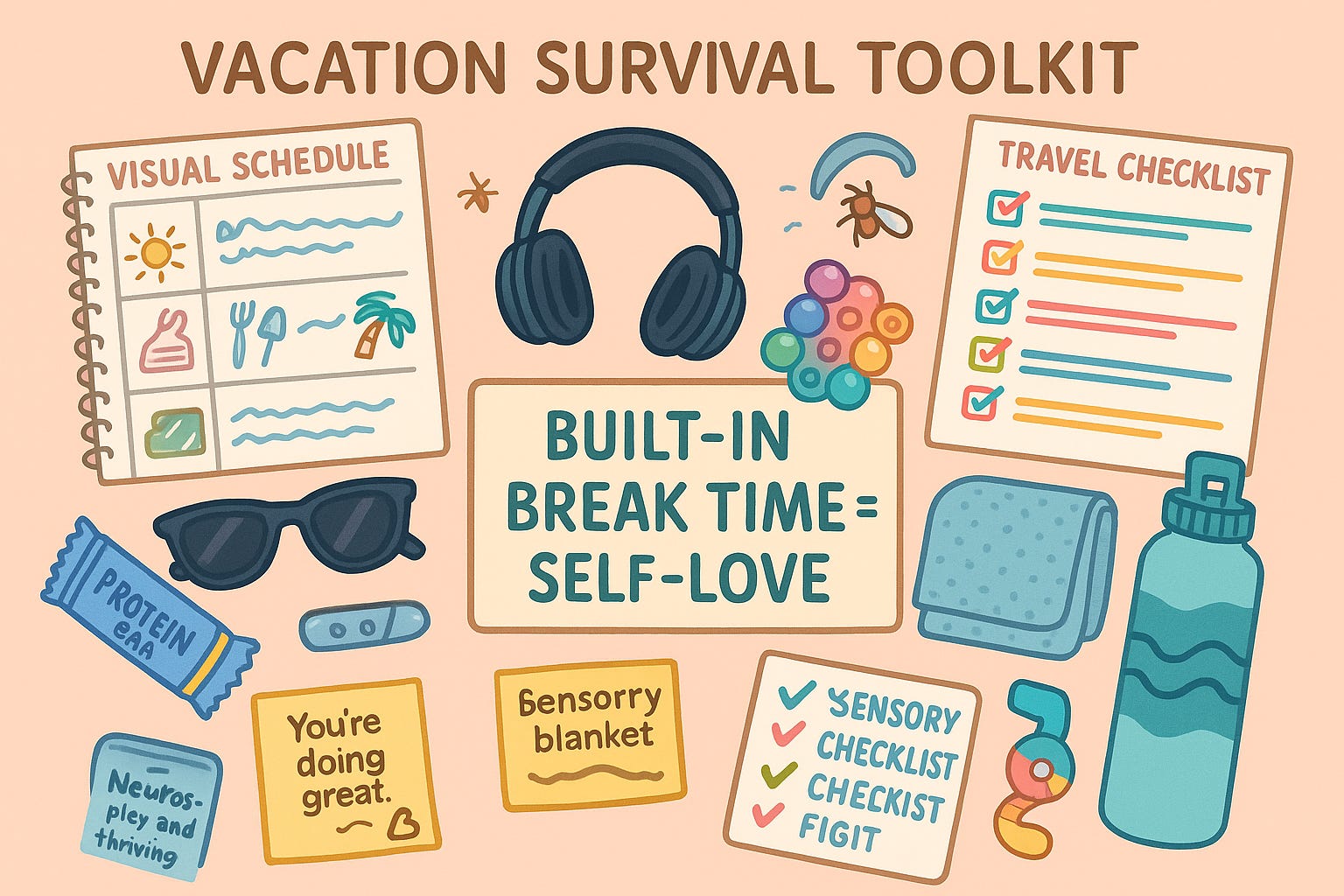
Plan Ahead (Really, Two Weeks Ahead): Break down tasks into small steps. Research travel experts (and neurodivergent travelers) say that doing as much as possible early cuts anxiety. For example, one travel writer with ADHD recommends sorting passports, itineraries, apps, and even offline entertainment at least two weeks before departure. This leverages our planning strength (when not under last-minute panic) and uses reminders and checklists for the rest. Tip: Put ALL travel documents in one dedicated folder or drawer months ahead – so you’re never frantically searching on Day 0.
Visual Schedules and Social Stories: Use charts, planners, or smartphone reminders to map out each day in broad strokes. The Duke Autism Center recommends creating a “travel visual schedule” to outline the routine – even if it’s as simple as “Pool time 🏊, Lunch 🍲, Nap 💤” – and checking off items as you go. Having a concrete picture of “what’s next” can greatly reduce the shock of transitions. Similarly, write or read a short “social narrative” (even to yourself) about expected events: “We will get on the airplane. It will be loud and bright. I can cover my ears if I need to.” These tools clarify vague situations and set expectations.
Priority Packing (with Checklists): Packing trips us up every time. Resist the “throw everything in and pray” or “last-minute panic” methods. Instead, make a detailed packing list (for clothes, meds, chargers, etc.) and turn it into a game of checkboxes. Dr. James Brown (ADHD expert) even recommends taping a list onto the suitcase and literally ticking items off as you pack. If lists alone overwhelm you, try body doubling – pack with a partner or friend so they can remind you of forgotten items. Start a few days early and do one category at a time (e.g. “toiletries” on Day 1, “meds & documents” on Day 2). This breaks the executive burden into tiny, doable chunks.
Create a “Chill Kit” (Distraction Toolkit): Pack sensory coping items that help you self-soothe. Think noise-cancelling headphones or earplugs (to block crowds and plane noise), sunglasses or a brimmed hat (to tone down brightness), and maybe a comfortable scarf or sweater if you get cold on planes. Include fidget toys, a favorite snack, or a novel/touchstone item (like a small Lego kit or a smooth rock) to occupy restless fingers. The Duke toolkit calls this a Distraction Toolkit – items chosen to help you “remain calm and cope with delays, boredom, or unstructured time”. For many of us, having these on hand is like carrying a mini-safety net.
Schedule Down-Time: Plan built-in breaks every day. Even a neurotypical person needs time to recharge; we need it even more. If the itinerary says museum, then theme park, then fancy dinner, consider trimming one thing to allow an afternoon nap or quiet beach time. Block out 30–60 minute solo “do-nothing” periods each day. During these, turn off group talk, find a low-stim spot (like a shady corner or the hotel room), and give your brain a chance to reset. By preventing total overwhelm, you actually get more mileage out of your outing overall.
Communicate & Adjust Expectations: Don’t take it personally if you or someone else isn’t as “carefree” on vacation as advertised. Talk openly with travel companions ahead of time: let them know you may need frequent breaks or quiet time. Make a signal (like “I need a breather” hand gesture) to gracefully bow out of activities without drama. Also, mentally lower the bar. You might not visit all five museums on the list, and that’s okay. Do one activity well rather than five half-heartedly. Try to focus on the things that truly matter to you or your family’s joy. It may also help to note that an Autistica survey found that many with AuDHD excel in hyperfocus on their interests – so aim to incorporate at least one highly enjoyable element for each neurodivergent traveler (e.g., an architecture buff might prioritize a single stunning building rather than a whole walking tour).
Mind Your Body Clock: Travel messes with sleep routines, and that can snowball into a disaster for our brains. If you take ADHD medication, check rules for other countries and bring a doctor’s note (flight delays plus an empty pillbox is a recipe for trouble). Try to keep a rough regular sleep/wake time. Even on vacation, do little rituals: maybe an hour before bed, wind down with a book or playlist so your brain knows it’s bedtime. Also, drink water and eat protein; low blood sugar can exacerbate both executive and emotional crashes.
Use Digital Reminders: Alarm clocks, phone timers, or watch alerts can save our hides. Set reminders for check-ins (“Time to regroup in 5 min!”), medication, meal time, or even “stretch your legs.” Some travelers find phone apps (like travel schedulers or visual timers) helpful for staying on track without relying on memory. Just the act of seeing “2:00 PM – Walk on Beach” on your phone can steady the nerves.
Leverage Hyperfocus (ADHD Perk): If you catch a burst of travel excitement or interest (say, in a museum exhibit or a nature trail), try to ride it in short, bounded doses. Obsessive focus can be great for deep engagement, but don’t let it pull you past dinner time or cause you to skip rest. Set an external alarm to remind you to stop or switch activities as needed.
Plan Alone Time & Quiet Activities: If traveling as a group or family, carve out time where the neurodivergent traveler (adult or child) can have personal downtime. Maybe agree that after lunch, one person gets headphone time while others read or rest. Pack solo-friendly diversion: e-reader loaded with favorite books, a sketchbook, or downloaded movies.
Seek Neuro-Inclusive Options: Whenever possible, choose travel options that minimize stress. For example, some airports allow pre-boarding or have quiet rooms; many cities have sensory-friendly maps or “quiet zones” in museums and parks. Look into local disability accommodations (family lines, audio tours instead of group lectures, etc.). Sometimes calling ahead can make a huge difference (e.g., “please seat me at a corner table away from loud bars”).
Remember, many of these tips come from experts and fellow travelers. The Duke Autism Center notes that visual schedules “provide consistency while reducing resistance” by making new routines predictable. Travel writers with ADHD emphasize that even something as small as taping the packing list to the suitcase can be a game-changer. And researchers stress that having a simple support (like a distraction kit or a travel buddy) is “particularly helpful for autistic individuals and those with sensory or attentional difficulties”.
Finally, give yourself permission to take things at your pace. If that means leaving the theme park early, having a picnic instead of a restaurant, or even doing laundry with a movie instead of partying all night – that’s okay. Vacations should be about refreshment, not exhaustion. By treating your neurodivergence like the superpower it is (with its own care instructions), you can often reclaim some calm and actually find joy in the getaway.
Safe travels, fellow neurodivergent wanderers – may your packing checklists be complete and your meltdowns be minimal!
Until Next Time, Stay Authentic-
XO, Carmen