The Clock is Ticking: Understanding ADHD Time Anxiety
Why neurodivergent brains perceive time differently, leading to anxiety and overwhelm.

Ever feel like time is either sprinting away or stuck in molasses, but never just... ticking normally? Welcome to ADHD time perception, where our brains treat clocks like abstract art: interesting to look at, impossible to understand.
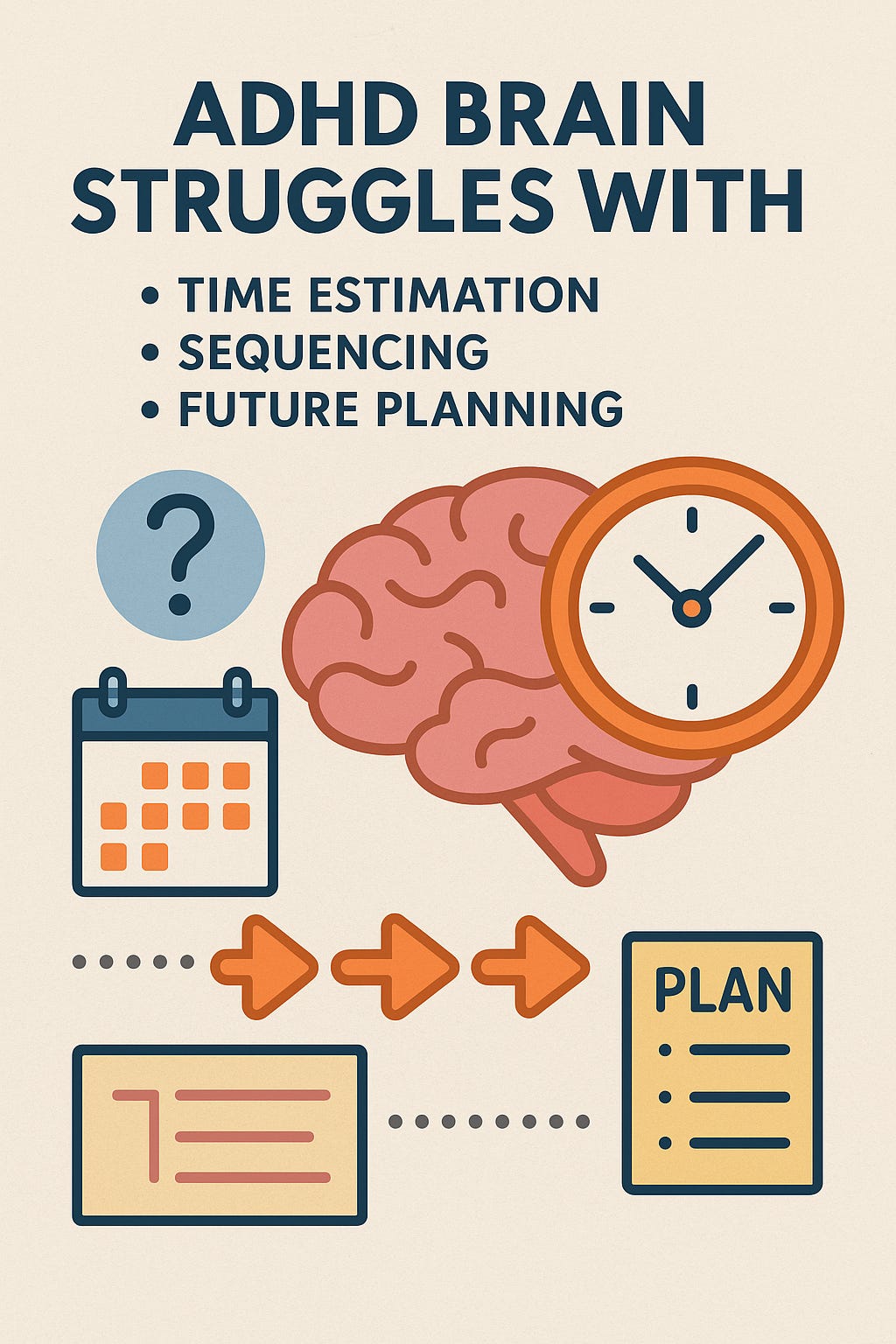
ADHD temporal anxiety isn’t just about being late (though, let’s be real, we do have a love/hate relationship with punctuality). It’s about the constant low-level panic of not knowing how much time has passed, how long something will take, or if you even have enough time to start. Research shows that the ADHD brain struggles with time estimation, sequencing, and future planning, thanks to executive function differences and dopamine dysregulation.
This isn’t laziness. It’s neuroscience. And your calendar app is not mad at you, I promise.
Living in the Future Tense: The Anxiety of What’s Ahead
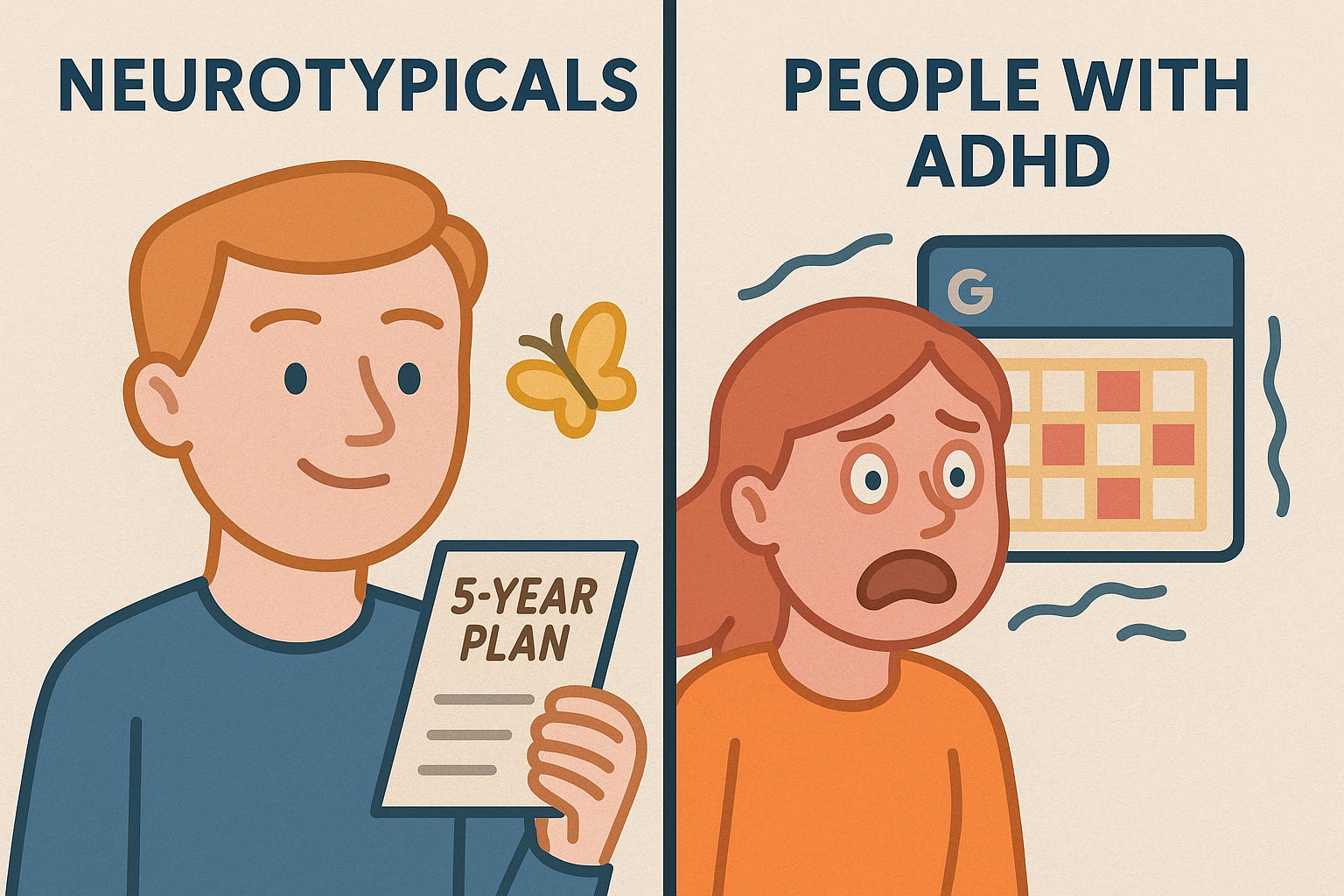
Neurotypicals might glance at their 5-year plan and feel a mild flutter of motivation. We glance at next week and feel like we’re being chased by a rabid Google Calendar.
ADHD impacts the prefrontal cortex, the part of the brain responsible for executive functions like planning, prioritizing, and time awareness. Add in the way our working memory functions (or doesn’t), and the result is often a chronic fear that we’re behind, missing something, or that it’s already "too late" to catch up. This can evolve into a nasty cocktail of procrastination, perfectionism, and panic.
That existential dread about aging, goals, and the passage of time? It's not just a quarter-life crisis — it's executive dysfunction with a sprinkle of mortality. Cute!
Now or Never: The Pressure of Urgency
Here’s where our old frenemy dopamine shows up. The ADHD brain is constantly scanning for stimulation that feels urgent and rewarding. Deadlines? They’re terrifying, but they work. Because when that clock is ticking, our brains release adrenaline and cortisol, kicking dopamine into gear. Suddenly, folding laundry at 2 a.m. before a trip feels like a great idea.
But here’s the kicker: this cycle trains us to crave last-minute panic. We feel most productive when we’re stressed, even if it means melting down regularly. That’s urgency addiction. It’s not sustainable, and it burns us out faster than our phone batteries at 3%.
Anchoring Yourself in the Present
Mindfulness is often pitched to ADHDers like it's a warm bubble bath for the brain. But we need a grippier version. Think: tactical, dopamine-friendly, and not boring.
Try these ADHD-adjusted mindfulness hacks:
"Name 5" grounding: Name five things you can see, hear, and touch. Fast and tangible.
Movement-based mindfulness: Walk, pace, dance — whatever keeps you in your body.
Time-limited awareness: Set a 3-minute timer and just notice. No need to meditate for an hour while fighting the urge to rearrange the bookshelf.
The goal isn’t stillness. It’s presence, and you get to define what that looks like.
Planning Without Panic: ADHD-Friendly Future Tools
Neurotypical planners are cute. But we need something more like a GPS for time: flexible, visual, and non-judgmental. Here's how to reduce future-time anxiety without setting yourself up for another planner graveyard:
Time Blocking, Loosely: Instead of strict schedules, assign themes to chunks of your day ("creative time," "emails," "break"). It offers structure without suffocation.
Reverse Planning: Start with the deadline, then build backward. This shows you how much time you actually have versus how much you feel you have.
Future You Notes: Write short notes to your future self. "Hey, drink water before the 2 p.m. call."
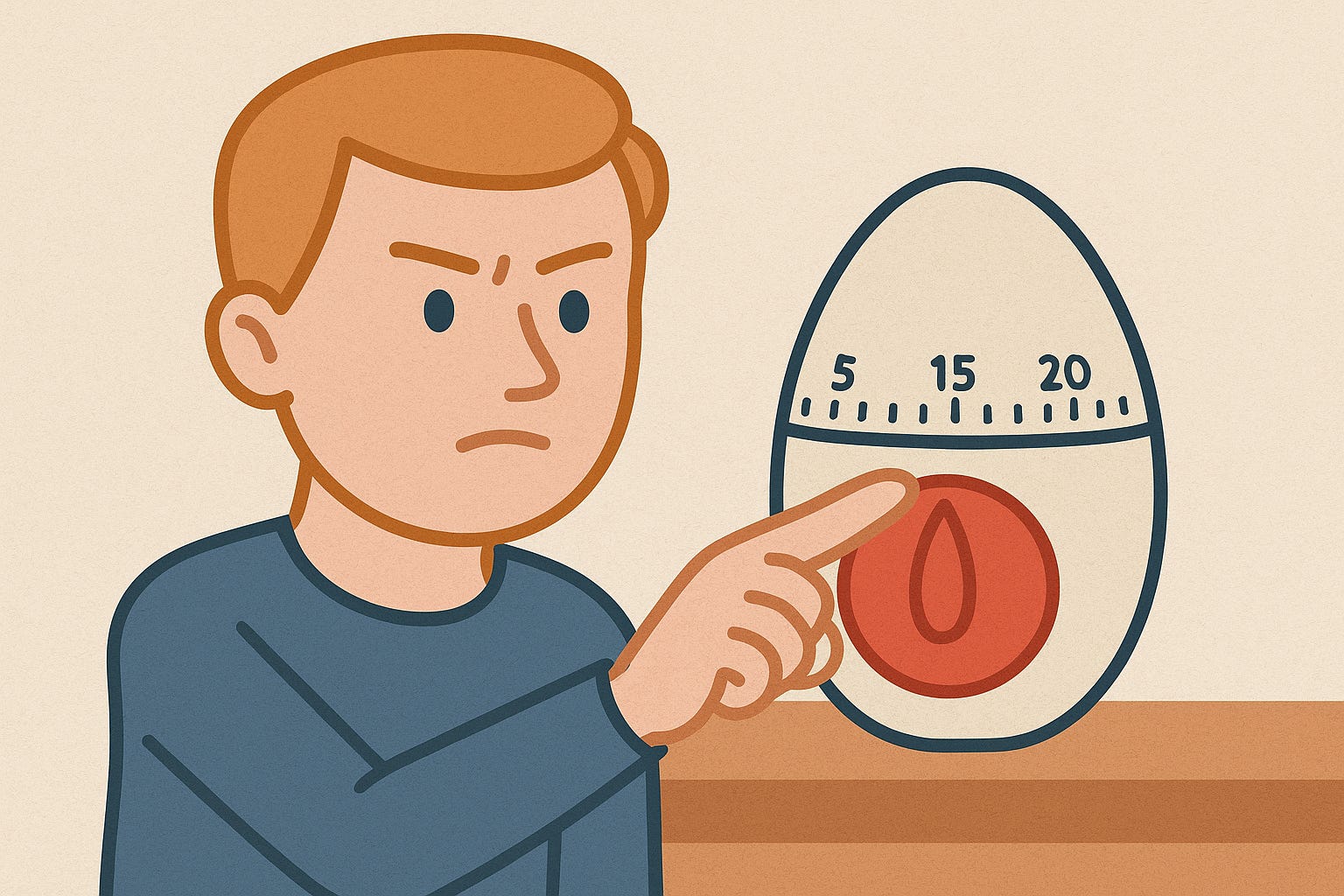
Visual Timers & Clocks: Analog clocks or apps like Time Timer make time visible — a game-changer for the invisible clock problem.
Structured Spontaneity: Create open blocks for "whatever feels right." That way, spontaneity doesn’t equal derailment.
In Conclusion: Time May Be a Construct, But Your Experience Is Real
If time feels like an enemy, know this: your brain isn’t broken. It’s just operating on a different wavelength. One that sees possibilities instead of clocks. With the right tools and a little humor, you can shift from panic to power.
And when in doubt? Time is fake. You’re doing your best. Take a breath. (And maybe set a timer.)