
When Motivation Goes Missing: The ADHD Brain’s “Why” Button, the Science Behind It, and What Actually Helps

Executive summary
If you live with ADHD, you already know the rude truth: motivation doesn’t “fade” like a candle. It vanishes like someone yanked the power cord mid-sentence. One minute you’re capable, the next minute you’re staring at an email like it’s written in ancient rune cipher. That whiplash isn’t a character flaw. It’s neurobiology plus brain economics
.
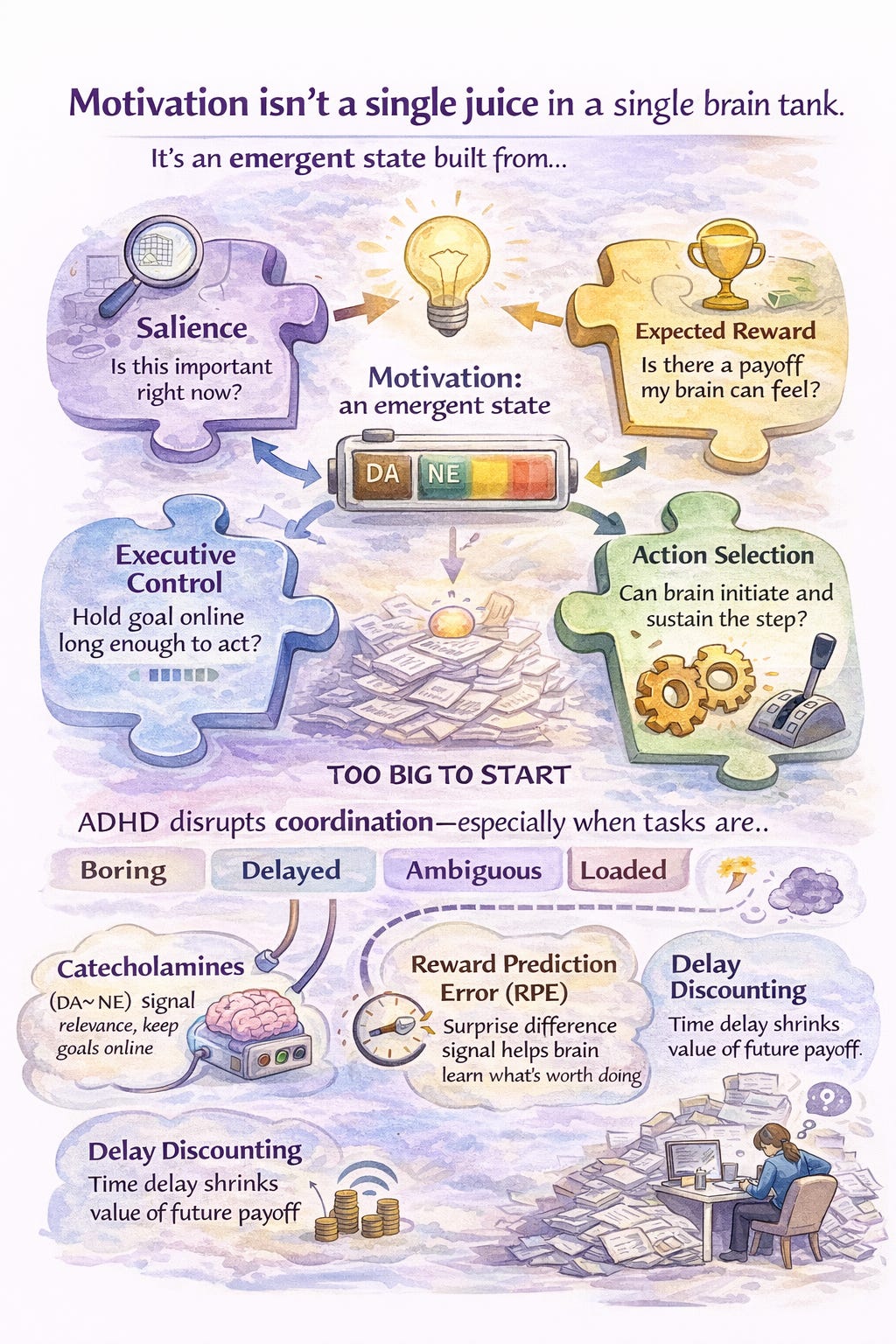
From a neuroscience lens, “motivation” is not a single juice in a single brain tank. It’s an emergent state built from (1) salience (does my brain tag this as important right now?), (2) expected reward (is there a payoff my brain can feel?), (3) executive control (can my prefrontal cortex hold the goal online long enough to act?), and (4) action selection (can basal ganglia/striatal circuits help initiate and sustain the next step?). ADHD tends to disrupt the coordination of those systems—especially when tasks are boring, delayed, ambiguous, emotionally loaded, or too big to “start.”
Research converges on several “load-bearing” mechanisms:
Dopamine and norepinephrine (catecholamines) strongly influence prefrontal cortex function; ADHD medications that help many people typically enhance catecholamine signaling in ways that can strengthen top-down regulation (attention, inhibition, working memory).
Reward prediction error (RPE)—the brain’s “surprise difference” signal—helps the brain learn what’s worth doing. Dopamine systems are heavily involved in this learning signal, and ADHD research suggests reinforcement learning and sensitivity to feedback can differ in ways that matter for persistence and follow-through.
Delay discounting is often steeper in ADHD on average: the longer you have to wait for a reward, the less it “counts” emotionally (even if you logically care).
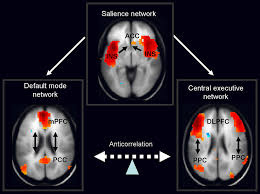
Large-scale brain networks (default mode, salience/ventral attention, and frontoparietal control networks) show subtle but meaningful differences in how they coordinate in ADHD; one robust theme is reduced separation (less anticorrelation) between the default mode network and task-positive networks—basically, the inner-thought network is more likely to “bleed into” task mode.
Emotion regulation isn’t a side quest in ADHD; it often directly shapes executive function in the moment. Strong emotion can either kick-start action (hello, panic productivity) or lock the system (shutdown, avoidance, spirals).
And yes: brain findings are real, but they’re also heterogeneous. Effect sizes in large network studies are often small, and neuroimaging meta-analyses show inconsistency across studies—so the science supports patterns, not a single “ADHD brain scan.”
The neuroscience of ADHD motivation when it goes missing
I’m going to say the quiet thing out loud: a lot of advice about motivation assumes you have a brain that reliably pays you upfront for effort. ADHD tends to run on a different payment system—more like “cash now, not a check later.” And when the brain can’t detect “cash now,” it doesn’t just feel unmotivated; it can feel physically hard to initiate.
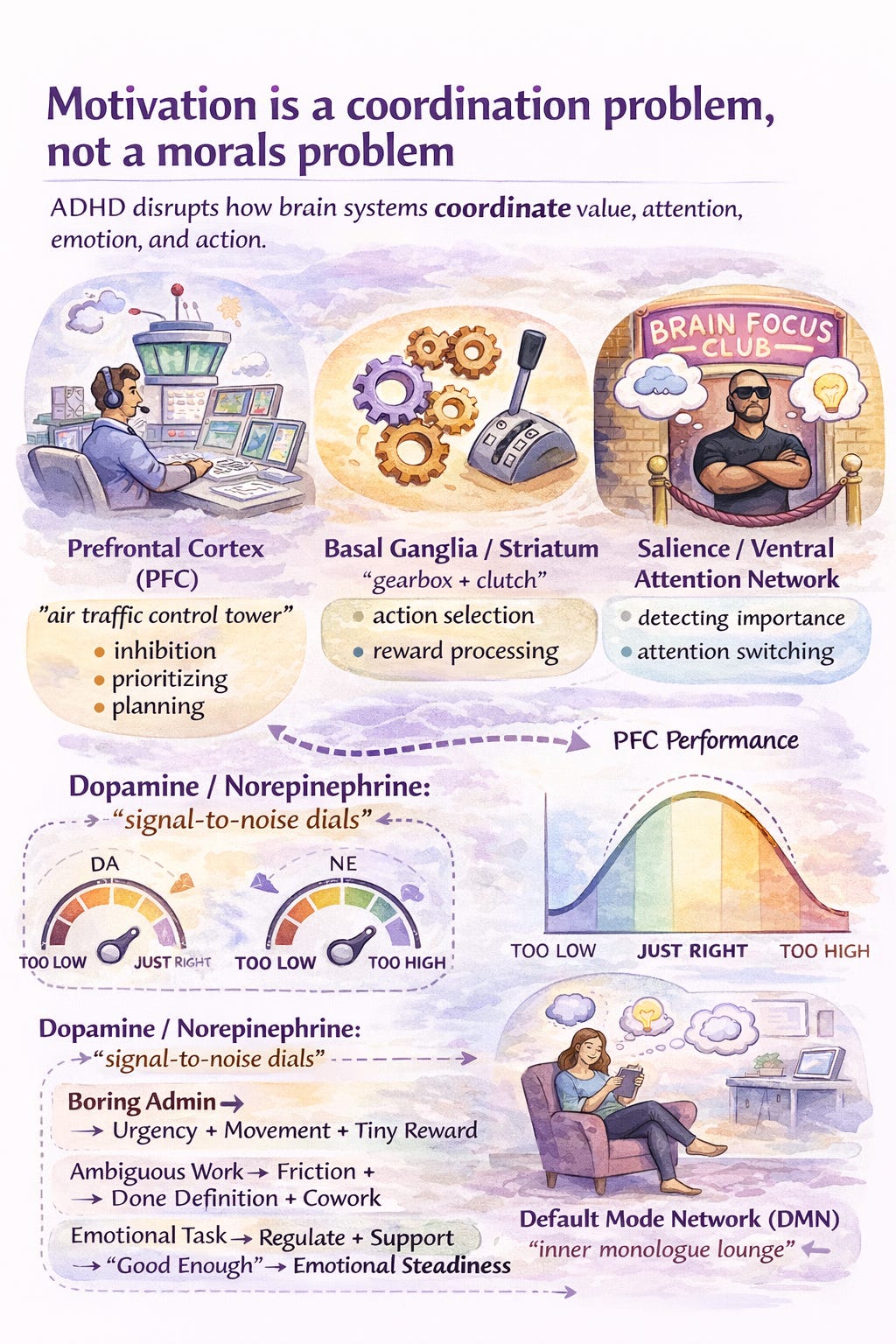
Motivation is a coordination problem, not a morals problem
Neuroscience has a boring-but-important message: motivation isn’t located in one place. It’s a dynamic negotiation between brain systems that estimate value, allocate attention, regulate emotion, and choose actions. ADHD disrupts that negotiation in multiple ways—especially in fronto-striatal circuits and broader network coordination.
Here’s the cast:
Prefrontal cortex (PFC): your “air traffic control tower”—working memory, inhibition, planning, prioritizing, and steering attention.
Basal ganglia / striatum: your “gearbox + clutch,” central to action selection, habit learning, and reward processing (including the ventral striatum / nucleus accumbens).
Salience/ventral attention network: your brain’s “bouncer” deciding what gets in—detecting what’s important and helping switch between internal and external focus.
Default mode network (DMN): your “inner monologue lounge”—self-referential thought, mind-wandering, internal narrative.
In ADHD, the issue is often not knowing what matters. It’s getting the relevant systems to line up at the same time: value + focus + initiation + emotional steadiness.
Dopamine and norepinephrine: the brain’s “signal-to-noise” dials
Dopamine (DA) and norepinephrine (NE) don’t just create “motivation” like a feel-good button. They modulate how strongly brain circuits signal relevance, maintain goals, and filter distractions—especially in the PFC. A key insight from decades of PFC research: PFC performance is highly sensitive to catecholamine levels—too little or too much can impair function (an “inverted-U” idea often discussed in this literature).
This matters for real life because:
When catecholamine signaling is suboptimal, the PFC has a harder time keeping the goal “online” (working memory) and inhibiting powerfully tempting alternatives.
Stress can further shift catecholamine state, which is one reason some people swing between “can’t start” and “can’t stop.”
A nuance I deeply appreciate (and the science supports): ADHD is not simply a “low dopamine” disorder in a simplistic way. Recent reviews argue the evidence supports dopamine involvement, but not a uniform hypo-dopaminergic state for everyone—subgroups, development, and interactions with other systems matter.
Reward prediction error: why novelty, urgency, and “surprise” can flip the switch
Reward prediction error (RPE) is the brain’s learning signal that says, essentially: “Whoa—this was better or worse than expected. Update the model.” Dopamine signaling is strongly linked with RPE-based reinforcement learning across fronto-striatal circuits.
Here’s the ADHD-relevant punchline: if your brain’s reward-learning circuitry is less likely to generate strong “this is worth it” signals for slow, abstract, or delayed payoffs, then tasks can feel like they have no traction. Not “I don’t care,” but “my brain can’t feel the caring strongly enough to move.”
Some ADHD models propose that anticipatory dopamine signaling to reward-predicting cues may be reduced (a “dopamine transfer deficit” framing), which would make sustained effort harder when reinforcement is not immediate.
Empirical work using reinforcement-learning tasks also reports differences such as altered sensitivity to positive/negative reinforcement and increased switching after negative feedback, which can look like inconsistency or “bailing” in real-world tasks.
Novelty is relevant here because dopaminergic systems respond to new or unexpected stimuli, and novelty can temporarily increase engagement—like your brain’s motivational “receipt printer” finally spitting out proof that the task matters.
Basal ganglia, ventral striatum, and “starting” as a biological event
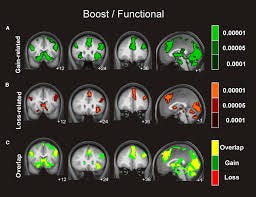
One of the most validating findings in ADHD neuroscience is that reward-related circuitry differences show up in the ventral striatum in many studies, especially during reward anticipation. A meta-analysis of fMRI reward anticipation studies reported medium effect sizes consistent with ventral-striatal hyporesponsiveness in ADHD.
And human brain imaging work has reported reductions in dopamine-related markers in reward-pathway regions in adult ADHD samples (with correlations to attention measures), supporting the idea that motivation/attention problems are linked to reward circuitry—not just “willpower.”
So when you can’t start, it may not be that you’re refusing. It may be that your “gearbox” is stuck between neutral and first gear, and the clutch won’t fully engage until something changes the incentive landscape (novelty, urgency, social pressure, immediate payoff, emotional intensity).
Default mode, salience network, and the “remote control” problem
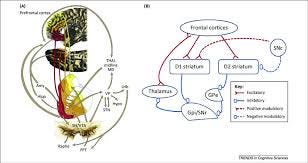
One consistent idea in ADHD network research is default mode interference: the DMN (inner narrative / mind-wandering) doesn’t quiet down as cleanly during task demands, or it stays more coupled with “task-positive” networks than usual. That can produce attentional lapses, drift, and that surreal feeling of watching yourself not do the thing.
A large mega-analysis reported ADHD diagnosis and ADHD traits were associated with less anticorrelation between the default mode network and several task-positive networks (including salience/ventral attention and dorsal attention), though effect sizes were small.
At the same time, meta-analytic work emphasizes heterogeneity and limited convergence across resting-state studies—meaning the signal is real but not tidy.
The salience network is often described as helping switch between DMN and executive/control networks (the brain’s “remote control”).
So when you’re trying to begin a low-salience task—say, scheduling a dentist appointment—you’re basically asking the salience system to crown something boring as “important,” suppress the DMN’s more interesting internal content, and keep the control network online long enough to execute. That’s a lot of coordination for a task that provides almost no immediate reward.
The part that’s both hopeful and fascinating: medication can influence these dynamics. An open-access randomized controlled trial in children found methylphenidate improved sustained attention and remediated aberrant dynamic interactions among salience, frontoparietal, and default mode networks.
Delay discounting, effort discounting, and emotional math
Two forms of “discounting” are especially relevant when motivation goes missing:
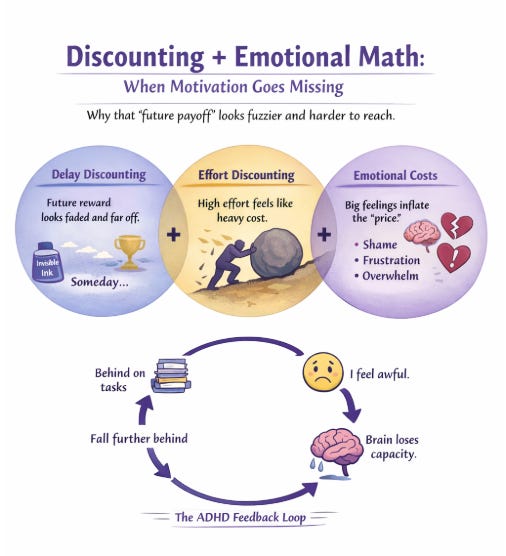
Delay discounting: future rewards feel less valuable the further away they are. A meta-analysis of case-control studies found delay discounting is significantly elevated in ADHD, with a medium effect size (about d ≈ 0.43).
That’s your brain saying, “Yes, I understand the future reward exists… but it feels like it’s printed in invisible ink.”
Effort discounting: rewards can also lose value if the cost (effort) feels high. Emerging work links ADHD symptoms to greater physical effort discounting in young adults (meaning effort costs weigh more heavily in choices).
A scoping review also notes that the experience of mental effort in ADHD is under-studied and complex, proposing distinct facets (task-elicited effort, volitional effort, and the affective experience of effort).
Now add emotion regulation: if a task triggers shame, boredom, frustration, fear-of-failure, or overwhelm, the “cost” side of the equation skyrockets. Reviews of adult ADHD find emotion dysregulation is common, associated with symptom severity and executive function, and linked to greater use of non-adaptive regulation strategies.
And this is where ADHD gets extra unfair: negative emotions can degrade the very executive functions you need to act, creating a feedback loop: I’m behind → I feel awful → my brain loses capacity → I fall further behind → I feel worse.
A quick visual model of “missing motivation”
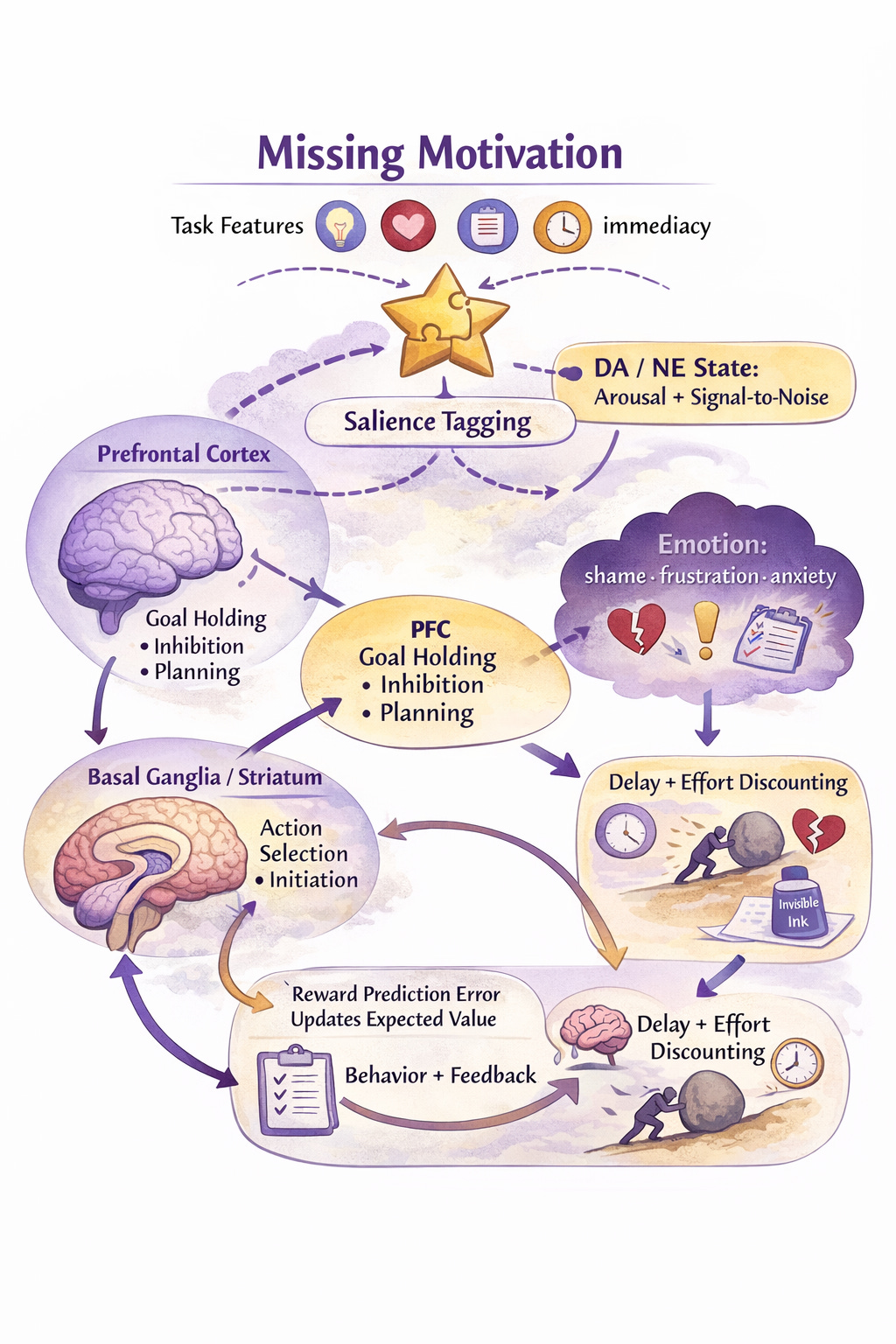
Educational infographic illustrating a neuroscience model of “missing motivation.” Task features (novelty, interest, clarity, immediacy) feed into salience tagging and dopamine/norepinephrine state, influencing the prefrontal cortex (goal holding, inhibition, planning) and basal ganglia/striatum (action selection, initiation). Behavior and feedback update expected reward value, while emotion (shame, frustration, anxiety) and delay/effort discounting increase perceived cost and disrupt action.And because our brains love visuals, here’s a purely conceptual sketch of delay discounting—how future rewards can feel like they “shrink,” sometimes more steeply in ADHD on average:
Norepinephrine and the “alertness + focus” engine
Norepinephrine (largely modulated by the locus coeruleus system) is deeply involved in arousal, attention, and stress response. Reviews highlight the locus coeruleus–noradrenergic system as a brain-wide modulator relevant to neurodevelopmental conditions (including ADHD), influencing attention/arousal and interacting with stress and sleep-wake regulation.
Other review work frames the LC-NE system as an interface between attention and reward, helping shape attentional bias and strategy selection.
Translation: if your arousal level is too low (bored/understimulated) or too high (overwhelmed/panicked), attention and motivation can both wobble. It’s not dramatic; it’s physiology.
How missing motivation looks from the outside
When motivation disappears in ADHD, the outside world often writes a story like: “They don’t care.” But internally it’s more like: “I care—my brain just won’t issue the clearance code.”
Common patterns people notice
You might recognize some of these, either in yourself or in how other people respond to you:
Inconsistent performance: brilliant in sprints, unreliable in marathons. This is consistent with models emphasizing state regulation, reward sensitivity, and network switching difficulties in ADHD.
Procrastination that isn’t about time management, it’s about activation: the “start” button is sticky until urgency slams into the system. Elevated delay discounting and reward-processing differences provide a plausible mechanism for why urgency can feel like rocket fuel.
Avoidance that looks like defiance but is often emotion regulation: “If I don’t open the portal, I can’t feel the bad feelings.” Adult ADHD emotion dysregulation research supports links between emotion regulation difficulties, executive function, and impairment.
Hyperfocus: not magical focus powers—more like when your brain finally gets a strong enough reward/salience signal to lock in. Reward circuitry and salience tagging are part of that story.
Interpersonal effects (the stuff that hurts)
This is where it gets tender: when your output is inconsistent, other people often assume your feelings are inconsistent too. But a brain can love people with full devotion and still forget to reply, miss deadlines, or freeze at paperwork. ADHD is associated with functional impairments across school/work and relationships; it’s not just “symptoms in a vacuum.”
A partner might interpret “can’t start the dishes” as disrespect. A manager might interpret “late project” as laziness. A friend might interpret “missed text” as rejection. Meanwhile, you’re over there living inside a brain that treats boring tasks like they’re behind a paywall.
Metaphors (because sometimes we need poetry to tell the truth)
Here are a few that feel painfully accurate for “missing motivation”:
Motivation is a Wi‑Fi signal: when it’s strong, everything syncs; when it’s weak, you’re refreshing the page like a maniac.
The prefrontal cortex is an air traffic control tower: when it’s underpowered or overloaded, planes (tasks) circle and nobody lands.
The basal ganglia is the gearbox and clutch: you can press the gas (wanting), but if the clutch won’t engage, the car doesn’t move.
Reward prediction error is a confetti cannon: surprise outcomes teach the brain; no confetti, no update, no drive.
Delay discounting is invisible ink on a promise: the future reward is real, but it doesn’t feel real enough to mobilize you today.
The salience network is a club bouncer: if your task isn’t “important right now,” it doesn’t get in.
Emotion is a fog machine: once it fills the room, the exits (next steps) are harder to see—even if you know they exist.
Boring tasks are broccoli without salt: you want to want them; your brain just refuses to call them appetizing.
Real-life vignettes
These are composites—little mirrors, not diagnoses.
The email that becomes a moral referendum
Jordan tells themself: “I’ll respond after lunch.” Lunch becomes three hours of rereading the email, opening new tabs, and suddenly reorganizing the fridge. The email isn’t hard; it’s emotionally ambiguous. If Jordan replies “wrong,” consequences feel huge. Motivation disappears because the task is both low-reward and high-threat.
The laundry mountain with a hidden tax
Maya can do laundry—until she can’t. The blocker isn’t “shirts into washer.” It’s the invisible chain: sort, pretreat, set timer, transfer, fold, put away, remember where things go. Every step is a mini decision; the aggregate feels like carrying wet sand. She waits until she has no socks, then does six loads in one exhausted weekend.
The creative project you love… until it’s scheduled
Alex adores writing—until they commit to a weekly publishing schedule. Now the task has deadlines, performance pressure, and a shifting reward profile: it stops being pure interest and becomes evaluation. Some weeks they fly; other weeks they go numb. Their motivation isn’t fickle; the incentive landscape has changed.
The form that becomes a portal to shame
Sam needs to fill out insurance paperwork. The form isn’t cognitively complex, but it’s loaded: money, health, bureaucracy, past mistakes. Sam avoids it, then feels guilt, then avoids it harder. Eventually a friend sits beside them (quietly, no judgment), and Sam finishes in 20 minutes—astonished that it ever felt “impossible.”
What actually helps
I’m not going to sell you a fantasy where you “hack dopamine” and become a productivity robot. I’m aiming for something more humane: build a life where your brain gets enough traction to move—most days, in most seasons.
Big-picture principle: design for salience, reduce friction, and regulate emotion
Motivation in ADHD is often more responsive to environment + task design than to pep talks. If the brain’s salience/reward systems aren’t spontaneously tagging the task as “worth it,” your job becomes: engineer the tag.
Practical levers:
Make rewards immediate and visible
If delay discounting is steeper, bring the payoff closer. Use tiny rewards, fast feedback, progress bars, “done lists,” and mini milestones. This matches what delay discounting research implies: subjective value drops with delay, so reduce the felt delay.
Shrink the start
Don’t “clean the kitchen.” Do “turn on the sink.” If initiation is the problem, make the first action almost comically small—because once the basal ganglia are engaged, continuation is more likely than initiation. (Not always, but often.)
Add novelty without blowing up your life
Novelty is not a personality flaw; it’s a fuel source tied to learning and dopaminergic signaling. Rotate environments, tools, playlists, or order of operations. Novelty can create the “spark” that pulls attention online.
Build emotion regulation into the plan
If a task is emotionally loaded, treat the emotion as part of the workflow. Plan short breaks, grounding, self-compassion scripts, or a “good enough” definition before you start. Emotion dysregulation is linked to severity and executive function—so this isn’t fluff; it’s mechanics.
Evidence-based treatments that support motivation indirectly by improving core systems
This is the “don’t DIY your brain chemistry” portion.
Medication (when appropriate, with a clinician)
I’m not here to prescribe or “push meds,” but the catecholamine story is hard to ignore: a major mechanistic rationale for common ADHD medications is optimizing catecholamine signaling in circuits relevant to attention and executive control.
Also, that methylphenidate RCT showing improvements in sustained attention and network dynamics is a concrete example of how medication can affect the systems that underlie “motivation.”
CBT for ADHD (skills + thinking patterns)
A Cochrane review concludes CBT may improve core ADHD symptoms in adults and, when combined with medication, may improve global functioning and reduce depression/anxiety (with evidence quality ranging from very low to moderate).
A separate meta-analysis of randomized trials reports CBT for adults with ADHD reduces both core and emotional symptoms and is associated with improvements in self-esteem and quality of life.
Mindfulness-based interventions (as a complement, not a cure)
A 2025 systematic review/meta-analysis suggests mindfulness-based interventions may improve core symptoms and overall functioning in adults, while also highlighting inconsistency and the need for more high-quality long-term studies.
Organizational skills training (especially useful for kids, and honestly… for adults too)
A meta-analysis in children found organizational skills training improves organizational skills (with moderate teacher-rated effects and larger parent-rated effects) and also has small-to-moderate effects on inattention ratings.
Exercise as an executive function amplifier
A 2025 meta-analysis reports exercise interventions improve inhibitory control and working memory in school-aged children with ADHD (with more limited effects on cognitive flexibility).
Tools that are “evidence-aligned” even when the ADHD-specific RCT is limited
Some strategies have strong general evidence in self-regulation science, and they map well onto ADHD mechanisms.
Implementation intentions (“If X, then I do Y”)
These are structured if-then plans used to automate initiation, especially when motivation is unreliable. Large-scale planning interventions and procrastination research discuss implementation intentions as a plausible mechanism for bridging intention-to-action gaps (though effects vary by context and behavior).
Example: “If I open my laptop, then I immediately open the document and type one sentence.”
Not because one sentence is the goal—because starting is the goal.
Episodic future thinking (EFT): making the future reward emotionally real
EFT involves vividly imagining a specific future event, which can reduce delay discounting in experimental studies (i.e., future rewards become more salient).
In ADHD terms, it’s a way of tinting the “invisible ink” so the future payoff feels more present.
Co-working / body doubling (promising, popular, still under-researched clinically)
Direct clinical outcome evidence is limited, but descriptive research documents how neurodivergent individuals use body doubling and why they perceive it as helpful.
Clinically reputable sources describe it as a strategy that can improve accountability and task initiation for some people.
If it helps you—great. Just hold it lightly, like a tool, not a verdict.
A practical “Motivation Rescue Protocol” for bad brain days
When I’m in the “motivation missing” zone, I need a protocol, not a pep talk.
Step one: name the blocker (in one sentence).
Is it boredom? Ambiguity? Shame? Fear? Overwhelm? Physical depletion? The intervention depends on the blocker, and emotion dysregulation is not a minor variable here.
Step two: change one of the inputs.
If boredom: add novelty or speed (timer, music, new location).
If ambiguity: create a “first ugly draft” version and define “done.”
If overwhelm: shrink the task until it’s smaller than your resistance.
If shame: add compassion + accountability (safe person, neutral co-working, therapist).
Step three: bring the reward closer.
Even a micro-reward can help counteract delay discounting: immediate checklist dopamine is still dopamine.
Step four: end with an “I did that” receipt.
Track “evidence of effort,” not just outcomes. This supports learning loops: behavior → feedback → updated expected value.
Reflection journal prompts
Use these as a gentle lab notebook for your brain. Choose 3 per week, not all at once (we are not turning journaling into another punishment).
What exactly did I call “motivation” today—energy, interest, confidence, clarity, or emotional safety?
If I had to name the missing ingredient in one word, what is it: salience, reward, support, structure, or regulation?
What kind of task was it (boring, ambiguous, repetitive, socially risky, emotionally loaded)? Which kind breaks me most often?
Where did I feel the resistance in my body (chest, throat, head, stomach)? What emotion was riding shotgun?
What would make this task feel 10% more immediate or rewarding?
What would make the first step 80% smaller? (Write the smallest start you can tolerate.)
When have I done something like this successfully before—what conditions were present?
If my brain had a “salience bouncer,” what got let in today, and why?
Where am I relying on future-me as if she’s a different person with a different nervous system?
What’s the hidden cost I’m not admitting (fear of doing it wrong, fear of being judged, fear of discovering I’m behind)?
If I used an “if–then plan,” what would it be for this task?
What is one way I can make the future reward more vivid right now (a specific image, scene, sensory detail)?
What support would I ask for if asking were easy? What’s the smallest version of that ask?
What did I do today that counts as meaningful effort, even if it didn’t finish the whole thing?
What would “good enough” look like, and what part of me resists good enough?
Want the printable + the systems?
Paid members get the Motivation Missing Toolkit: the Map, micro-planners, dopamine menu, triage templates, and copy/paste scripts so you can stop white-knuckling and start building traction.
Because you don’t need more advice. You need usable scaffolding.
