
Understanding Interoception Challenges in AUDHD and How to Build Awareness
Self Reflection

What Is Interoception?
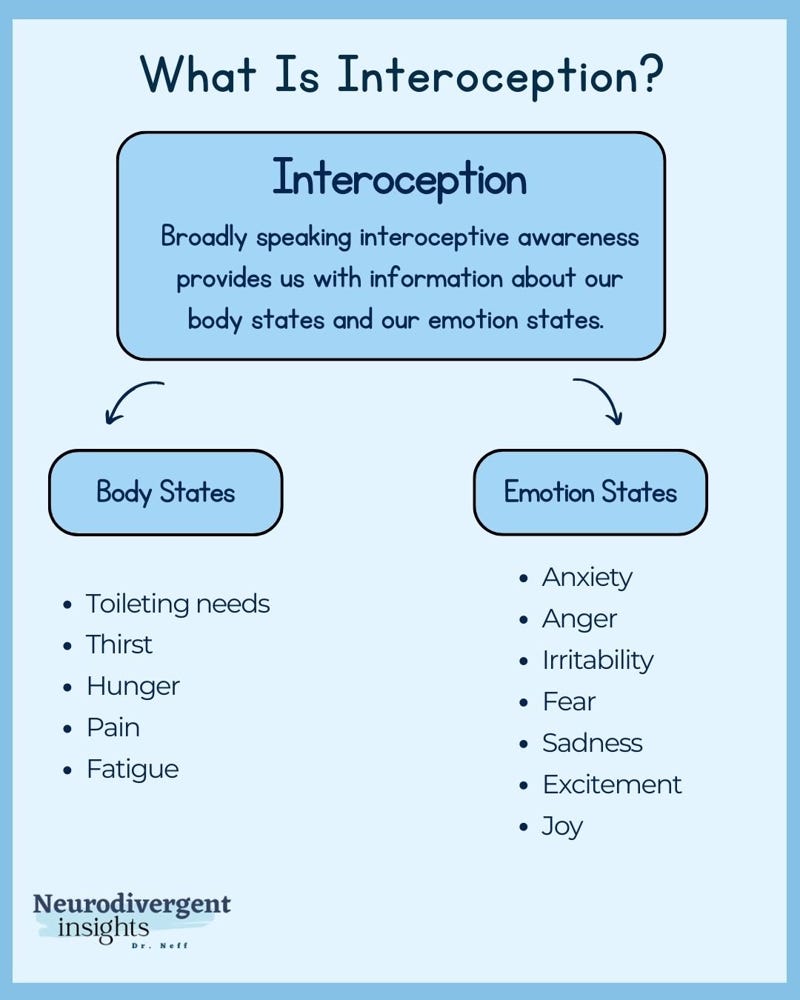
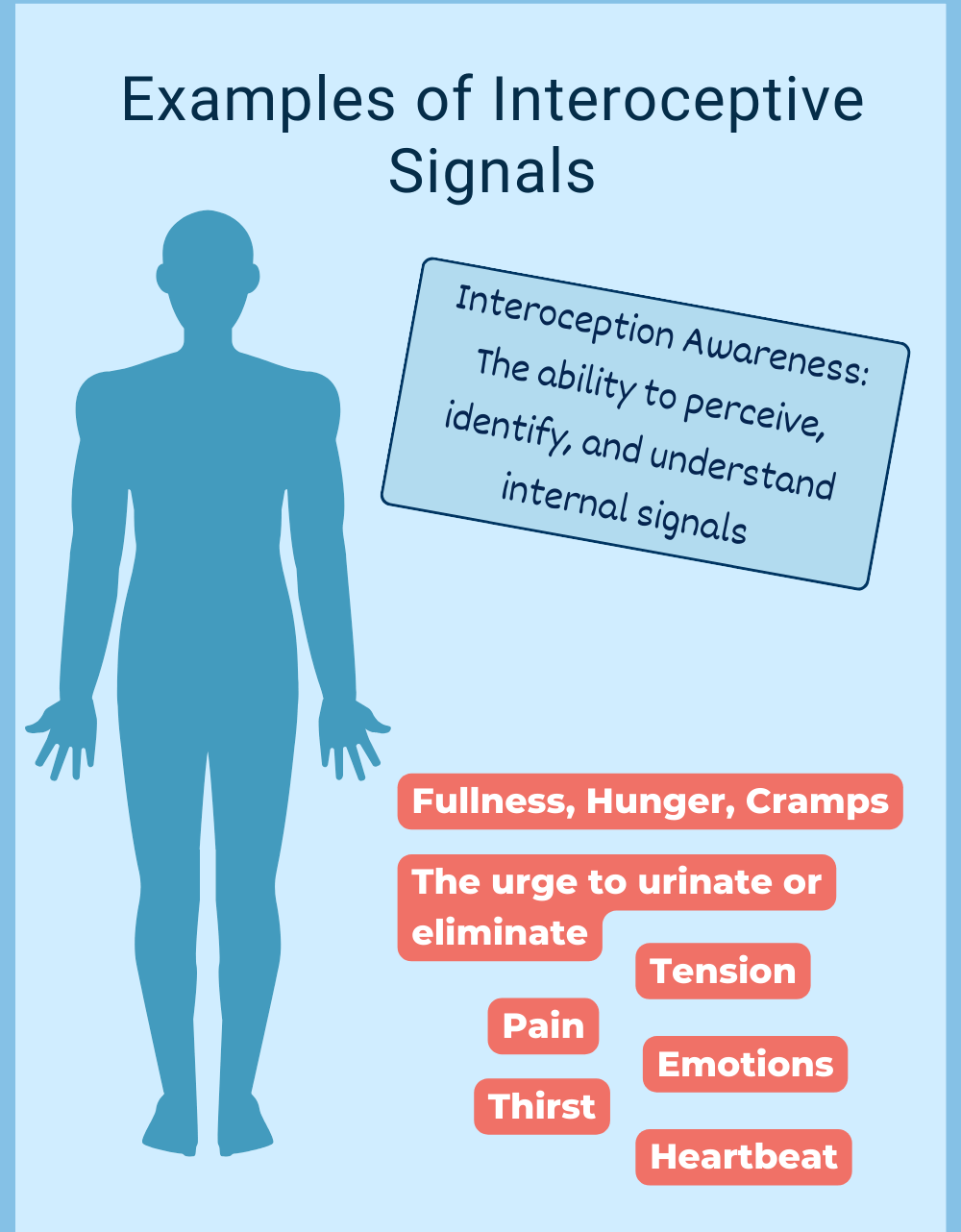
Interoception is like your body’s internal radar or “GPS.” It’s one of our lesser-known senses (alongside sight, sound, touch, taste, and smell) that tells you how you feel inside. In plain terms, interoception reports on hunger, thirst, heart rate, tiredness, temperature, and even emotions like anxiety or excitement. A well-tuned interoceptive sense alerts you when your blood sugar dips (making you hungry) or when you’re too hot or thirsty. Basically, it helps you notice “my stomach feels empty” or “my heart is racing,” so you can respond. When this sense is strong, you can easily read your body’s needs; when it’s weak or confused, those signals get missed.
Why AUDHD Makes It Tricky
For autistic + ADHD brains (AUDHD), interoception often gets more complicated. Neurodivergent folks frequently experience sensory processing differences – not just in sights or sounds, but in hidden senses like interoception. Many autistic people, for example, feel emotions intensely but have trouble naming them (a trait called alexithymia), because the inner cues are hard to interpret. ADHD adds another twist: a constantly busy or distracted mind may simply not notice quiet body cues. Over time, if others misunderstand or ignore your signals, you might start doubting them yourself. In short, an AUDHD brain might sense something strongly (like stress) yet miss the “meaning” of that feeling or not recognize the body’s warning.
Everyday Struggles: How It Shows Up
Losing track of interoceptive signals can affect daily life in clear ways. For example, we might miss hunger or thirst cues, so we skip meals or forget to drink until very late. “I often have no idea what emotions I’m feeling when I’m overwhelmed,” explains one neurodivergent writer, leading them to overshoot snacks or caffeine and spiral into anxiety. Other times, small discomforts can blow up – unnoticed irritation can become rage or slight fatigue turns into crashing exhaustion, because we didn’t catch it early. Basic needs suffer too: some with AUDHD have trouble feeling the urge to pee or pee when it’s not appropriate, or sleep terribly because they don’t sense tiredness. In all these moments, the body is signaling something, but our internal radar isn’t tuned in, so we end up struggling with eating, emotions, self-care, and even boundaries without knowing why.
Brain Insights: Why Signals Get Lost
Neuroscience helps explain why interoception can misfire. Think of a three-part journey: Internal receptors (in your gut, heart, muscles, etc.) send impulses up the spinal cord and via the vagus nerve, through the brainstem and thalamus, into the insula – the “interoception hub” deep in the brain. The insula (along with nearby regions like the anterior cingulate) is where raw signals (fast heartbeat, thirst, full bladder, stress) are integrated and given meaning. Studies find that people with very tuned-in interoception often have a thicker, more active insula, whereas those who struggle may show less gray matter or activity there. In autism and ADHD, this circuitry can develop differently. Emerging research suggests that connections involving the insula, thalamus, or vagal pathways may be altered in neurodivergent brains. Put simply, the “alarm bell” machinery might be wiring-erratic: signals may be too faint, too loud, or mixed up. That’s why you might feel something in your gut or chest but not be sure if it means anxiety, hunger, or something else.
Boosting Your Inner Radar: Strategies


Even if interoception is challenging, there are lots of practical ways to strengthen it. These tips are grounded in neuroscience and often recommended for neurodivergent folks:
Mindful Body Checks. Regularly pause and notice subtle sensations: “Is my heartbeat fast? Are my muscles tense? Do I feel cold or hungry?” Simple body scans (even just focusing on one part, like hands or feet) can reveal hidden cues. These interoception exercises (adapted body-mindfulness) have been shown to lessen anxiety, decrease alexithymia, and improve emotional regulation. For example, spend 1–2 minutes noticing your breath moving in and out, or how your stomach feels as you digest a meal.
Podcast Suggestion:
Journaling (Expressive Writing). Writing down your internal signals turns them into concrete information. Try a daily “body/emotion diary”: note times and what you feel (e.g. “10 AM – throat sore and yawning – guess: I’m tired”). Tracking patterns (like hunger pangs at 2 PM) helps train your awareness. Experts note that expressive writing is cathartic and can improve linking physical sensations with emotions. Over time, your journal becomes a map of your unique cues.
Therapy & Support. Working with a therapist (especially one familiar with neurodiversity) can help translate signals into words. Therapies like Dialectical Behavior Therapy (DBT) or occupational therapy often include interoceptive exercises and emotion-naming. Support groups or coaching for AUDHD can also validate your experiences. Simply talking through a day can reveal, “Oh, that headache was actually anxiety,” or “My jaw pain came on slowly as stress built,” helping you learn your body’s language.
Movement & Sensory Activities. Physical activity wakes you up to bodily cues. Gentle exercise (yoga, stretching, dance) can highlight sensations (tingling muscles, breathing depth, temperature). Try a sensory routine: fidget with a texture, take a warm bath, use a weighted blanket, or chew gum—activities that anchor you in physical feeling. Even routine habits (like a walking route or breathing exercises) can cue you to check in. Over time, feeling your muscles move or your feet on the ground teaches you to scan your body more often.
Podcast Suggestion:
Meditation & Breathing. Mindfulness practice, even for 5 minutes, trains attention on the present body. Sit quietly and follow one breath: feel how it enters your nose and chest, notice how you expand. If your mind wanders to “I have so much to do,” gently bring it back to sensing. According to researchers, mindfulness involves observing thoughts and sensations without judgment. This helps recognize the “story” your inner critic tells you (like “I’m too slow”) as merely a thought, not fact. Starting small (maybe focus only on breathing or heartbeats) and gradually expanding makes mindfulness doable for many neurodivergent people.
Mindful Self-Compassion (Taming the Inner Critic). Many people with AUDHD have an overactive inner critic. That voice might tell you, “Why didn’t I feel hungry sooner? I’m failing.” Catch yourself: note it as “just a thought”. Then actively offer a kind response (e.g., “It’s okay, I’m learning”). Research and autism advocates note that self-criticism actually drags you down, while self-compassion helps you stay motivated. Practicing kindness to yourself when signals slip helps reduce shame and makes it easier to notice the next cue.
External Reminders & Routines. Use timers or apps as backups for internal signals. For example, set an alarm every 3–4 hours to drink water or have a healthy snack. Put sticky notes by your desk (“Feel hungry?”) or habit-trackers for bedtime routines. These external aids can compensate until your internal cues become more reliable. Over time, you may start hearing the soft buzz of an alarm in your stomach even without the phone.
Celebrate Small Wins & Be Patient. Tuning into your body is a skill that builds slowly. Notice and praise any progress: “Today I realized I was thirsty before it got bad,” or “I felt anger rising and stepped outside to calm down.” Each insight is a win. Remember: your interoceptive experience is unique. What feels like a jitter in your chest might be anxiety, whereas someone else might feel it in their hands. With gentle practice, journaling, therapy, mindfulness, and self-compassion, your internal GPS can get more finely tuned. Over time you’ll learn to trust and care for those inner signals – an empowering step toward self-understanding and well-being.
Sources: The above insights are based on current neuroscience and neurodiversity research: